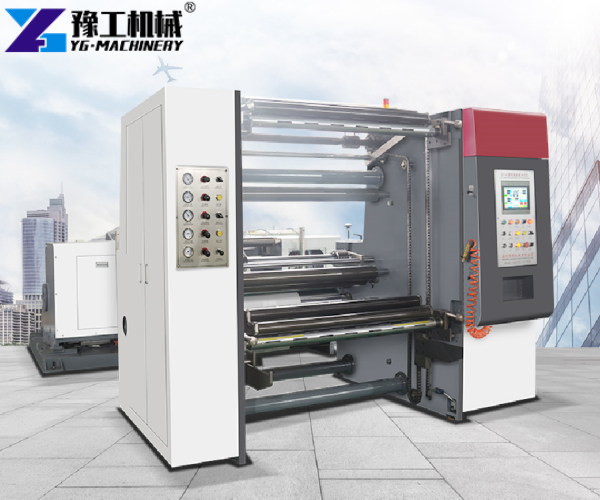
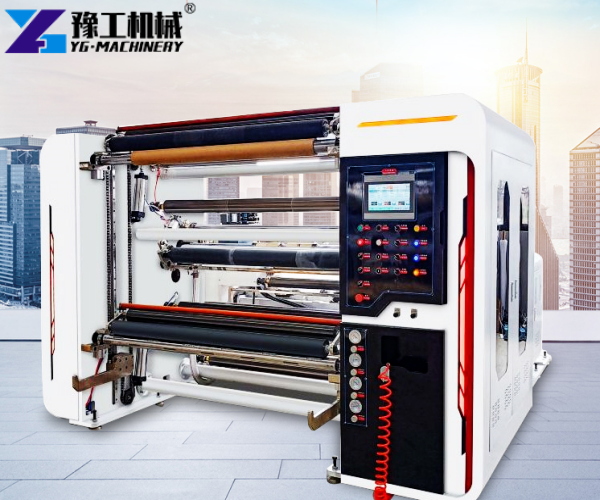
An automatic slitting machine cuts wide rolls into narrower rolls for packaging, printing, labeling, and other converting work. A tape producer may divide jumbo adhesive rolls into retail widths, while a label converter needs slit rolls that feed smoothly into printing and finishing equipment. YG Machinery offers standard slitting models and custom slitting machine options for different roll sizes and production layouts.
Automatic Slitting Machine Parameters
| Model | YG-1300 | YG-1600 | YG-1800 |
| Max width | 1300mm | 1600mm | 1800mm |
| Max Diameter for unwinding | Φ 1400mm | Φ 1400mm | Φ 1400mm |
| Min width of slitting | 30mm | 30mm | 30mm |
| Max Diameter of rewinding | Φ 1000mm | Φ 1000mm | Φ 1000mm |
| Speed | ≤350m/min | ≤350m/min | ≤350m/min |
| Total Power | 24kw | 26kw | 30kw |
| Power supply | 380V/50hz | 380V/50hz | 380V/50hz |
| Weight | 4000kg | 4500kg | 5500kg |
| Overall dimension(LxWxH) | 3300x3150x1930(mm) | 3300x3450x1930(mm) | 3300x3650x1930(mm) |
How an Automatic Slitting Machine Fits Into Roll Converting
A roll slitting machine turns a parent roll into multiple narrower rolls. Material travels from unwinding through a cutting section and onto rewind stations. Slit rolls then feed into another operation, such as label printing, tape packaging, film laminating, or bag making.
Production problems often appear after slitting, not just at the cutting point. A roll with uneven edges may cause trouble at a label printer. Film that winds too loosely can shift during storage or transport. Adhesive residue on a cutting edge can affect later cuts. For this reason, converters judge a slitter by finished-roll condition as well as cutting speed.
Slitting Applications for Tape, Labels, Film, and Jumbo Rolls
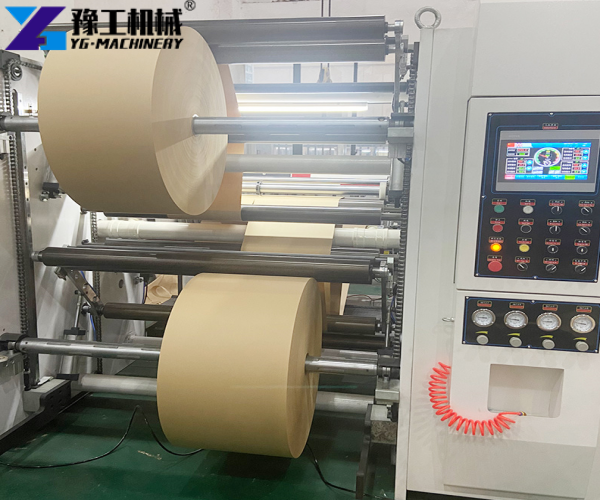
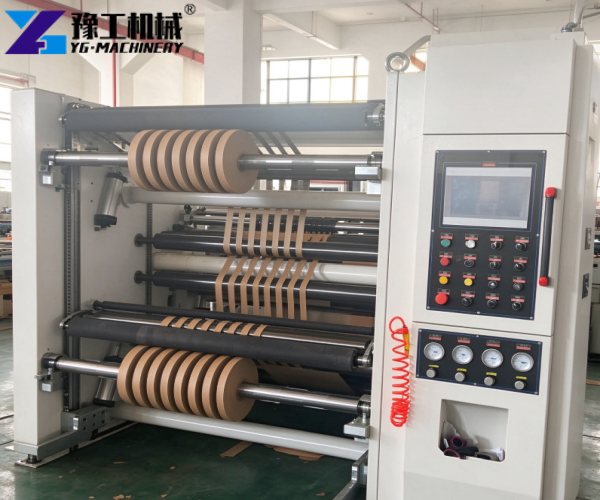
Tape Slitting Machine
In tape converting, a tape slitting machine cuts jumbo adhesive rolls into narrower products for carton sealing, masking, electrical insulation, and industrial use. Adhesive residue can build up around cutting tools, while rough edges may affect handling and tape application.
Backing material and adhesive formulation both influence cutting results. For example, tape that releases cleanly during application may still leave residue around the slitting area. Finished rolls need clean edges, even winding, and smooth unwinding.
Label Slitting Machine
Label converters use a label slitting machine to prepare stock for printing, finishing, and dispensing. Many label materials combine face stock, adhesive, and release liner, so cutting must separate the web without damaging layers needed for downstream processing.
Poorly cut liner edges can interfere with feeding. Unevenly wound rolls may also shift or sit poorly on printing and dispensing equipment. Slit width matters, but edge condition and roll alignment matter too.
Plastic Film Slitting Machine
For flexible packaging, wrapping, laminating, and bag production, a plastic film slitting machine divides wide film rolls into narrower feed rolls. Thin film can stretch during handling, and uneven web tension may lead to wrinkles or inconsistent winding.
Different film grades behave differently during slitting. Thickness, surface properties, and roll dimensions affect how the web moves through cutting and rewinding sections. Production setup needs to account for the actual film rather than treating all grades alike.
Jumbo Roll Slitting Machine
Paper mills and film converters use a jumbo roll slitting machine to divide large parent rolls into widths required by downstream production. Large rolls also create handling demands, including loading space, core dimensions, roll weight, and movement of finished rolls.
Working width is one part of model selection. Plant layout and roll-handling arrangements also affect how parent rolls enter the machine and how slit rolls move to the next process.
Blade Choice and Slit-Edge Condition
Slitting methods include razor, rotary, and shear cutting. Each method suits different materials and machine arrangements; available specifications do not state which blade system comes with these models.
Blade condition influences edge quality. A worn or unsuitable blade can leave rough edges, tear material, or create residue when processing adhesive stock. On tape, residue can build up around the cutting area. On paper, a poor cut may leave fibers along the edge. On film, tearing or uneven edges can affect downstream feeding.
A material-specific production run gives a clearer picture than a general claim about cutting quality. It allows the converter to examine finished edges and winding results on the actual substrate.
Tension, Rewinding, and Common Slitting Defects
Slitting quality also depends on how material travels and rewinds. Flexible film may wrinkle when tension is uneven. Rolls can telescope when layers shift sideways. Loose winding can cause trouble during storage or at the next machine, while overly tight winding can deform sensitive material.
These defects do not have one universal cause. Material thickness, roll condition, alignment, cutting method, and winding setup all play a role. Tension control and web-guiding equipment can affect results, but their availability on a particular model needs to be established from its configuration.
For production assessment, converters commonly examine three outcomes:
- Slit-edge condition
- Consistency of strip width
- Finished-roll shape
If a job specifies a width tolerance, the measurement method and acceptance limit belong in the order requirements.
Selecting an Automatic Slitting Machine for Production
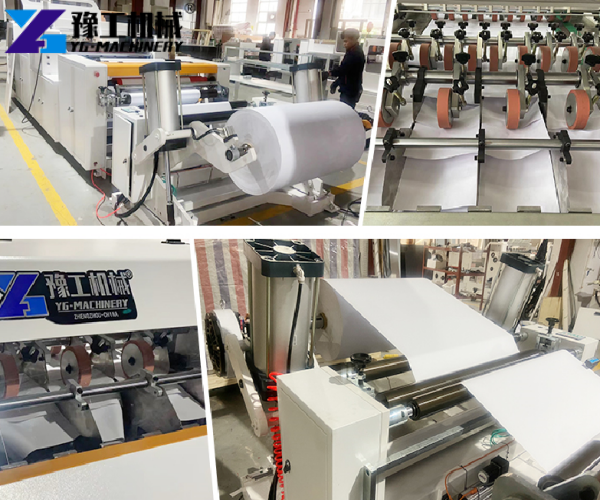
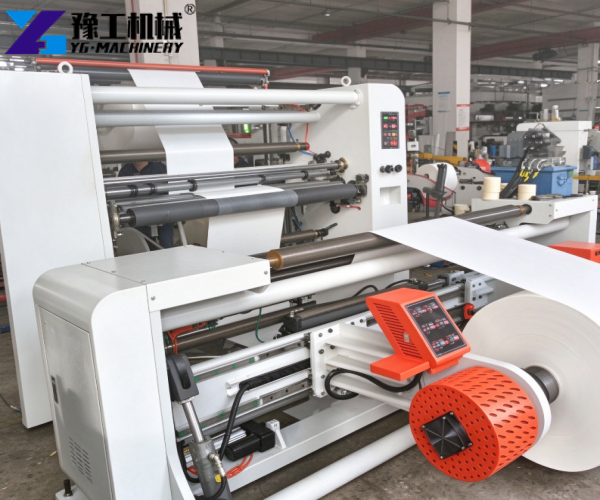
Model choice begins with parent-roll width, but the finished product matters just as much. A line making narrow tape rolls has different needs from one preparing broad film rolls for laminating.
YG-1300, YG-1600, and YG-1800 provide three working-width options. Selection also depends on material, slit layout, core size, and required finished-roll diameter. For non-standard production layouts, a custom slitting machine may be needed.
A useful equipment brief describes the actual job:
- Substrate and thickness
- Incoming roll dimensions
- Number and width of slit strips
- Finished-roll diameter and core size
- How finished rolls enter the next process
These details give the manufacturer a concrete basis for discussing machine configuration.
Automatic Slitting Machine Manufacturer
YG Machinery manufactures slitting equipment for roll-converting applications. Its standard range covers three working widths, while custom manufacturing addresses projects with non-standard dimensions.
For a particular order, machine configuration follows agreed production requirements. Blade arrangement, tension control, web guiding, and slitting tolerance depend on the selected design and should not be assumed from working-width data alone.
Overseas orders include technical documentation, shipping coordination, and after-sales support. This covers equipment delivery and assistance after installation.
FAQ
Why can adhesive tape leave residue during slitting?
Adhesive formulation, tape temperature, blade condition, and cutting method can all affect residue buildup. A blade arrangement that performs well on one tape may need adjustment for another. The machine’s supplied blade system should be checked against the tape grade.
What causes wrinkles in slit film rolls?
Wrinkles can develop when film tension varies, material enters the cutting section unevenly, or winding conditions do not suit the substrate. Film thickness and surface properties also affect handling. The cause needs to be assessed in relation to the actual material and line setup.
What should a label converter consider besides slit width?
Label converters also need clean cuts through the face stock and liner, even roll alignment, and smooth feeding into printing or dispensing equipment. Damaged liner edges or uneven winding can disrupt downstream production.
Does a higher slitting speed always increase output?
Not necessarily. Output also depends on roll changes, material handling, slit layout, and how consistently finished rolls meet production requirements. A line may run below its maximum speed to maintain stable material handling or edge quality.
Can one slitting machine process different roll materials?
That depends on machine configuration and material characteristics. Paper, adhesive tape, and flexible film behave differently during cutting and rewinding. Compatibility needs to be assessed for each intended substrate rather than assumed across all materials.
Buying an Automatic Slitting Machine From YG Machinery
Machine selection starts with incoming material and finished-roll requirements—not speed alone. YG Machinery offers standard working-width options and custom manufacturing for non-standard projects. Details about substrate, roll dimensions, slit layout, and downstream use help define a configuration for your production line. For other industrial production needs, YG Machinery also supplies rebar straightening and cutting machine, pile cutting machine, paper rewinder machine, and tissue production machine.