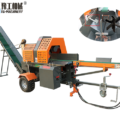
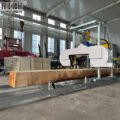
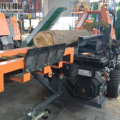
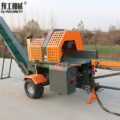
Splitting firewood by hand sounds simple. But many homeowners and small forestry operators struggle with hours of hard labor, back injuries, and wasted time. An industrial log splitter solves these problems fast. It uses powerful hydraulics to split logs in seconds. One machine does the work of several workers. No sore muscles. No risk of hitting your foot with an axe. For smaller jobs, a mini wood splitter is also available.
YG Machinery offers 15T and 20T industrial log splitters for homeowners, farmers, and firewood businesses.
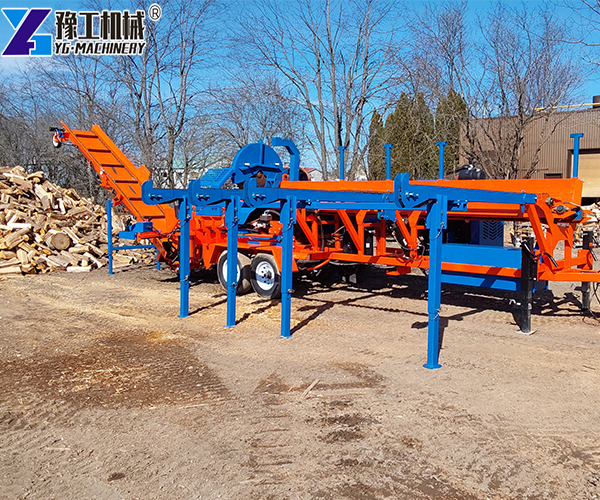
Technical Parameters: 15T vs 20T Industrial Log Splitter
| Parameter | 15T Model | 20T Model |
| Max splitting force | 15 tons | 20 tons |
| Cycle time | 7 seconds | 8 seconds |
| Max splitting length | 610mm (24″) | 610mm (24″) |
| Max splitting diameter | 380mm (15″) | 400mm (16″) |
| Work efficiency | 4 m³/h | 5 m³/h |
| Power | 15HP gasoline engine | 15HP gasoline engine |
| Engine displacement | 420cc | 420cc |
| Fuel tank capacity | 6.5L | 6.5L |
| Oil tank capacity | 50L | 50L |
| Knife | 4-way (6-way option) | 4-way (6-way option) |
| Firewood conveyor | 3.2m belt | 3.2m belt |
| Chain saw length | 1.2m | 1.2m |
| Weight | 480kg | 510kg |
| Tyre | 12″ | 12″ |
Both models include hydraulic rotator, adjustable sawing speed, and one-handle control valve.
How a Hydraulic Log Splitter Works?
The industrial log splitter operates on a simple hydraulic principle.
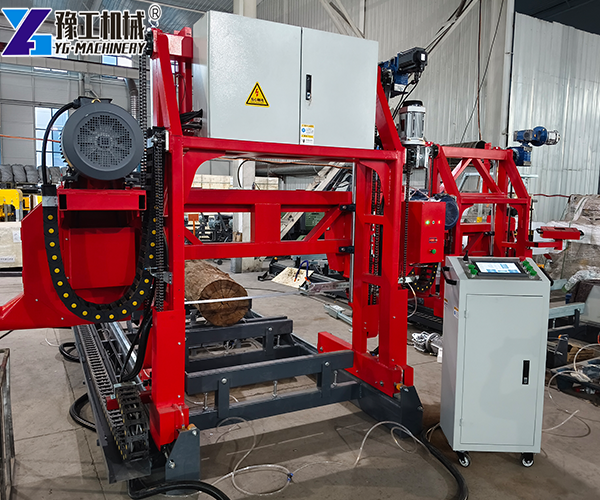
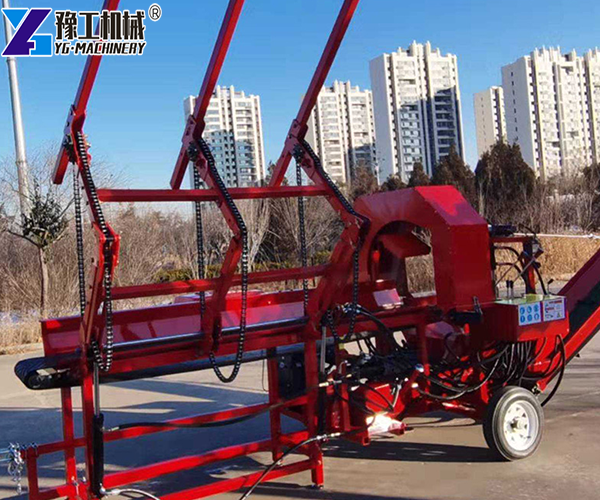
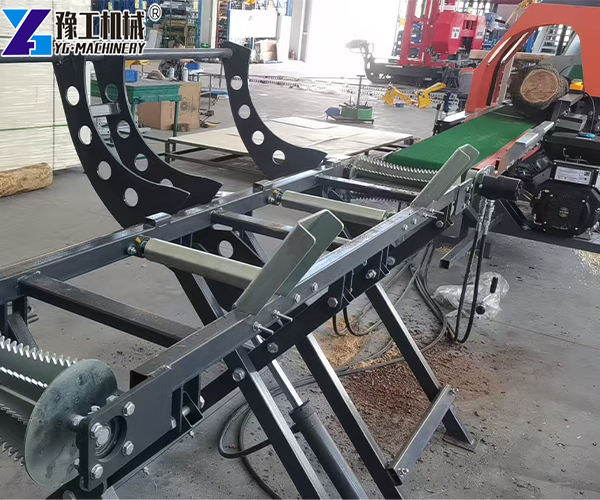
Step 1: Log feeding – The operator places a log onto the feeding conveyor or directly into the cradle. The conveyor moves the log toward the splitting area.
Step 2: Saw cutting – A hydraulic chain saw cuts the log to the desired length. The operator controls the saw with a joystick.
Step 3: Hydraulic splitting – The hydraulic ram pushes the log against the splitting wedge. The wedge forces its way through the wood, splitting it into multiple pieces.
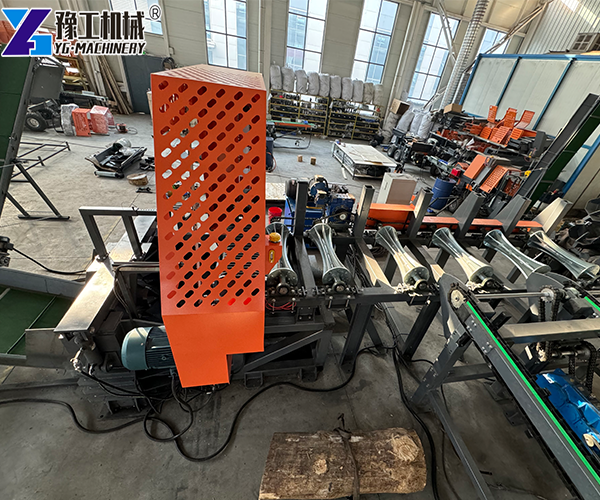
Step 4: Discharge – The split firewood falls onto the discharge conveyor. The conveyor moves the wood to a pile, truck, or storage area.
The entire cycle takes 7-8 seconds from start to finish. One operator can process 4-5 cubic meters of firewood per hour.
If you are comparing hydraulic systems with flywheel-powered machines, you can also read our Kinetic Wood Splitter for Sale guide.
Applications of Firewood Processor
Home heating – Homeowners with wood stoves or fireplaces. Process a winter’s supply of firewood in one weekend. For homeowners who only need to process a small amount of firewood for kindling, a firewood kindling splitter is also available.
Farm use – Farmers need firewood for shops, barns, and outbuildings. Also use wood chips for animal bedding.
Small firewood business – Produce split firewood for resale to local customers. Process faster, sell more cords.
Woodworking shops – Prepare raw lumber for furniture making, wood turning, and crafts.
Biomass fuel production – Split logs for wood chip production or biomass boilers.
Forestry and logging – Process harvested logs into usable firewood. Reduce waste from logging operations.
Campgrounds and resorts – Supply firewood for guests. Process on-site when demand is high.
Christmas tree farms – Process scrap wood from tree operations into firewood for sale.
One industrial log splitter serves all these users. If you process different wood sizes or need another cutting configuration, you can also explore our Wood Cutter Splitter .
Customer Reviews: What Users Say About YG Log Splitters?
Nora from the United States
“The professional manager at YG Machinery guided me through every step. She was very knowledgeable and efficient. The quality of the machine I have received so far has exceeded my expectations! Thank you!”
Delia from Germany
“The seller is top. Always helps with questions. Sent all customs documents. I can recommend this seller 100%! The splitter is great and does what it should.”
Kamer from Canada
“It was easy working with the supplier. They communicated well and the order was done on time.”
Jim from the USA
“I greatly like the machine. Good work. Thank you for being so helpful. The machine works excellently. Look forward to further cooperation.”
Customers consistently praise the build quality, customer service, and reliable performance of YG wood splitter machines.
Not sure which log splitter fits your workload? Read our complete buying guide: How to Choose a Wood Splitter – 3 Key Parameters You Must Know .
How to Choose the Right Wood Splitter Model?
| Your need | Recommended model | Why |
| Occasional home use, smaller logs (under 380mm) | 15T | Sufficient power, lower cost |
| Frequent use, larger logs (up to 400mm), harder wood | 20T | More splitting force, higher efficiency |
| Firewood business, daily production | 20T | Higher output (5m³/h vs 4m³/h) |
| Mixed hardwood (oak, hickory, maple) | 20T | 20 tons handles dense hardwood better |
| Softwood only (pine, fir, cedar) | 15T | 15 tons is enough for softwood |
Consider these factors:
- Log diameter and wood hardness
- How often you split wood (weekly vs monthly)
- Firewood volume needed per season
- Budget for equipment
Still not sure? Tell us your typical log size and wood type. YG will recommend the right industrial log splitter for sale.
If you are new to log splitters and are unsure how to operate one safely, we also recommend reading our How to Use a Log Splitter Safely – First Time User Guide .
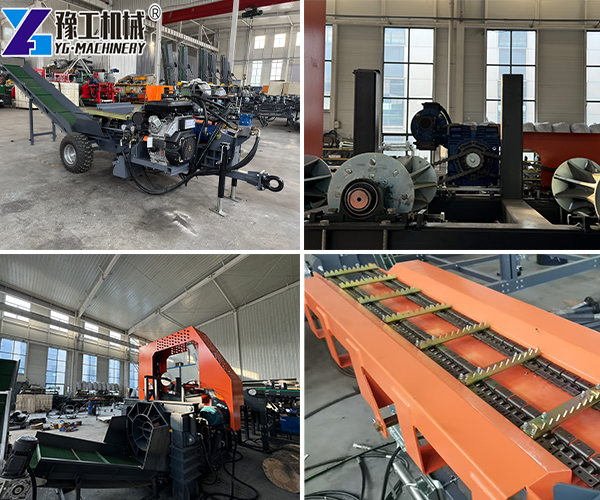
Safety Tips for Operating a Log Splitter
Use safety equipment – Always wear gloves and safety glasses. Protect your hands and eyes from flying wood chips.
Check the machine before use – Inspect the splitting wedge, chain saw, and hydraulic hoses for wear or damage. Make sure everything is properly attached.
Position wood correctly – Place the log firmly against the cradle. It should not shift during splitting.
Let the machine do the work – Do not force the ram. Move the control handle slowly and steadily.
Be aware of your surroundings – Keep bystanders at a safe distance. No one should stand near the splitting area.
Keep hands clear – Never reach into the splitting area while the ram is moving. Use the conveyor and controls to position wood.
Clean the machine after use – Remove wood residue and debris. This prolongs the life of the machine.
Follow manufacturer’s instructions – Refer to the manual for safe use and maintenance procedures.
For a complete step-by-step operation guide, see our How to Use a Log Splitter Safely – First Time User Guide .