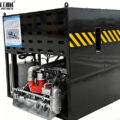
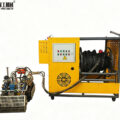
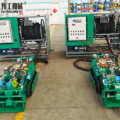
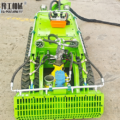
YG Machinery supplied a YG900 tank cleaning robot to a lubricating oil plant in Brisbane, Australia. The plant had five 500m³ storage tanks. Cleaning them was dangerous. Workers had to enter the tanks. One worker once fainted from oxygen deficiency.
The YG900 dredging robot with explosion proof motor and tracked chassis solved the problem. Two tanks were cleaned in three days. Previously, each tank took five days. Downtime reduced by 40%. No workers entered the tanks. Sludge residue dropped to less than 0.8%. Product quality increased from 97% to 99.5%.
Customer Background
The Brisbane plant cleaned its storage tanks every six months. Workers went inside to remove sludge. It was slow, hot, and unsafe. A worker once fainted inside a tank. The production manager started looking for a safer solution.
Why a Lubricating Oil Plant Needed a Safer Cleaning Solution?
The old cleaning method had three big problems.
- Safety. Tanks contain chemical vapors. Even with ventilation, oxygen levels can drop. One worker already fainted. The next time could be worse.
- Time. Cleaning one tank took five days. The plant had to shut down production during cleaning. Five days of lost production cost money.
- Quality. After cleaning, some sludge always remained. This affected the purity of the next batch. Product quality stayed at 97%. The plant wanted higher.
The plant needed a water tank cleaning robot that could enter the tanks without putting workers at risk. Faster cleaning and better results were also required.
How the Plant Found an Industrial Tank Cleaning Robot?
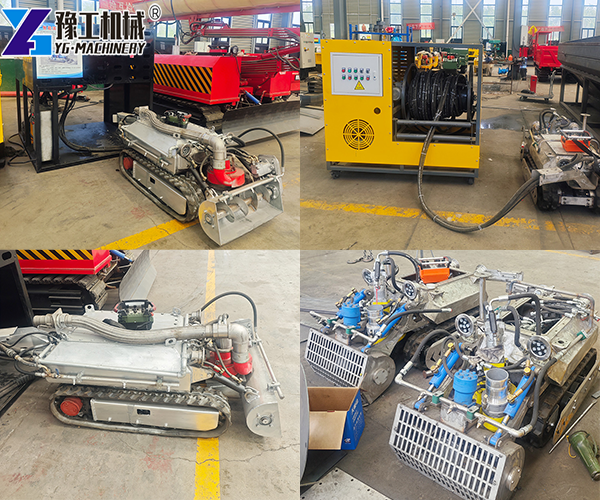
Mitchell, the production manager, searched online for tank cleaning solutions. He found videos of remote controlled dredging robots cleaning industrial tanks. No workers inside. One person with a remote control.
He contacted several suppliers. Some offered basic machines without explosion proof motors. Those would not work in a chemical plant. Volatile vapors require special safety equipment.
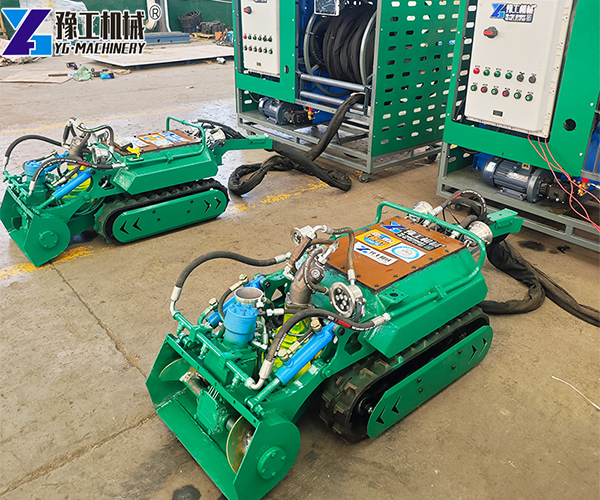
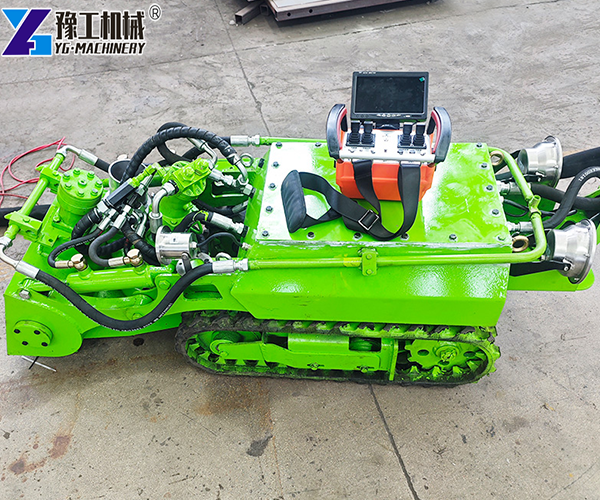
He found YG Machinery. The YG900 model had an explosion proof motor, tracked chassis, and remote control operation. It was designed for confined spaces like storage tanks.
Mitchell asked questions. Our sales manager answered within a few hours. He explained how the robot moves, pumps sludge, and works in low oxygen environments. Mitchell placed an order.
The Solution: Remote Control Silt Removal Robot with Explosion Proof Motor
Here is what the plant received:
| Specification | YG900 |
| Robot dimensions | 1650×960×750mm |
| Dredging width | 900mm |
| Travel speed | 3-15 m/s |
| Pump flow | 200 m³/h |
| Pump head | 0-25m |
| Main motor power | 22kW |
| Control system | Wireless remote |
| Lighting | Underwater LED × 2 |
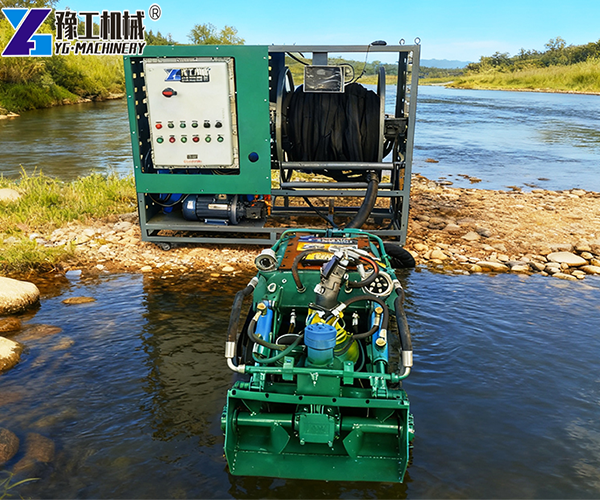
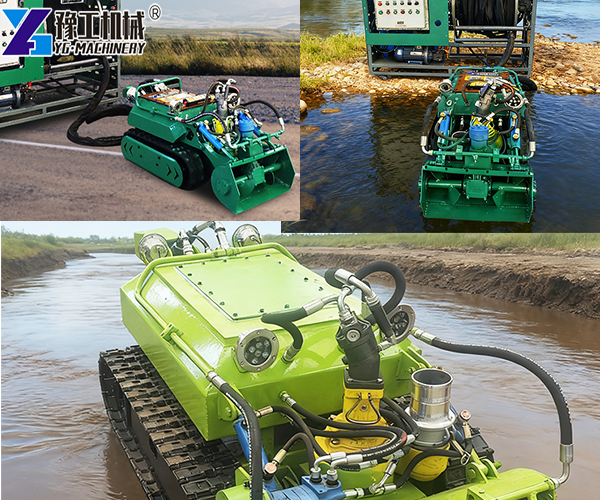
This tank cleaning robot comes with an explosion proof motor for safe operation in chemical environments. The tracked chassis moves easily on slippery tank bottoms. The remote control lets one person operate the robot from a safe distance. No workers enter the tank.For complete YG900 technical specifications, check our product page.
Core Features of This Dredging Robot for Confined Spaces
Explosion proof motor. This is the most important feature for a chemical plant. The motor will not spark. It is safe to use around chemical vapors.
Tracked chassis. The robot moves on tracks like a small tank. It does not get stuck in sludge. It climbs over pipes and obstacles inside the tank.
Remote control operation. One person stands outside the tank with a controller. The robot goes in. The operator watches through a camera. No one enters the dangerous space.
High flow pump. The 4-inch pump moves 200m³ of sludge per hour. The robot cleans fast.
Underwater LED lights. The tank is dark. Two LED lights let the camera see clearly. The operator knows exactly where the robot is cleaning.
Compact size. The YG900 fits through standard tank manholes. No need to cut openings or modify the tank.
For industrial tank cleaning, a remote control dredging robot is the only safe choice.
Implementation and Results
The YG900 arrived at the Brisbane plant within four weeks. YG provided remote training. The team learned to operate the robot in one day.
They tested the robot on two storage tanks first.
Cleaning time. Each tank used to take five days. Two tanks took ten days. With the YG900, two tanks were cleaned in three days. That is 1.5 days per tank. Cleaning time reduced by 70%.
Downtime. The plant only shuts down the tanks being cleaned. Other tanks keep running. But every hour of cleaning still costs money. With faster cleaning, total downtime reduced by 40%.
Safety. No workers entered the tanks. No one wore breathing equipment. No one risked fainting or chemical exposure.
Cleanliness. The old method left sludge residue. The YG900 removed almost everything. Sludge residue dropped to less than 0.8%.
Product quality. Cleaner tanks mean purer raw materials. Product quality increased from 97% to 99.5%. That is a big difference for a lubricating oil plant.
Customer Feedback from Australia
Mitchell told us:
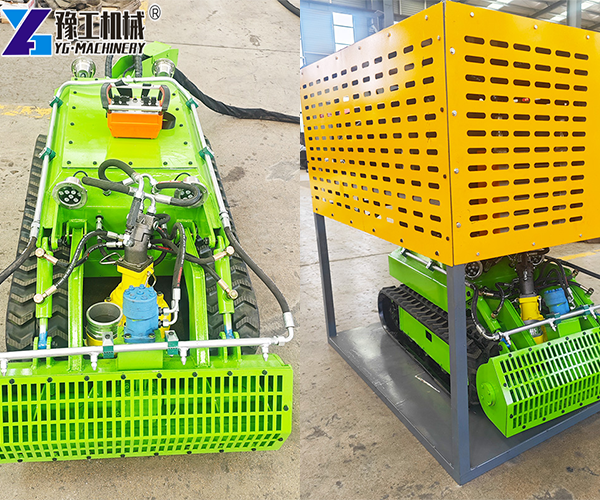
“The YG dredging robot solved our tank cleaning problem completely. Before, every cleaning was nerve-wracking. We always worried about worker safety. Now one person easily completes the task with a remote control.
The explosion proof motor gives us peace of mind. The tracked chassis moves through sludge without getting stuck. Cleaning time dropped from five days per tank to less than two days. Our product quality improved. We already ordered a second unit for our other tanks.”
FAQ: Industrial Tank Cleaning Robot Questions
Q: Is the explosion proof motor really safe for chemical plants?
A: Yes. The motor is designed to prevent sparks. It meets Australian safety standards for flammable environments.
Q: Can the robot work in a tank with no oxygen?
A: Yes. The robot does not need oxygen. It works in any environment. Workers stay outside.
Q: How deep can the robot go?
A: The YG900 works at depths up to 30 meters. Enough for most storage tanks.
Q: What kind of sludge can it handle?
A: Oil sludge, chemical sediment, sand, mud. The pump handles particles up to 50mm.
Q: Do I need special training to operate it?
A: No. Most operators learn in one day. The remote control is intuitive. We provide video training.
Q: Do you ship to Australia?
A: Yes. Shipping takes about 4-5 weeks by sea. We handle export documentation.