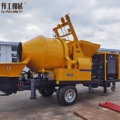
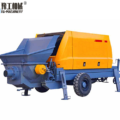
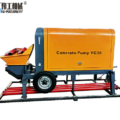
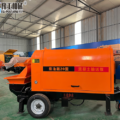
Pouring concrete sounds simple. But many contractors struggle with slow manual labor, high worker costs, and equipment that cannot reach the job site. A trailer mounted concrete pump solves these problems fast. It pumps concrete through pipes to where you need it. No wheelbarrows. No buckets. For a concrete contractor, this machine means fewer workers, less physical labor, and faster project completion.
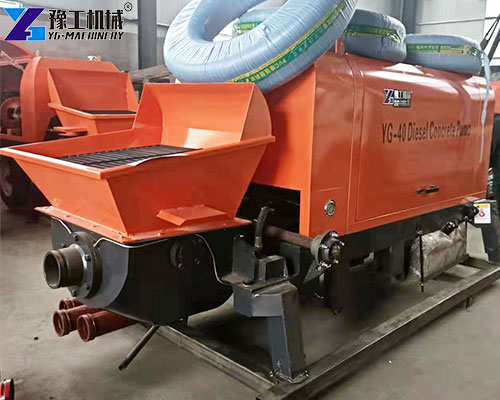
YG Machinery offers YG-20, YG-30, YG-40, and YG-50 trailer mounted concrete pumps for residential, municipal, bridge, and rural construction projects.
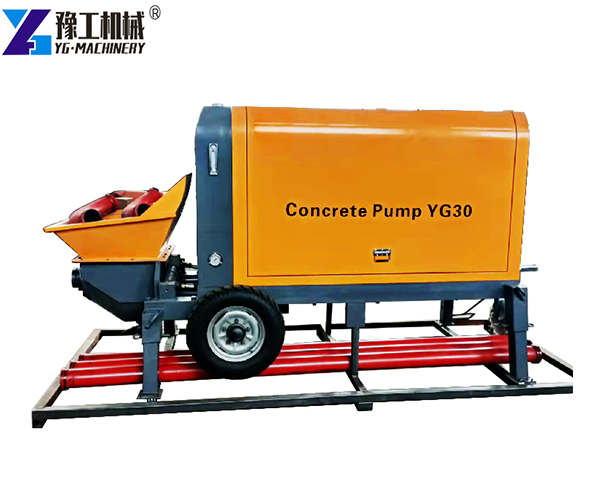
Technical Parameters: YG-20 to YG-50
| Parameter | YG-20 | YG-30 | YG-40 | YG-50 |
| Motor power | 22KW | 37KW | 45KW | 55kw |
| Max outlet pressure | – | 26mpa | 28mpa | 28mpa |
| Max theoretical throughput | 10-15m³/h | 16-18m³/h | 20-22m³/h | 35m³/h |
| Max aggregate size | ≤20mm | ≤20mm | ≤30mm | ≤40mm |
| Vertical conveying distance | 50-60m | 80m | 120m | 150m |
| Horizontal conveying distance | 100-140m | 140m | 260m | 300m |
| Pipe diameter | 80mm | φ80(100)mm | φ100(80)mm | Φ125/100mm |
| Weight | 1600kg | 2200kg | 2400kg | 2500kg |
| Dimensions (L×W×H) | 3400×1200×1600mm | 3600×1500×1600mm | 4000×1500×1550mm | 4200×1700×1750mm |
Electric vs Diesel: Which Power Option Fits Your Site?
Choosing between electric and diesel depends on your job site conditions.
Electric concrete pump
- Zero emissions – safe for indoor and underground work
- Low noise – no complaints from neighbors
- Lower operating cost – electricity is cheaper than diesel
- Requires stable power supply (220V/380V)
- Best for: urban construction, basements, tunnels, residential areas
Diesel concrete pump
- No power line needed – works in remote areas
- Strong and reliable – handles tough conditions
- Fuel adaptable – runs on standard diesel
- Best for: rural construction, mountain roads, mining sites
Both options pump the same concrete. The choice is about where you work. Tell us your site location. We will recommend the right power type.
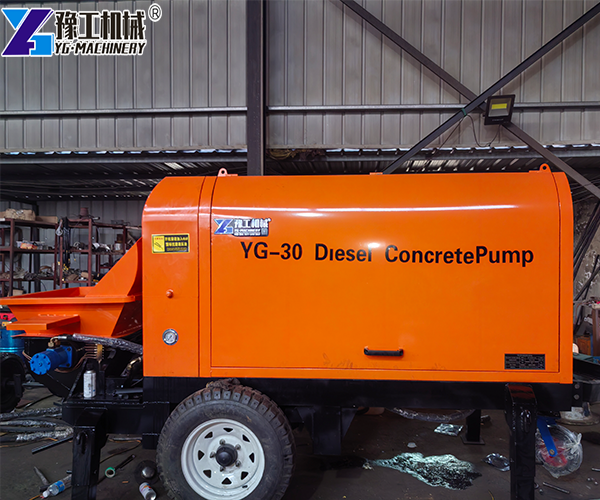
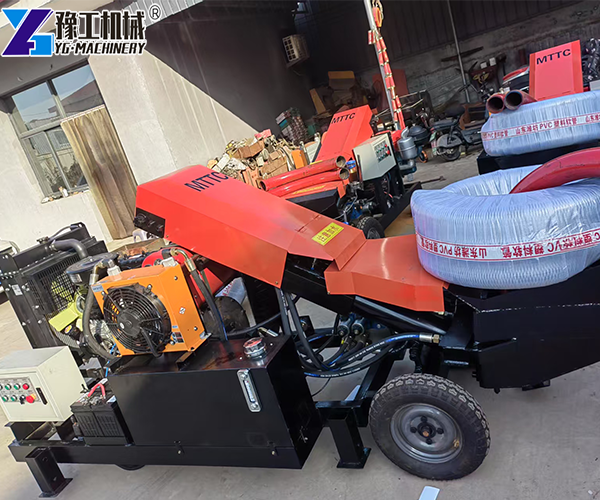
How a Trailer Concrete Pump Works?
The small concrete pump operates on a simple hydraulic principle.
Step 1: Concrete feeding – Ready-mix concrete is poured into the hopper. A mixer truck or concrete mixer supplies the material.
Step 2: Hydraulic pumping – A hydraulic cylinder pushes two pistons back and forth. One piston draws concrete into the cylinder. The other piston pushes concrete out.
Step 3: S-tube valve switching – The S-tube valve alternates between the two cylinders. Concrete flows continuously without stopping.
Step 4: Pipeline delivery – Concrete is pushed through steel pipes or rubber hoses to the pouring location. The pump can reach high floors or long distances.
Step 5: Pouring – Workers control the hose at the pour point. They can stop and start the flow easily.
One operator controls the pump. One worker guides the hose. No more carrying concrete in buckets.
Unlike a concrete mixer and pump combo, this unit only pumps ready-mix concrete from a separate mixer.
Key Advantages of Concrete Pumping Machine
Save labor – One pump replaces 4-6 manual workers. Reduce your crew size and payroll costs.
Faster construction – Pump up to 35m³ per hour. A full foundation pour takes hours, not days.
Reach difficult spots – Pump through narrow doorways, up stairs, or over obstacles. Flexible hoses reach where wheelbarrows cannot.
Less physical strain – Workers do not carry heavy concrete. Fewer back injuries. Less worker fatigue.
Consistent pour quality – Concrete flows steadily. No voids. No cold joints. Better finished product.
Works in tight spaces – The trailer is compact. Fits through standard gates. Tow it behind a pickup truck.
Electric or diesel – Choose based on your job site power. Both options available.
Low maintenance – S-tube valve design reduces wear. Hydraulic system is simple and reliable.
This static concrete pump stays stable during long pumping runs, thanks to the trailer chassis and support legs.
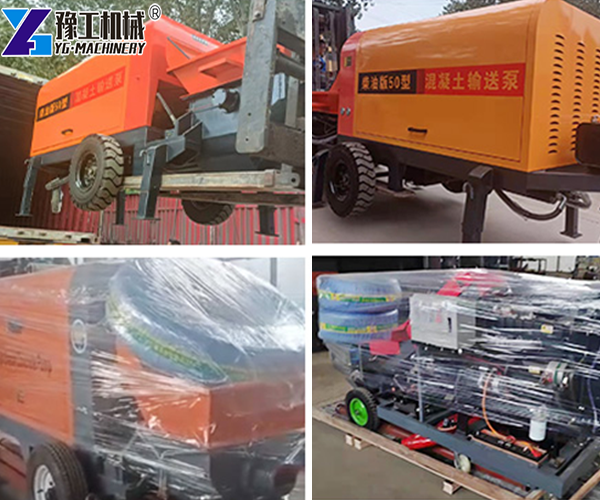
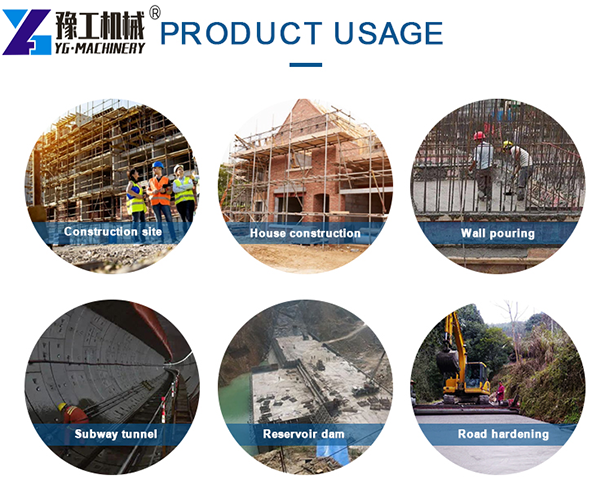
Applications of Trailer Mounted Concrete Pump
Residential housing – Pour foundations, slabs, columns, and walls for houses and small apartment buildings. The YG-20 and YG-30 are perfect for this.
Rural construction – No ready-mix trucks in remote areas? Use a diesel pump with a mixer. Pump concrete directly into forms.
Basement and underground – Zero emissions electric pump works safely in enclosed spaces. Reach corners that trucks cannot access.
Bridge and tunnel projects – Pump concrete long distances through pipes. The YG-40 and YG-50 handle high output requirements.
Road and sidewalk repair – Quick setup for small municipal jobs. Pump concrete directly into repair areas.
Swimming pools – Pump concrete for pool shells and decks. Consistent flow means fewer cold joints.
Agricultural buildings – Barns, silos, and equipment sheds. Pump concrete where trucks cannot drive.
Commercial buildings – Small to medium commercial projects. The YG-40 delivers 20-22m³ per hour for faster pours.
A single trailer concrete pump serves all these industries.
Customer Case: Residential Development in the Philippines
A construction company in Manila, Philippines was building a 20-unit residential development. Each house needed foundation, slab, columns, and beams. The job site had narrow streets that concrete trucks could not enter. Workers were carrying concrete in wheelbarrows and buckets. Progress was slow. Labor was expensive. The project was falling behind.
The contractor bought a YG-30 trailer mounted concrete pump. The machine was towed behind a pickup truck through the narrow streets. It was small enough to fit on the site. An electric version was chosen for zero emissions.
The results:
- Pumping speed reached 15-18m³ per hour
- Labor reduced from 8 workers to 3 (1 operator + 2 hose handlers)
- Each house pour took 2-3 hours instead of 2 days
- The project finished 8 weeks ahead of schedule
- No worker injuries from carrying heavy concrete
The project manager said: “The concrete pump was a game-changer. We could not get concrete trucks into the site. The pump solved that. We finished early and saved a lot on labor.”
How to Choose the Right Mini Concrete Pump Model?
| Your project type | Recommended model | Why |
| Small house, small slab, sidewalk | YG-20 (10-15m³/h) | Compact, easy to move, lower cost |
| Medium residential, 2-3 story building | YG-30 (16-18m³/h) | Most popular, good balance |
| Larger commercial, bridge, tunnel | YG-40 (20-22m³/h) | Higher output, longer reach |
| Large infrastructure, high output | YG-50 (35m³/h) | Highest capacity, best for big jobs |
Based on your location:
- Urban site with power → Electric pump
- Remote site with no power → Diesel pump
- Basement or indoor work → Electric pump (zero emissions)
- Mountain or rural work → Diesel pump (no power lines)
Still not sure? Tell us your project size, typical pour volume, and site location. YG will recommend the right mini concrete pump for sale.
Energy Saving: Why Electric Saves You Money Long Term
An electric concrete pumping machine costs less to operate than diesel. Here is why.
Fuel vs electricity cost – Electricity is cheaper than diesel per unit of energy. Over a year of regular use, the savings add up fast.
Lower maintenance – Electric motors have fewer moving parts than diesel engines. No oil changes. No fuel filters.
Longer service life – Electric systems run cooler and cleaner. The motor lasts longer with proper care.
No fuel logistics – No need to transport diesel to remote sites. No fuel storage tanks.
For urban and indoor projects, electric is the smart choice. For remote sites without power, diesel is still the best option.