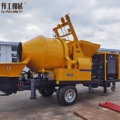
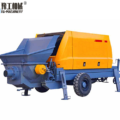
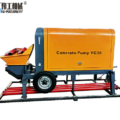
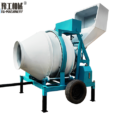
Mixing and placing concrete sounds simple, but many contractors struggle with two separate machines, slow material transfer, and high labor costs. A concrete mixer with pump solves these problems fast. It gives you a single unit that mixes and pumps that works for residential buildings, bridge projects, and rural construction. With 30-46m³/h output and 500m horizontal reach, our concrete mixer equipment helps you cut labor in half and finish jobs faster.
YG Machinery offers reliable concrete mixer with pump units for residential, commercial, and infrastructure projects.
Technical Parameters of Concrete Mixer with Pump
| Model | YGS30 | YGS40 |
| Max theoretical concrete output | 30/17 m³/h | 46/30 m³/h |
| Max concrete outlet pressure | 9 Mpa | 10 Mpa |
| Max aggregate size | ≤30mm | ≤40mm |
| Power | 37kW | 45kW |
| Concrete cylinder diameter | Φ140×1000mm | Φ180×1000mm |
| Oil tank capacity | 80L | 100L |
| Max horizontal conveying distance | 120m | 140m |
| Max vertical conveying height | 50m | 60m |
| Pipe cleaning mode | Washing | Washing |
| Overall dimension | 4500×2200×2600mm | 4500×2200×2600mm |
| Total weight | 4000kg | 4300kg |
| Discharging capacity | 0.45m³ | 0.45m³ |
| Feeding capacity | 0.8m³ | 0.8m³ |
Both models are available with diesel or electric motors. Choose the power source that fits your job site.
Not sure which model fits your project? Read our How to Choose a Concrete Mixer with Pump guide to compare output capacity, pumping distance, and power options before making a decision.
Main Structure of Concrete Mixer Equipment
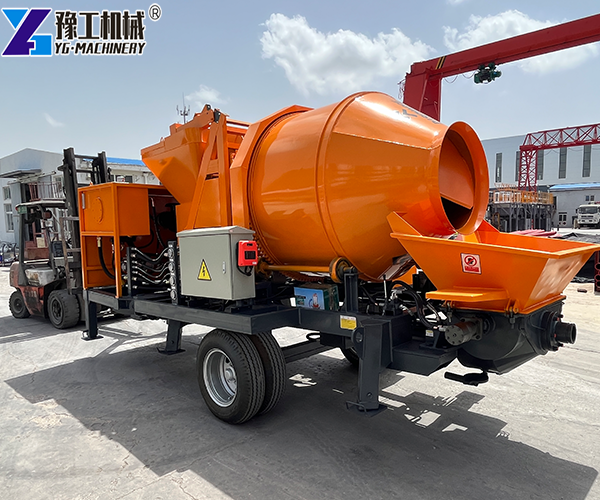
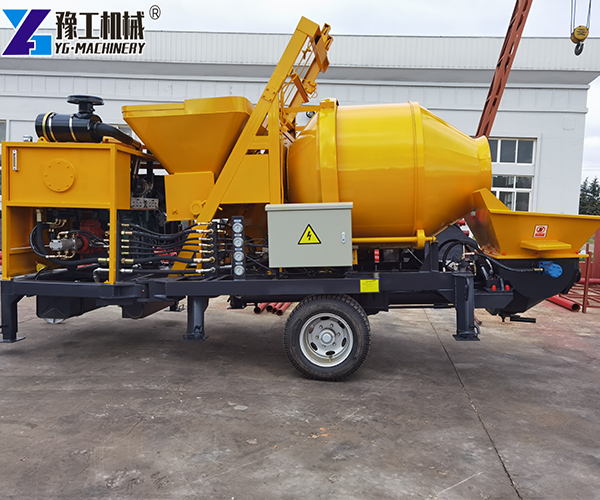
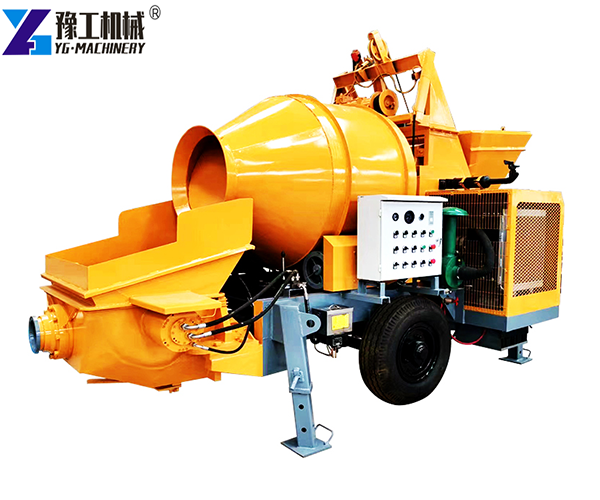
A concrete mixer with pump has several main parts:
Mixing drum – The drum mixes cement, sand, gravel, and water. It has a 0.8m³ feeding capacity and 0.45m³ discharging capacity.
Pumping system – S-valve pump delivers concrete through pipes. Can pump up to 140m horizontally or 60m vertically.
Diesel engine or electric motor – Provides power for both mixing and pumping. 37-45kW options.
Trailer chassis – Heavy-duty wheels and hitch. Easy to tow between job sites.
Control panel – Simple controls for mixing, pumping, and cleaning. Remote control optional.
Hopper – Large opening for easy loading. Can be fed by wheelbarrow or small loader.
Delivery pipe system – Includes steel pipes and hoses. Standard configuration includes pipe and hose kit.
Working Principle of Concrete Mixer with Pump
The working principle is simple and efficient:
Step 1 – Load materials – Cement, sand, gravel, and water are loaded into the mixing drum.
2 – Mix – The drum rotates. Materials are mixed into uniform concrete.
3 – Discharge to hopper – Mixed concrete drops into the pumping hopper.
4 – Pump – The S-valve pump pushes concrete through the delivery pipe.
5 – Place – Concrete reaches the pour location through the hose.
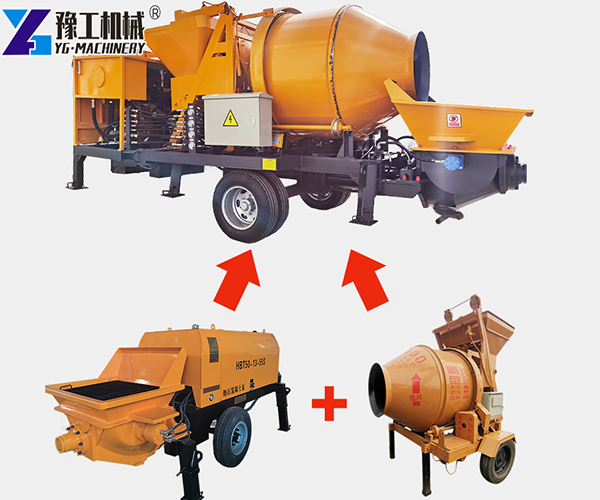
One machine does both jobs. No need to transfer concrete from mixer to pump. No delay between mixing and pouring.
Core Advantages of Concrete Mixer Equipment
Mix and pump in one machine – No need for separate mixer and pump. One machine does both jobs.
Saves time – No waiting for concrete transfer. Mix and pump continuously.
Reduces labor – One or two workers operate the whole system. No extra crew for moving concrete.
High output – Up to 46m³ per hour. Keeps the job moving fast.
Long pumping distance – 140m horizontally or 60m vertically. Reaches where other machines cannot.
Diesel or electric power – Diesel for remote sites without power. Electric for lower operating costs and zero emissions.
Portable design – Trailer mounted. Easy to move between job sites.
S-valve pumping system – Reliable and easy to maintain. Handles fine concrete well.
Easy to operate – Simple controls. Basic training is enough for most workers.
Cost effective – One machine costs less than buying separate mixer and pump. Less maintenance too.
If your project only requires concrete mixing without pumping, you can also choose our Concrete Mixer Equipment for Sale for a more economical solution.
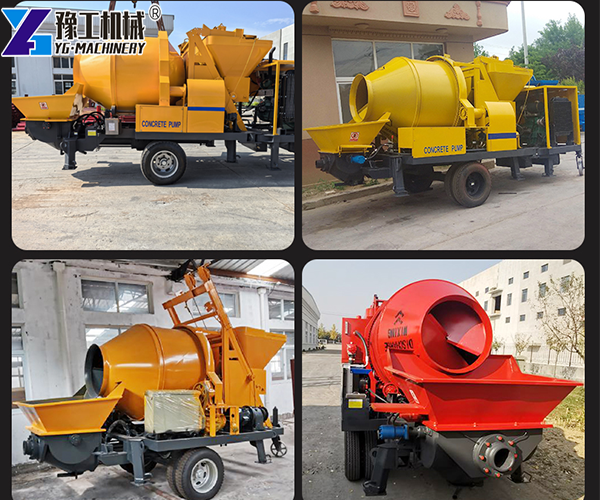
Customer Case – Philippines Residential Project
A contractor in Manila was building multiple townhouses. Each house needed foundations and slabs. Ready-mix trucks could not access the narrow streets. The contractor mixed concrete manually on site. It was slow. Quality was inconsistent.
They bought a YGS30 concrete mixer with pump. The machine sat on the street. Sand and gravel were loaded by wheelbarrow. The machine mixed and pumped concrete to the pour location. One worker operated the hose. Another loaded materials.
The contractor said: “We finish one house foundation per day now. Before the machine, it took three days. Concrete quality is consistent. No more guessing.”
Similar equipment has also been successfully used in residential construction and municipal projects. Learn more about our Portable Concrete Pump for flexible concrete placement.
Application of Concrete Mixer with Pump
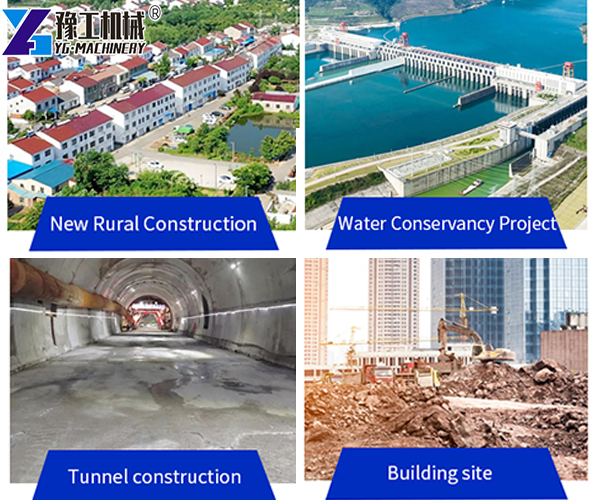
This concrete mixer equipment works well in many jobs:
- Residential buildings – Pour foundations, slabs, columns, and walls. No need for ready-mix trucks.
- Rural housing – Mix on site using bagged cement and local aggregates. No ready-mix supply needed.
- Road and bridge repair – Small batches. Pump to hard-to-reach areas.
- Tunnel construction – Mix and pump in confined spaces. Zero emissions with electric models.
- Secondary structural column grouting – Fill columns in multi-story buildings.
- Farm and agricultural projects – Pour livestock floors, equipment pads, irrigation structures.
- Small commercial buildings – Retail shops, warehouses, office foundations.
- Municipal infrastructure – Sidewalks, curbs, drainage works.
Anywhere concrete needs to be mixed on site and placed accurately, this machine delivers.
For projects requiring longer pumping distances or higher output, you may also be interested in our Small Concrete Pump .
FAQ
Q: What is the output capacity?
A: YGS30 produces 30/17 m³/h. YGS40 produces 46/30 m³/h. Enough for most residential and small commercial projects.
Q: Does it need ready-mix concrete?
A: No. The machine mixes its own concrete. Use bagged cement, sand, and gravel. No ready-mix truck needed.
Q: How far can it pump?
A: YGS30: 120m horizontal or 50m vertical. YGS40: 140m horizontal or 60m vertical.
Q: Diesel or electric – which should I choose?
A: Diesel for remote sites without power. Electric for lower noise, zero emissions, and lower operating costs.
Q: Is it easy to transport?
A: Yes. The machine is trailer mounted. Tow it behind a truck. One person can move it.
Q: How many workers are needed?
A: Two workers. One loads materials. One operates the hose. The machine does the rest.
Q: What is the max aggregate size?
A: YGS30 handles ≤30mm. YGS40 handles ≤40mm. Standard concrete aggregates work fine.
Related Concrete Equipment
In addition to concrete mixer with pump, YG Machinery also offers concrete mixer equipment for on-site concrete mixing, small concrete pumps for residential and commercial construction, and portable concrete pumps for projects that require flexible concrete delivery across different job sites.