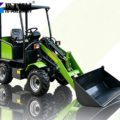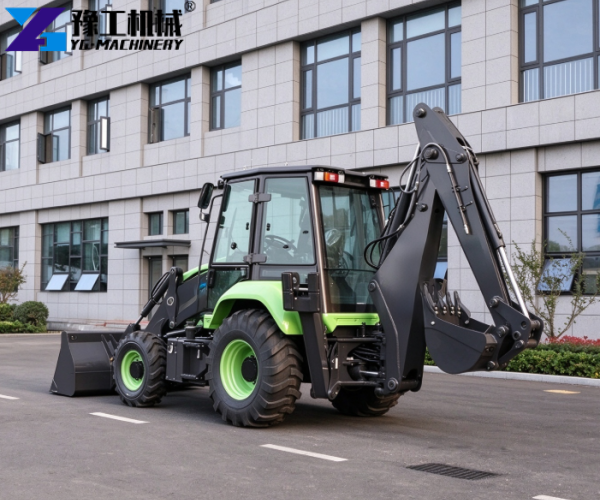
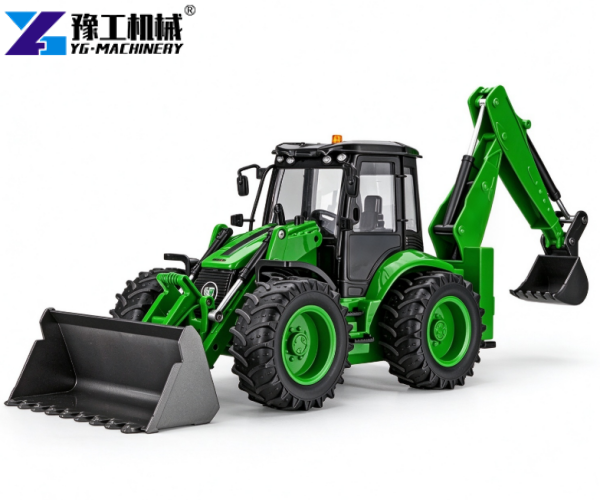
An electric backhoe loader combines material loading and site handling in one compact machine. Battery power supports indoor work, residential construction, landscaping, farm maintenance, and other projects where exhaust emissions and limited working space matter. Compared with diesel-powered equipment, an electric model avoids fuel combustion during operation and reduces engine-related maintenance.
For compact worksites, bucket capacity, lifting height, turning radius, battery runtime, and attachment compatibility all affect daily output. The right configuration depends on the materials handled, ground conditions, travel distance, and whether the work involves loading alone or both loading and rear excavation.
Electric Backhoe Loader Specifications
| Item | DN08 Electric |
| Rated Load | 0.8T |
| Bucket Capacity | 0.3m³ |
| Dumping Height | 1780mm |
| Maximum Lifting Height | 3140mm |
| Dumping Reach | 980mm |
| Maximum Lifting Weight | 600kg |
| Maximum Excavation Force | 1000kN |
| Gradeability | 30° |
| Turning Radius | 2610mm |
| Overall Length | 3840mm |
| Overall Width | 1160mm |
| Overall Height | 2330mm |
| Net Weight | 1980kg |
| Battery Voltage | 72V |
| Battery Capacity | 200Ah |
| Working Hours | 4-5 Hours |
| Travel Motor Power | 2×4000W |
| Hydraulic Motor Power | 5000W |
Loading Performance and Battery Operation
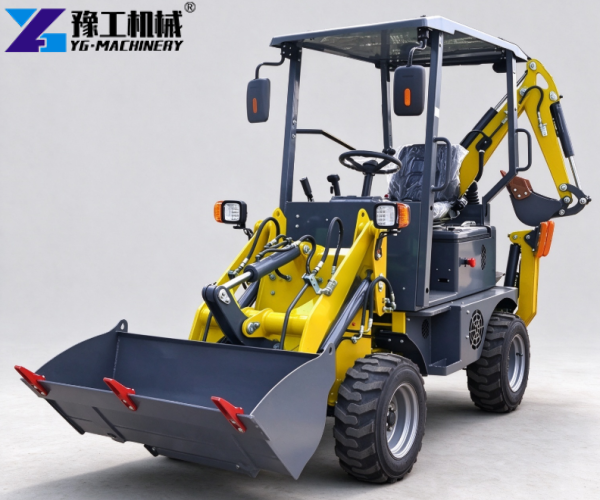
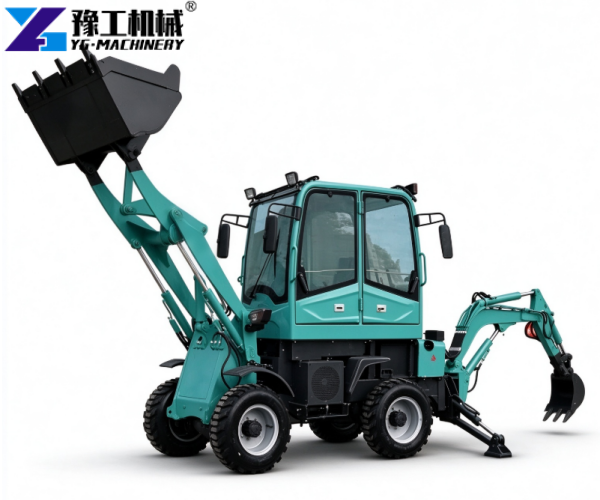
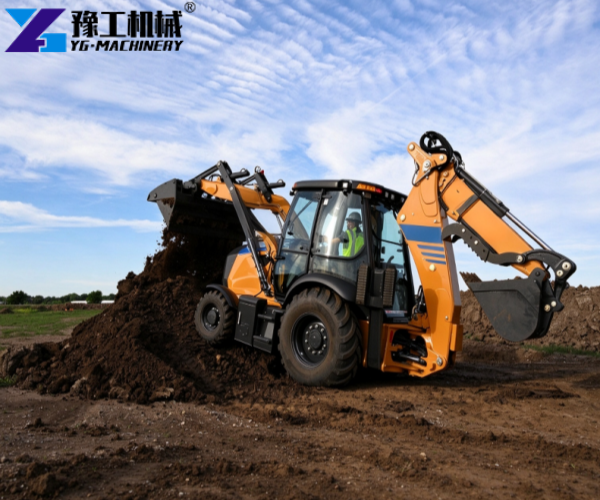
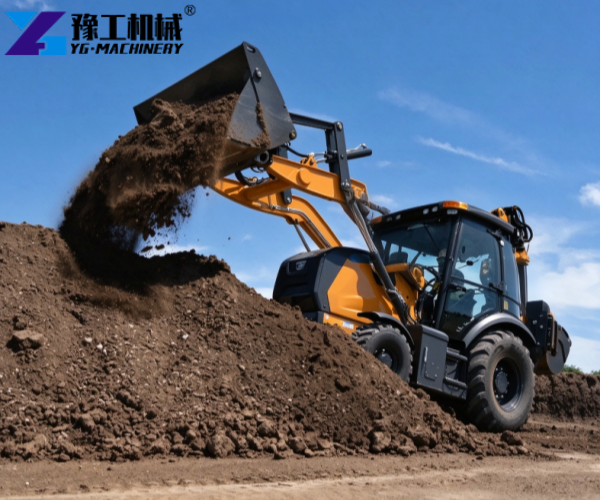
A 0.3m³ front bucket handles loose materials such as soil, sand, gravel, and construction debris. Maximum lifting height reaches 3140mm, while dumping height reaches 1780mm and dumping reach measures 980mm. These dimensions support planning around material piles, loading points, and unloading areas.
Two 4000W travel motors drive DN08 Electric, while a 5000W hydraulic motor powers its hydraulic system. The 72V, 200Ah battery has a stated working time of 4–5 hours. Heavy loads, frequent lifting, long travel routes, and low temperatures affect actual runtime.
A battery powered backhoe loader reduces reliance on diesel fuel and direct exhaust emissions during operation. Charging access and battery maintenance remain part of daily planning. Electricity consumption, servicing, and eventual battery replacement also contribute to ownership costs.
Excavation and Attachment Compatibility
A conventional backhoe loader combines front loading equipment with a rear digging assembly. Loading capacity and lifting height describe front-end work; they do not establish trench depth or rear digging reach. For excavation projects, the machine quotation needs to identify the rear boom, digging bucket, hydraulic connections, and corresponding working dimensions.
Attachment choice also affects machine performance. DN08 Electric’s supplied specifications list a 0.3m³ front bucket. Other attachments require compatible mounting dimensions, suitable hydraulic output where applicable, and an approved load rating.
| Attachment | Typical Application | Compatibility Considerations |
| Front bucket | Loading | Soil, sand, gravel, and debris; Listed capacity: 0.3m³ |
| Replacement bucket | Different material handling tasks | Mounting dimensions and rated load |
| Fork attachment | Pallets and packaged materials | Mounting system and load rating |
| Grapple | Branches and irregular materials | Mounting and hydraulic connections |
| Rear digging bucket | Trenching and excavation | Rear digging configuration and bucket connection |
| Hydraulic breaker | Concrete breaking | Hydraulic output and mounting interface |
Electric Backhoe Loader vs. Small Skid Loaders
An electric backhoe loader combines front loading with rear excavation when equipped with a complete backhoe assembly. Small skid loaders focus on loading, carrying, grading, and compatible attachment work.
| Comparison | Electric Backhoe Loader | Small Skid Loaders |
| Main functions | Loading and rear excavation on a complete configuration | Loading and attachment-based tasks |
| Trenching | Rear digging boom and bucket | Compatible digging attachment, where supported |
| Attachment layout | Front and rear equipment | Primarily front-mounted equipment |
| Key selection factors | Loading ratings and digging dimensions | Rated capacity, lift height, and attachment compatibility |
Projects involving foundations or trenches benefit from a complete backhoe configuration that combines digging and material handling. Jobs focused on moving loose materials may need only a compact loader. Selecting equipment around actual work requirements avoids paying for functions that the project does not use.
Applications Across Compact Worksites
- Construction: Moves soil, aggregate, and debris around foundations and site access routes.
- Landscaping: Handles soil and gravel around gardens, parks, and property grounds.
- Agriculture: Transfers loose materials around farmyards and storage areas.
- Property maintenance: Supports material movement in confined work areas.
- Covered work areas: Reduces direct exhaust emissions where site conditions permit electric machinery.
Maintenance and Purchase Information
Routine maintenance covers hydraulic hoses, fluid levels, running components, battery condition, steering, and braking systems. Follow the maintenance schedule for the supplied machine configuration. Suitable charging facilities and a realistic operating schedule also support daily productivity.
The electric backhoe loader price varies with battery configuration, included attachments, warranty terms, and shipping arrangements. A quotation should list the supplied bucket, any rear digging equipment, battery details, spare parts, delivery schedule, and shipping costs.
When requesting a DN08 Electric quotation, state the intended application, required attachments, daily operating hours, and delivery destination. For excavation work, include the target trench depth and digging reach so the supplier can assess the requested configuration. Contact YG Machinery today for professional recommendations, factory-direct pricing, and customized solutions tailored to your operational needs.
FAQ
Can DN08 Electric dig trenches as supplied?
The published specifications list a front loading bucket but do not establish a rear digging configuration. Trenching capability depends on the actual equipment supplied, so the quotation needs to identify the rear digging assembly and its working dimensions.
Why are rated load and maximum lifting weight different?
The specification lists 0.8T rated load and 600kg maximum lifting weight but does not explain their test conditions. The manufacturer needs to define each rating before either figure is used to calculate a safe working load.
What should an excavation equipment quotation include?
Request the rear boom and bucket details, digging depth and reach, hydraulic specifications, included attachments, warranty terms, and delivery conditions.
How long does DN08 Electric run per charge?
The stated working time is 4–5 hours. Actual runtime varies with load, travel distance, terrain, temperature, and hydraulic demand.