A road marking machine applies traffic lines and symbols to roads, parking lots, airport runways, and other paved areas. Common markings include lane dividers, parking space lines, road-edge lines, and traffic guidance symbols. Different paint materials require different application methods.
YG supplies thermoplastic marking machines and cold paint spraying equipment. Available types include hand-push, electric, self-propelled, and vehicle-mounted models, along with equipment for two-component coatings. These machines serve road construction, parking lot marking, and traffic line maintenance projects.
Two Types of Road Marking Machines
Road marking equipment mainly uses two application methods: hot-melt coating and cold paint spraying. Paint type determines how workers prepare the material and apply it to the pavement.
Thermoplastic Road Marking Machine
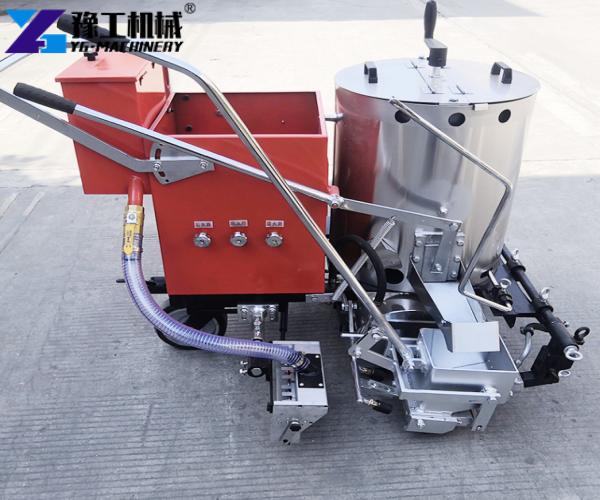
A thermoplastic road marking machine applies hot-melt marking paint. Workers heat solid thermoplastic material in a hot-melt kettle until it reaches the temperature specified by the paint manufacturer. They then transfer the molten paint into a marking shoe, which deposits it onto the road surface.
This equipment serves road centerlines, lane dividers, parking space lines, and other projects that use thermoplastic paint. YG offers hand-push, electric, self-propelled, and oscillating models for different marking tasks.
Cold Paint Road Marking Machine
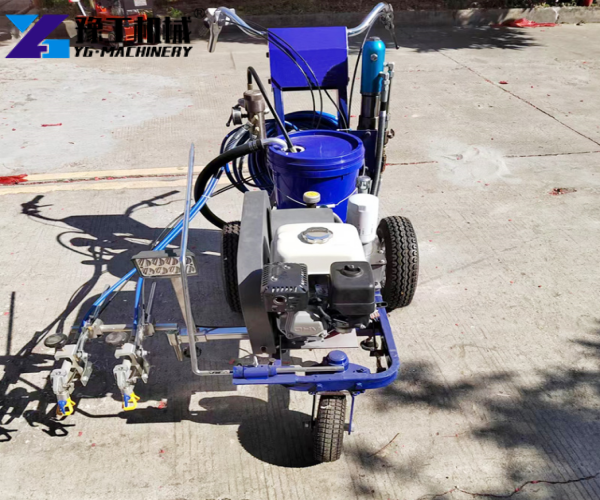
A cold paint road marking machine applies liquid paint without first heating and melting it. A pump delivers paint to a spray gun, which distributes it across the pavement.
Cold spray equipment serves road maintenance, parking lot marking, and traffic line renewal. YG’s range includes high-pressure airless sprayers, electric models, vehicle-mounted equipment, and two-component marking machines. Each type must match the paint formulation and application requirements.
Thermoplastic Road Marking Machine Parameters
| Machine Name | Model | Numbers | Unit |
| Advanced hand push | YG380 | 1 | set |
| Advanced hand push | YG380 (double bead sprinkler) | 1 | set |
| Advanced hand push | YG360 | 1 | set |
| Advanced hand push | YG360 (double spreader) | 1 | set |
| Advanced hand push | YG320 | 1 | set |
| All-in-one Type | YG180 | 1 | set |
| Electric Type | YG360S | 1 | set |
| Electric Type | YG380S | 1 | set |
| Electric Type | YG380S (double spreader) | 1 | set |
| Hot melt oscillating marking machine | YGM | 1 | set |
| self-propelled | YGZ | 1 | set |
| Line bucket | 10/15/20cm | 1 | set |
| Line bucket | 30/40cm | 1 | set |
| Line bucket | 45cm | 1 | set |
Cold Paint Road Marking Equipment Parameters
| Machine Name | Model | Numbers | Unit |
| Double-cylinder double-pump vehicle-mounted | YGM-III | 1 | set |
| Hand push high-pressure airless cold spray | YG-13L (single shot) | 1 | set |
| Hand push high-pressure airless cold spray | YG-13L (double shot) | 1 | set |
| Hand push electric cold spray machine (electric) | YG2000 | 1 | set |
| Two-component cold spray marking machine | Two-component | 1 | set |
| Two-component (40 cm) | Two-component | 1 | set |
| Two-component (hand push, 15 cm) | Two-component | 1 | set |
Difference Between Thermoplastic and Cold Spray Road Marking Machine
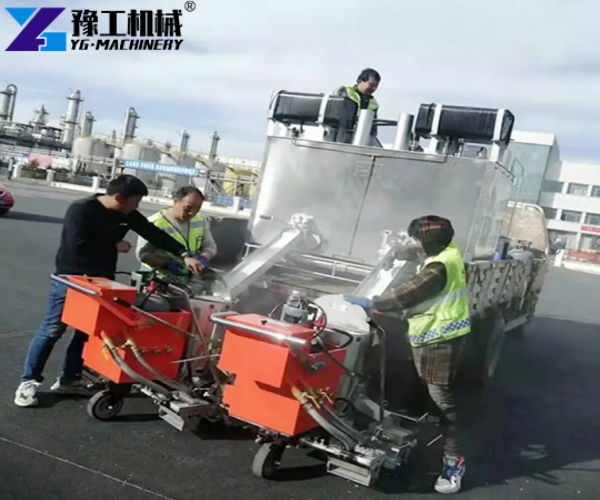
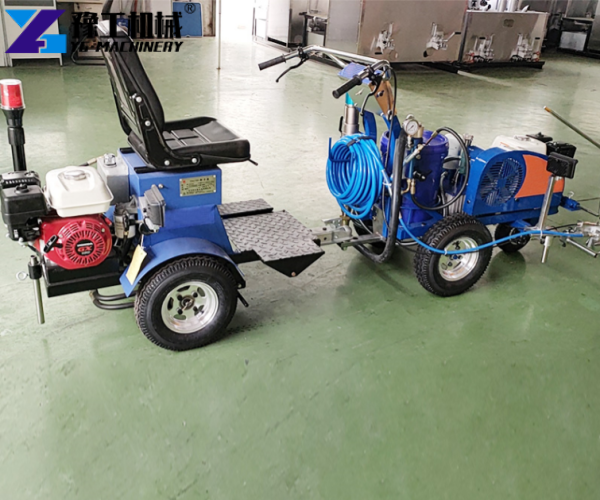
Thermoplastic and cold spray machines differ in paint preparation, application method, and equipment requirements.
| Comparison Item | Thermoplastic Road Marking Machine | Cold Spray Road Marking Machine |
| Paint type | Thermoplastic road marking paint | Cold-applied paint or compatible two-component paint |
| Paint preparation | Requires heating and melting | Conventional cold paint requires no heating |
| Application method | Deposits molten paint through a marking shoe | Sprays paint through a spray gun |
| Common machine types | Hand-push, electric, self-propelled, oscillating | Hand-push, vehicle-mounted, electric, two-component |
| Typical applications | Road centerlines, lane dividers, parking space markings | Road maintenance, parking lot lines, traffic marking renewal |
| Main equipment requirements | Hot-melt kettle, temperature control, marking shoe | Paint supply system, pump, spray gun, compatible nozzles |
| Key selection factors | Melting temperature, line width, application method | Paint viscosity, spray pressure, gun configuration |
Thermoplastic paint hardens as it cools, so workers must maintain the specified temperature during application. Cold paint spraying skips the melting stage, but correct pressure, nozzle selection, and coating thickness remain important.
Paint specifications should guide equipment selection. Thermoplastic materials require compatible heating and application systems. Cold-applied coatings need a matching spray system, while two-component products may require dedicated mixing and delivery equipment.
Working Principle of a Road Marking Machine
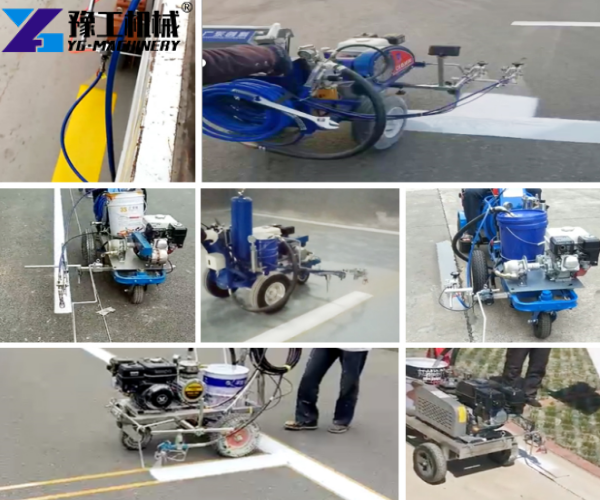
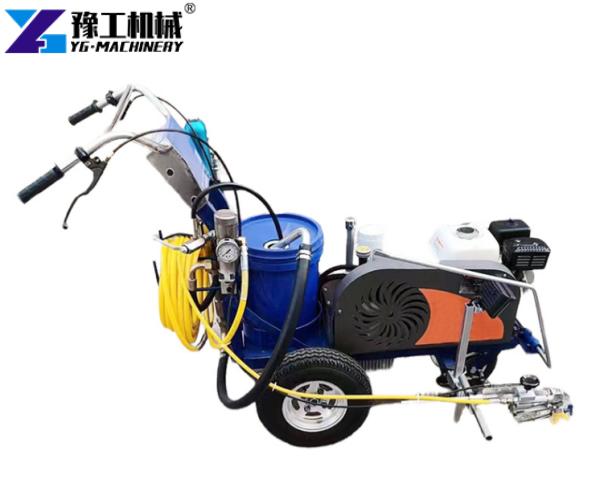
Thermoplastic Marking Process
A thermoplastic road marking machine applies hot-melt paint through five main steps:
- Heat the paint: Workers place solid material in a hot-melt kettle and heat it to the specified temperature.
- Transfer molten paint: Workers move the melted material into the machine’s marking shoe.
- Set line width: The shoe opening determines marking width.
- Apply the line: The operator guides the machine along the planned route as molten paint reaches the pavement.
- Allow cooling: Paint cools and hardens to form a solid marking.
Some models include a glass bead spreader. It distributes beads over fresh markings to improve nighttime visibility through retroreflection. Bead size, application rate, and embedment affect the result.
Cold Spray Marking Process
A cold paint road marking machine uses a pump and spray gun to apply liquid coating.
- Prepare the paint: Workers prepare or mix paint according to manufacturer instructions.
- Supply the paint: A pump delivers material from its container to the spray gun.
- Set spray parameters: The operator selects suitable pressure, nozzle size, and gun position.
- Apply the line: The operator guides the machine and controls the spray pattern.
- Allow drying or curing: The coating forms a finished marking according to its formulation.
Features of YG Machinery Road Marking Machine
- Simple structure, convenient operation, and convenient maintenance.
- There are a variety of models to choose from, including cold-spray type and hot-melt type marking machines to meet the needs of different customers.
- The construction efficiency is high, the marking quality is good, and the construction safety is good.
- Straight marking, clear lines, rapid discharge, uniform spraying, sun protection, and wear-resistant technology upgrade.
YG Machinery is a road machinery manufacturer with years of industry experience. In addition to the road marking machine, YG also supplies an industrial floor sweeper, road snowplow, slipform curb machine, and electric floor sweeper. These products serve road construction, surface cleaning, curb forming, and winter road maintenance projects.Looking forward to supporting your project with equipment solutions for road construction and maintenance.
FAQ
Can a road marking machine apply yellow and white lines?
Yes. A machine can apply either color when compatible paint is available. Buyers should specify the required color and paint type when ordering.
Can a road marking machine mark concrete surfaces?
Yes, if the selected coating suits concrete and the machine supports the application method. Workers must prepare the surface according to paint manufacturer instructions.
How long does road marking paint take to dry?
Drying time varies with paint formulation, temperature, humidity, and coating thickness. Thermoplastic paint hardens as it cools, while cold-applied coatings follow their specified drying or curing process.
What affects road marking service life?
Paint formulation, surface preparation, coating thickness, traffic volume, and weather all affect service life. Correct application and compatible materials reduce premature marking failure.
What maintenance does a road marking machine require?
Operators need to clean paint passages and inspect pumps, hoses, spray guns, marking shoes, and moving parts. Thermoplastic machines also require inspection of heating components and temperature controls. Follow manufacturer procedures for shutdown, cleaning, and cooling.