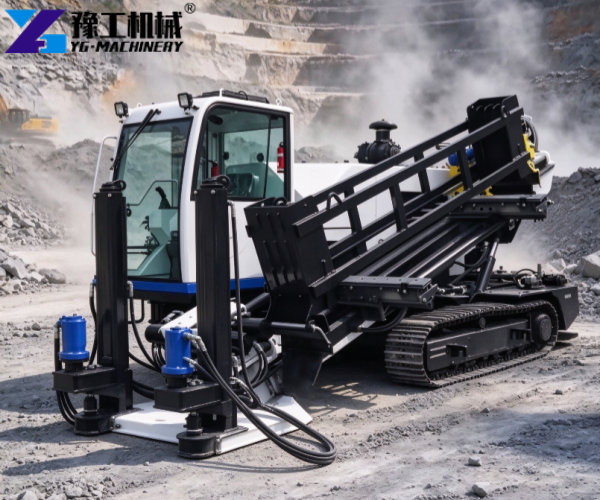
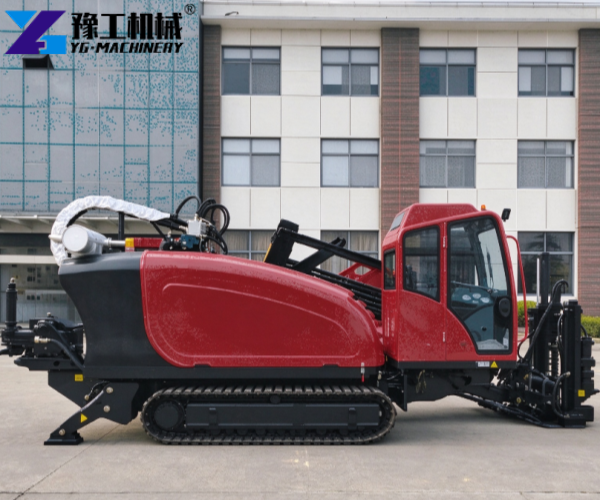
A horizontal directional drilling rig installs underground pipelines beneath roads, driveways, and developed areas without excavating an entire route. Canadian contractors use trenchless drilling for water lines, communication ducts, power conduits, and other underground utilities.
In March 2026, a utility contractor in Kitchener, Ontario, placed an order for 5 horizontal directional drilling rigs from YG Machinery. The order covered residential utility installation and road crossing work. Each unit featured a 450 kN pulling capacity, a Cummins 6CTA8.3 C260 engine, and a high-flow mud pump. Factory testing preceded shipment, with delivery scheduled within 45 days after order confirmation.
The planned work included four road crossings, with bore lengths of approximately 75–110 m and 160 mm HDPE pipes. Existing utilities and restricted roadside access shaped equipment positioning and bore alignment.
450 kN Horizontal Directional Drilling Rig Specifications
| Item | Parameter |
| Engine Power | Cummins 6CTA8.3 C260, 194KW (2200r/min) |
| Feed/Pull Capacity | 450KN |
| Rated Torque | 18000N·m |
| Main Shaft Rotary Speed | 0—48、0—96r/min |
| Feed/Pull Speed(Pinion rack type) | Gear Ⅰ:6m/minGear Ⅱ:12m/minGear Ⅲ:35m/min |
| Feed Stroke | 3500mm |
| Guide Hole Diameter | Φ170mm |
| Penetration Angle | 8—18° |
| Pressure of Hydraulic System | 20MPa |
| Travel Speed | 1.5-3km/h |
| Dimensions (L×W×H) | 7.2×2.3×2.45m |
| Weight | 11t |
| Mud Pump Max Flow Rate | 450L/min |
| Mud Pump Max Pressure | 8MPa |
| Rod Size | Φ83×3000mm |
The Cummins engine delivers 194 kW at 2,200 r/min. Operators select from three feed speeds and two rotary speed ranges to suit the drilling stage and ground resistance.
Horizontal Directional Drilling for Residential Utilities in Ontario
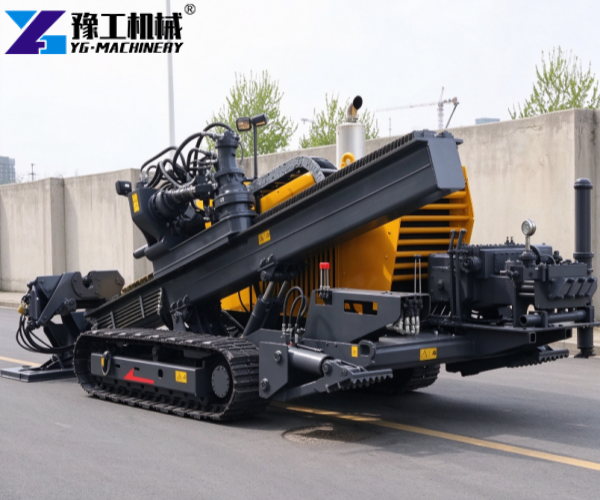
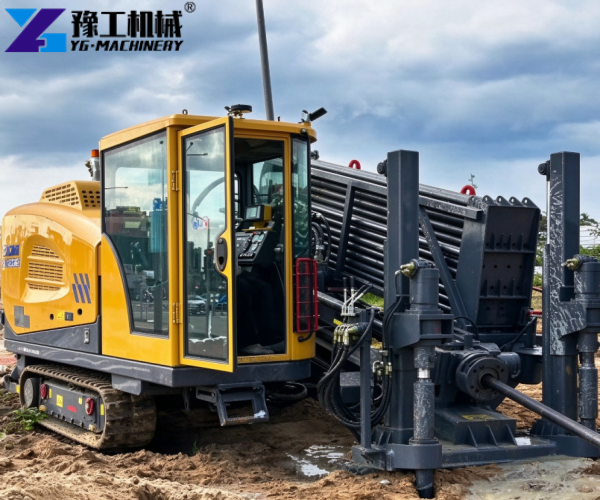
Residential utility work in Kitchener often takes place near paved roads, driveways, water lines, and communication ducts. Open-cut excavation across these areas requires trenching, traffic control, and pavement reinstatement.
Horizontal directional drilling equipment creates an underground route between entry and exit points without opening a continuous trench. Crews still need working pits and space for drill rods, machinery, and mud collection.
For the planned road crossings, site preparation covered three key areas:
- Utility locations: Survey records and site markings identified existing buried services.
- Rig access: Entry points needed enough room for equipment positioning and drill rod handling.
- Bore alignment: Road levels, required cover depth, and exit locations shaped each drilling route.
These preparations gave the crew defined entry and exit points before equipment mobilization.
HDD Equipment for Road Crossings and Underground Pipeline Installation
Guided Pilot Drilling
The crew starts with a pilot bore and uses a guidance system to track the drill head along the planned route. Operators adjust direction as the head advances, with particular attention to buried services and road cover.
The rig supports penetration angles from 8° to 18°. Entry angle selection follows the bore profile and available working space.
Reaming and Pipe Pullback
After the pilot bore reaches the exit point, crews enlarge the hole with suitable reaming tools. Tool size and reaming passes must accommodate the planned pipe diameter and the surrounding ground.
During pullback, operators monitor pulling force, rod connections, pipe movement, and resistance along the bore. For 160 mm HDPE pipe, the installation plan also needs adequate clearance for pipe movement and drilling-fluid returns.
Mud Circulation and Cuttings Removal
Drilling fluid cools the cutting head, transports loosened material out of the bore, and supports bore stability. The rig’s mud pump delivers up to 450 L/min at a maximum pressure of 8 MPa.
Fluid management changes with ground conditions:
- Clay: Sticky cuttings can collect around tools, so crews monitor returns for signs of poor bore cleaning.
- Loose sand: Fluid loss requires close attention during drilling.
- Gravel: Larger particles can increase resistance and complicate cuttings removal.
Crews adjust circulation according to fluid returns and ground conditions. A designated collection area keeps returned mud and cuttings away from road traffic and storm drains.
Preparing a Horizontal Directional Drilling Rig for Canadian Winters
Ontario winters place additional demands on engines, hydraulic systems, hoses, and drilling fluid. Cold-start procedures and suitable lubricants are important when temperatures fall overnight.
Before winter operations, crews need to:
- Follow manufacturer guidance for cold starts and hydraulic warm-up.
- Use lubricants rated for expected operating temperatures.
- Protect exposed hoses and fluid lines from freezing.
- Arrange suitable storage for drilling fluid and collected mud.
Before shipment, YG Machinery tests the engine, rotary mechanism, feed system, hydraulics, and mud pump. Technical documents and maintenance guidance accompany equipment preparation, while site teams handle winter-specific fluids and operating procedures.
Horizontal Directional Drilling Project Requirements and Performance
For the planned Ontario work, the project manager tracks bore length, alignment records, pipe installation progress, mud consumption, and machine downtime. These records allow the contractor to assess each road crossing against its work schedule.
“On our residential road crossings, the adjustable feed speeds gave our crew useful control during pilot drilling. We used the lower rotary speed on sections that required careful guidance. In clay, we watched the mud returns closely and adjusted circulation when cuttings cleared more slowly. Those operating details mattered as much as pulling capacity on our planned 160 mm pipe installations.”
The project records should document completed crossing lengths, any alignment corrections, drilling-fluid use, and maintenance events. These figures give the contractor concrete information for planning subsequent utility sections.
YG Horizontal Directional Drilling Equipment and Engineering Support
YG Machinery supplies horizontal directional drilling equipment for municipal pipelines, road crossings, and underground utility installation. Its engineering team reviews project details to identify suitable drilling models, drill rods, and supporting equipment.
For a Canadian project quotation, share:
- Planned bore length and pipe diameter
- Available soil survey or ground information
- Entry and exit locations
- Number of planned bore routes
- Site access restrictions and expected winter temperatures
Customers can also request technical specifications, machine dimensions, operating documents, and after-sales support information.
Get a Horizontal Directional Drilling Rig for Your Canadian Project
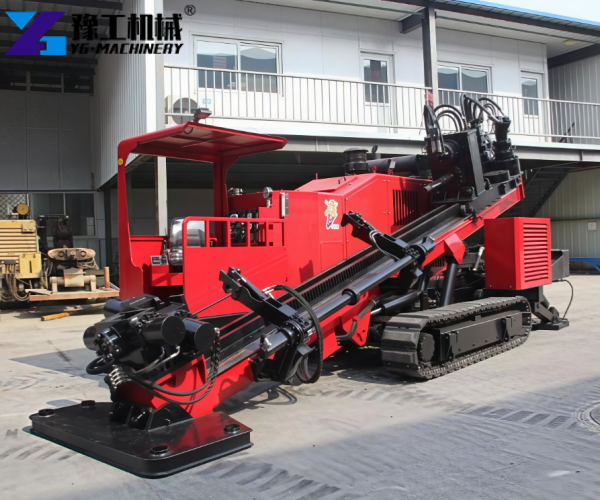
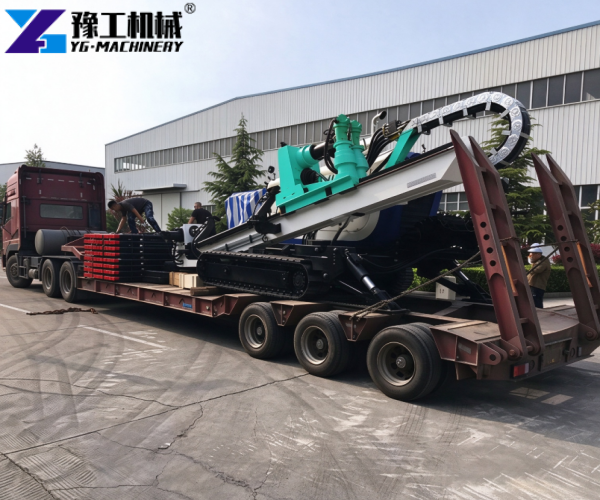
If you need a horizontal directional drilling rig for underground utilities, road crossings, or trenchless pipeline installation in Canada, YG Machinery offers models with different capacities and operating specifications. The 450 kN model combines a Cummins engine, adjustable feed speeds, rack-and-pinion movement, and high-flow mud circulation for demanding drilling work.
Our mature product range and professional engineering team support customized solutions based on bore design, ground conditions, pipe dimensions, and site layout.
Contact us today for detailed specifications, tailored equipment recommendations, and a quotation. Share your project requirements with our team, and let us help prepare an equipment solution for your next trenchless construction project.