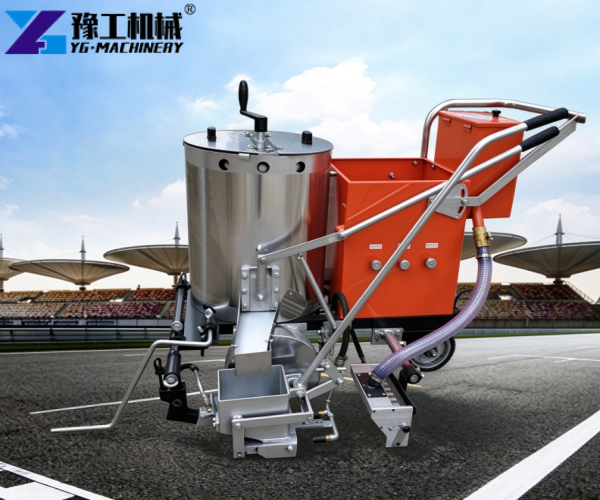
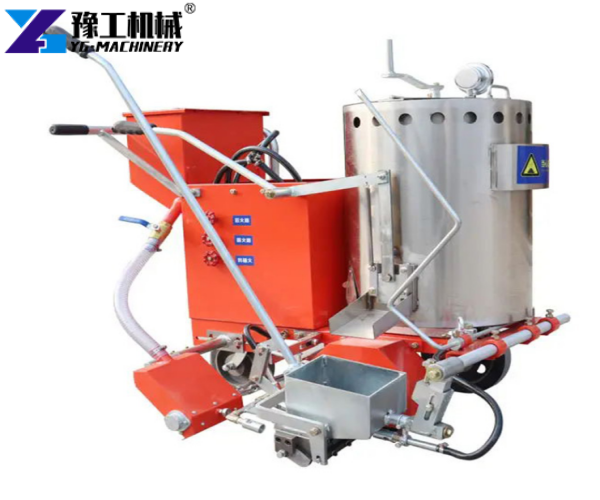
Road markings guide traffic on urban roads, highways, parking lots, and industrial sites. A Thermoplastic Road Marking Machine heats thermoplastic paint and applies it to the road surface to form clear traffic lines. Common applications include lane dividers, parking spaces, stop lines, and directional arrows. Different machines offer different marking widths, travel speeds, and operating methods. These features affect their performance across various road marking projects.
Thermoplastic Road Marking Machine Specifications
| Parameter | YG-180 Thermoplastic Type | YG-380 Thermoplastic Paint Machine | YG-360 Hand Push Type | YG360S |
| Marking thickness | 1.0-3.0mm | 1.0-3.0mm | 1.0-3.0mm | 1-2.5mm |
| Marking width | 50~450mm | — | — | — |
| Walking speed | — | 1.5km/h | — | 1-8 km/h (Adjustable) |
| Dimensions | 13509001100mm | — | — | 1100×980×1000 |
| Weight | 150kg | 100kg | 110kg | 150kg |
| Glass bead spreader | — | — | 15cm & 20cm | — |
| Battery capacity | — | — | — | 12 × 4 = 48 AH |
| Liquefied Gas Tank | — | 30kg | 30kg | — |
| Heating temperature | — | 180-210°C | 180-210°C | — |
| Daily workload | 150—200m²/day | — | — | — |
How Thermoplastic Road Marking Equipment Works
Thermoplastic marking involves four main stages: heating, melting, application, and cooling.
The process starts with heating thermoplastic paint in a compatible melting unit. The material reaches the working temperature specified by its manufacturer and becomes fluid enough for application. The molten paint then enters the marking mechanism, which spreads it across the prepared road surface. As the material cools, it hardens into a solid line.
Some projects also require glass beads to improve nighttime visibility. These beads reflect vehicle headlights toward their source. Their application rate and embedment depth affect the final reflective performance.
Several technical factors influence marking quality:
Paint temperature: Insufficient heat affects material flow, while excessive heat may damage the paint.
Surface preparation: Dust, oil, standing water, and loose particles can weaken adhesion.
Application speed: A steady travel speed helps maintain consistent line thickness and shape.
Material compatibility: Each thermoplastic formulation has specific heating and application requirements.
Applications of a Thermoplastic Paint Machine
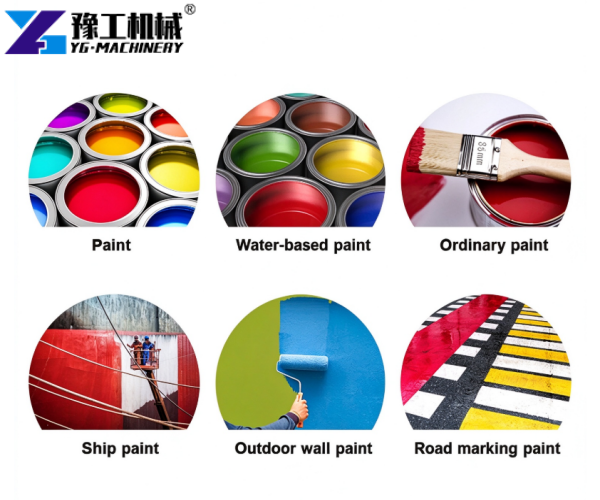
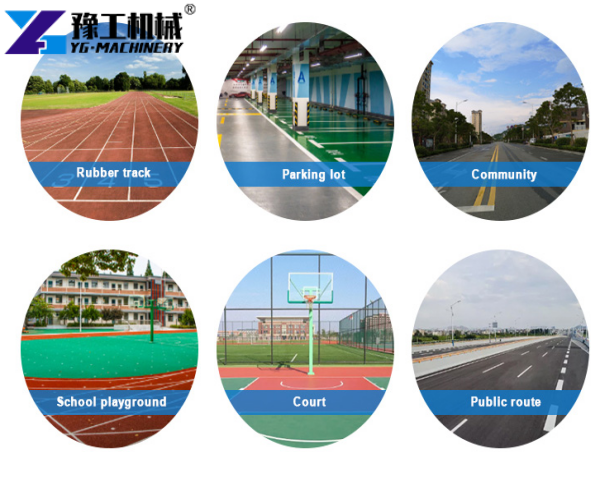
A thermoplastic paint machine serves road marking projects that require clear, durable traffic lines. Different sites present distinct marking requirements.
Urban Roads and Highways
Road construction and maintenance projects use thermoplastic paint for lane dividers, road edges, stop lines, and directional arrows. Long road sections require consistent line thickness and a steady material supply. Traffic control and road closure schedules also affect the work plan.
Parking Lots and Industrial Sites
Parking lots need clearly defined parking bays, access lanes, pedestrian crossings, and directional markings. Industrial sites may also require lines around loading zones and internal vehicle routes. A hand-push marking machine gives operators direct control when they mark short lines, corners, and narrow sections.
Airports and Transport Hubs
Airport service roads, cargo areas, and transport hubs use traffic markings to guide vehicles and separate operating zones. Project specifications may define line dimensions, reflective performance, and material requirements. Construction teams need to follow these standards throughout the marking process.
Selecting a Thermoplastic Line Marking Machine
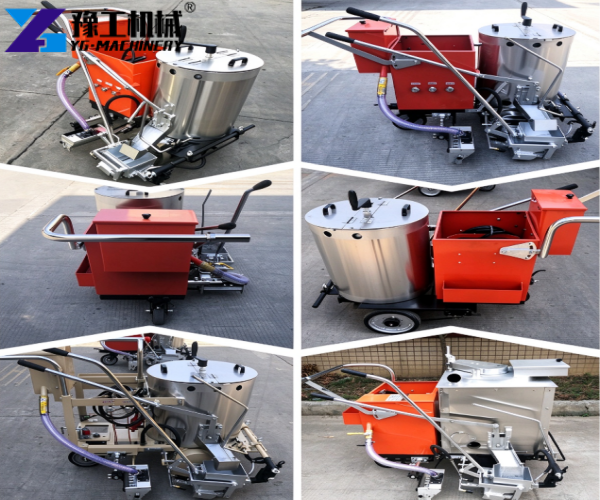
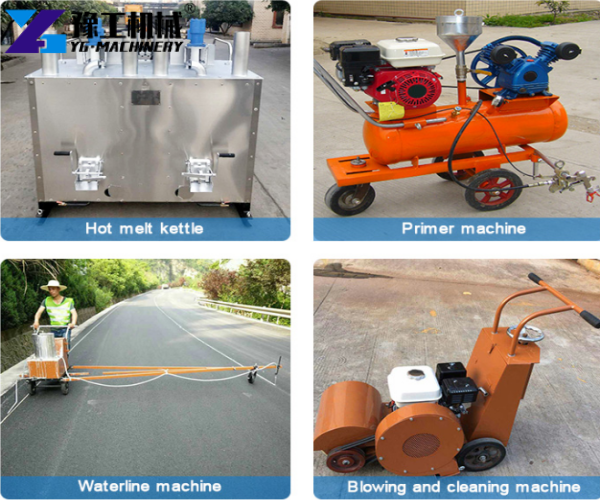
The marking layout, daily workload, and machine configuration all affect equipment selection. The specifications of each YG model provide useful reference points.
Marking width: The YG-180 lists a width range of 50–450 mm. This range accommodates projects with different line dimensions. The available width options for other models require confirmation.
Travel speed: The YG360S offers an adjustable travel speed of 1–8 km/h. This feature allows operators to regulate machine movement during different marking tasks.
Operating method: The YG-360 uses a hand-push design. Its manual movement gives operators direct control over direction and positioning.
Heating configuration: The YG-380 and YG-360 list 30 kg liquefied gas tanks and heating temperatures of 180–210°C. The paint manufacturer’s instructions determine the required working temperature.
Daily workload: The YG-180 lists a daily workload of 150–200 m². Actual output varies with line width, site layout, material supply, and working conditions.
Machine weight and dimensions also affect transport and site preparation. The YG-380 weighs 100 kg, while the YG-180 and YG360S each weigh 150 kg. Before purchase, it is useful to obtain the complete specification sheet, including power requirements, available accessories, and operating instructions.
FAQ
What causes thermoplastic road markings to peel from the surface?
Poor surface preparation, moisture, unsuitable application temperatures, and incompatible materials can weaken adhesion. A clean, dry surface and correct application temperature reduce the risk of peeling.
Can thermoplastic paint cover existing road markings?
Thermoplastic paint can cover some existing markings, but the condition of the old lines matters. Loose paint, dirt, and damaged material can affect adhesion and surface quality. The maintenance plan should account for the existing marking layer and relevant road requirements.
Why do thermoplastic road markings develop uneven edges?
Uneven edges may result from inconsistent movement, irregular paint flow, incorrect material temperature, or a dirty marking shoe. Stable machine movement and clean application components help produce more uniform lines.
What information matters when ordering a thermoplastic marking machine?
The main details include marking width, heating method, power configuration, accessories, and operating requirements. A complete model specification sheet can clarify missing data and confirm whether the machine meets the project’s technical requirements.
Road Construction Equipment and Related Machinery From YG Machinery
YG Machinery supplies road marking equipment for road construction, traffic marking, and maintenance projects. Our range also includes road roller machines and mini road roller machines for compacting road surfaces and preparing work areas.
For other construction tasks, we offer a fog cannon machine for sale for dust suppression, an sandblasting machine for surface treatment, and a road shot blasting machine for road surface preparation.
Contact YG Machinery for model specifications, pricing, and warranty details for our Thermoplastic Road Marking Machine range. We also provide technical support for our equipment. Our team can discuss your project requirements and help you identify a suitable machine configuration.