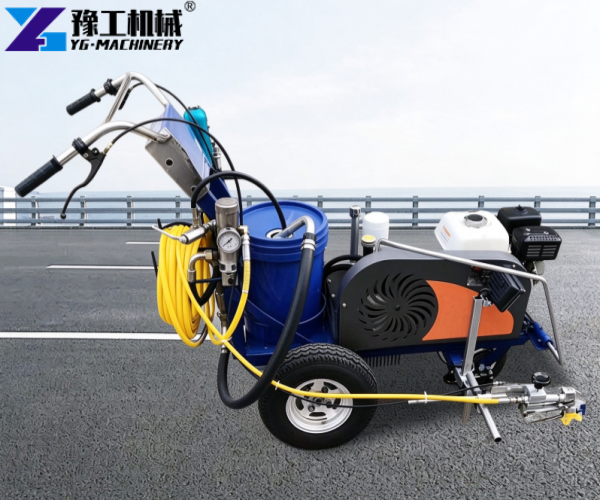
A cold paint road marking machine applies liquid road paint to asphalt and concrete. Road maintenance crews use it for parking bays, traffic lanes, access roads, and industrial yards. Unlike thermoplastic equipment, a cold paint striper sprays liquid coating without heating solid marking material.
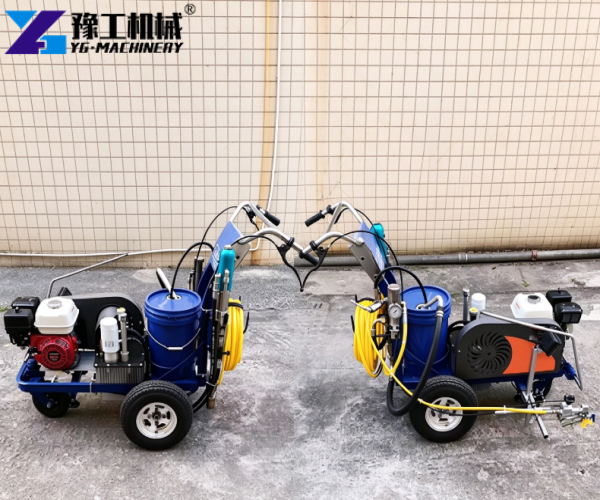
YG-8S and YG-8D serve different marking workloads. The single-gun YG-8S handles standard lines, while the double-gun YG-8D supports wider markings and higher paint flow.
Cold Paint Road Marking Machine Specifications
| Model | YG-8S | YG-8D |
| Motor power | 5.5hp Honda gasoline engine | 5.5hp Honda gasoline engine |
| Plunger pump | Electronic reversing | Automatic Reciprocating Commutation |
| Number of spray guns | Single gun | Double gun |
| Work mode | Hydraulic | Hydraulic |
| Pressure | 8–12 Mpa | 8–12 Mpa |
| Unloading flow | 4.8 L/min | 8 L/min |
| Spray width | 100–300 mm | 100–450 mm |
| Spray thickness | 0.2–0.4 mm | 0.2–0.4 mm |
| Size | 1600×800×1200 mm | 1600×800×1200 mm |
| Weight | 120 kg | 120 kg |
How Cold Paint Line Marking Works
The pump transfers liquid coating through a hose to the spray gun. As the operator guides the machine along the planned route, the gun applies paint to the pavement.
Paint preparation: Mix the coating according to its technical instructions and confirm compatibility with the spray system.
Pressure setup: Adjust the operating pressure to the paint and required spray pattern.
Trial marking: Apply a short line to assess width, coverage, and edge definition.
Line application: Maintain a steady path and movement speed across the marking area.
System cleaning: Flush the pump, hose, and gun according to the paint supplier’s instructions after work.
A pavement marking sprayer relies on compatible paint, nozzle size, pressure, and application speed. These factors affect line appearance, so the crew should establish the spray pattern before proceeding across a large area.
Applications of Cold Paint Striping Equipment
Cold paint striping serves road maintenance, parking management, and industrial pavement marking. Typical uses include:
- Parking bays: Mark spaces, directional arrows, and drive lanes.
- Public roads: Apply lane dividers, edge lines, and traffic guidance markings.
- Industrial yards: Mark vehicle routes, loading zones, and restricted areas.
- Warehouse access roads: Apply guidance lines on suitable paved surfaces.
- Commercial properties: Renew worn markings on internal roads and paved access lanes.
Line dimensions and site layout determine the spray setup. A double-gun configuration can cover wider markings, while a single gun handles standard lines. Pavement condition and coating specifications also influence the finished result.
Choosing Between YG-8S and YG-8D
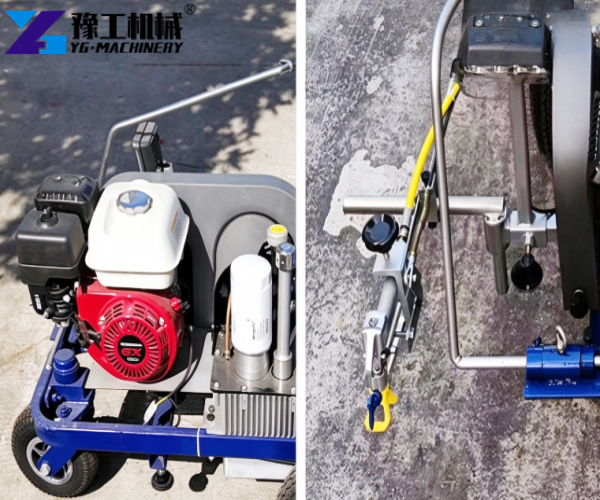
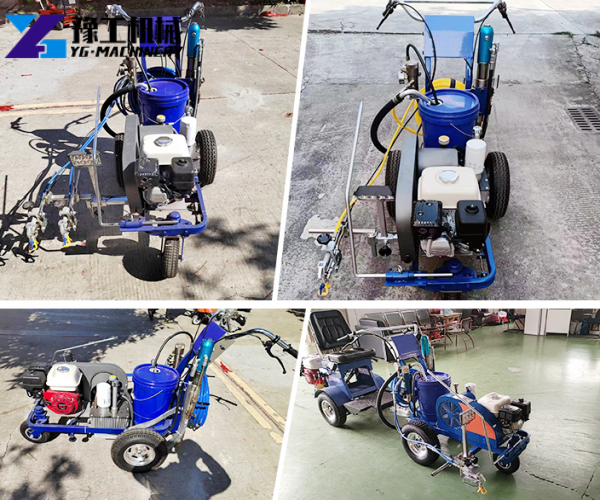
YG-8S fits routine line marking across parking bays, access roads, and smaller work areas. Its single-gun setup keeps operation straightforward when crews mark one line at a time.
YG-8D suits projects with wider markings or more demanding daily workloads. Its dual-gun arrangement allows crews to apply two lines in one pass when the marking layout and setup permit.
The choice comes down to the planned marking pattern, work volume, and site layout. Frequent line changes, tight corners, and small marking zones may favor a simpler setup. Larger, open pavement areas may benefit from the dual-gun configuration.
Pavement Preparation and Coating Conditions
Surface preparation and coating conditions affect adhesion and line quality. Before marking, crews need to:
- Remove dust, loose particles, oil, and other contaminants from the pavement.
- Confirm that surface temperature and moisture fall within the paint manufacturer’s application limits.
- Match the coating to the pump, hose, and spray gun.
- Inspect hoses, fittings, and pressure controls for leaks or damage.
- Set out the marking route and establish the required line width.
- Keep vehicles and pedestrians clear of active work areas.
Cold paint does not require thermoplastic heating, but the coating still needs suitable surface conditions and drying time. Rain, excess moisture, or unsuitable pavement temperatures can interfere with adhesion and curing.
Cold Paint Marking Project in Kazan, Russia
Road maintenance crews in Kazan mark parking areas, access roads, and industrial yards that experience seasonal weather changes. Projects spanning multiple paved sites require equipment for different line widths and careful planning around local conditions.
YG-8S handles standard markings with one spray gun. YG-8D provides two guns and higher paint flow for wider lines. Crews can assign each configuration according to site layout and marking workload.
Local Weather and Pavement Challenges
Russia’s varied climate creates demanding conditions for pavement marking. In Kazan, seasonal temperature changes, rain, and high pavement moisture can affect coating application and adhesion.
The cold paint marking system supports work across Russia’s different climate zones, but coating performance depends on application conditions. Pavement temperature and moisture require close control, and crews should avoid spraying during rain or high-moisture conditions. In cold weather, an unsuitable surface temperature can weaken adhesion and delay curing. The paint manufacturer’s temperature limits should guide work scheduling.
Site Work Sequence
Pavement assessment: Review surface condition, temperature, and moisture before coating.
Marking-zone preparation: Clean parking bays, access lanes, and industrial yard sections.
Spray adjustment: Set nozzle, pressure, and line width for the coating and marking plan.
Trial section: Review line edges and coverage before proceeding.
Area marking: Continue while pavement and weather remain within the coating’s application limits.
Customer Feedback
“Clear line edges and steady paint delivery matter when our crews mark parking areas and industrial sites. We review pavement conditions and assess the spray pattern before starting a full section. This gives us a chance to adjust the setup to the site and coating.”
YG Road Marking Equipment
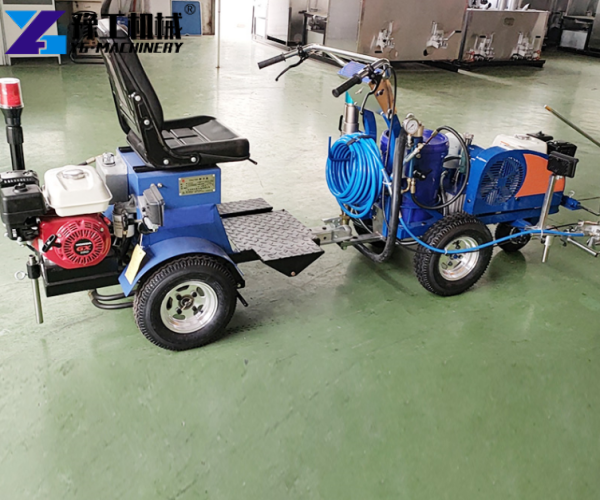
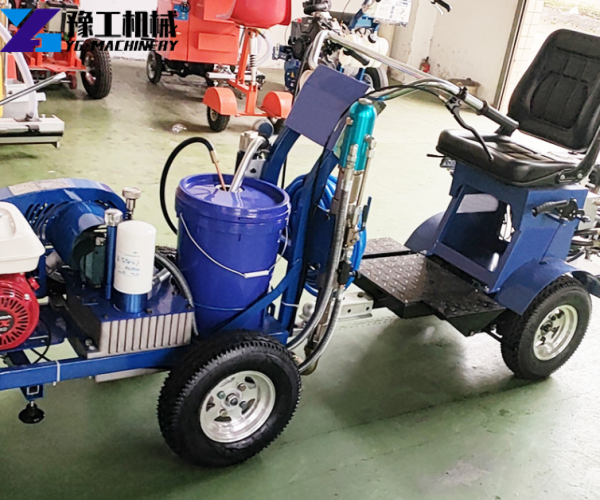
As a road marking equipment manufacturer, YG Machinery supplies cold paint and thermoplastic road marking machines, as well as thermoplastic marking equipment for pavement work and other road construction machinery.
YG Machinery also provides technical documentation, equipment inspection, and export support. Its product range includes road marking machines, industrial floor sweepers, road snowplows, and slipform curb machines for road infrastructure development and pavement marking operations.
FAQ
What paint does this equipment use?
It uses liquid road marking paint compatible with the pump, hose, and spray gun. Paint viscosity and application instructions determine whether a coating works with the machine.
What is the difference between YG-8S and YG-8D?
YG-8S has one spray gun, a paint flow of 4.8 L/min, and a spray width of 100–300 mm. YG-8D has two guns, an 8 L/min flow rate, and a maximum spray width of 450 mm.
Can it mark parking lots?
Yes. The equipment applies parking bay lines, drive-lane markings, and pavement guidance lines when the coating and surface meet application requirements.
What conditions affect marking quality?
Pavement cleanliness, temperature, moisture, paint compatibility, pressure, and nozzle setup all affect the result. A trial line helps crews assess coverage and edge definition before marking a larger area.