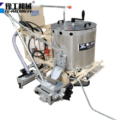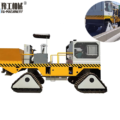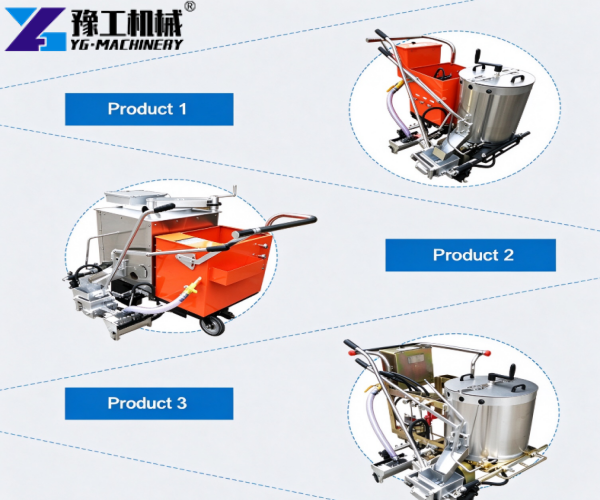
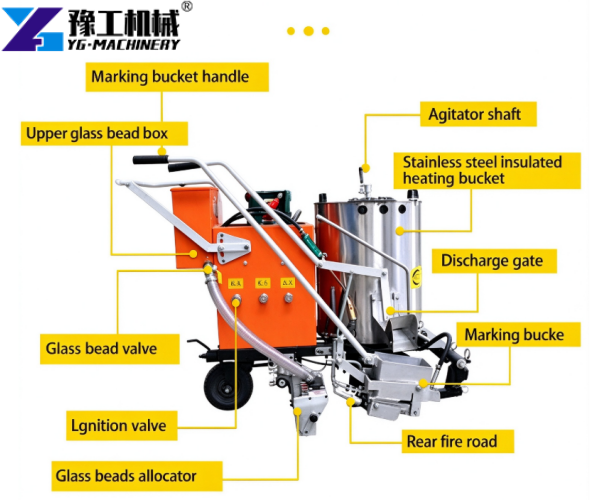
Thermoplastic road markings create durable lines for traffic guidance, parking management, and road safety. A thermoplastic paint machine heats and applies hot-melt marking material to create lane dividers, stop lines, arrows, and parking bay lines. For road maintenance teams and marking contractors, machine design affects how paint spreads, glass beads reach the surface, and crews handle straight or curved sections.
Thermoplastic Paint Machine Parameters
| Model | YG-CK360S | YG-CK380S |
| Thermoplastic Tank | Synchronous clutch spreading, speed-adjustable gear shifting device, 50-200mm | Synchronous clutch spreading, speed-adjustable gear-shifting device, 50-200 mm |
| Glass Bead Container | 10kg/box | 10kg/box |
| Glass Bead Spreader | Adjustable | Adjustable |
| Directional Device | Straight and curved road control | Straight and curved road control |
| Brake System | Drum brake with adjustable tension | Drum brake with adjustable tension |
| Marking Width | 100-450mm optional | 100-450mm optional |
| Battery Capacity | 15AH | 15AH |
| Battery Voltage | 48V Lithium Battery | 48V Lithium Battery |
| Driving Speed | 1-8km/h | 1-8km/h |
| Working Duration | Up to 24-hour marking operation after charging | Long-duration marking capability |
| Dimensions | 1210×970×1070mm | 1200×970×1100mm |
| Net Weight | 130kg | 100kg |
What Operating Modes Of Thermoplastic Paint Machine Can We Provide?
Road marking equipment uses different drive systems and paint application methods. The main types serve different coating and construction requirements.
Hand-push thermoplastic marking machine: Operators guide the machine along the planned marking route. Common applications include parking bays and local roads.
Electric thermoplastic striping machine: Electric drive reduces manual pushing effort during machine movement.
Electric vibrating striping machine: A vibrating mechanism creates specialized marking patterns for projects that require textured lines.
Thermoplastic kettle marking machine: A heating kettle melts solid thermoplastic material and supplies molten paint for application.
cold paint marking machine: This equipment applies liquid road marking paint without the melting process used for thermoplastic materials.
What Materials Can Thermoplastic Paint Machine Use?
A thermoplastic paint machine applies hot-melt road marking compounds made from resin, pigments, mineral fillers, and functional additives. Different formulations serve different marking requirements.
White thermoplastic paint: Used for lane dividers, parking space lines, and road boundaries.
Yellow thermoplastic paint: Used for designated restrictions and traffic markings under local regulations.
Reflective thermoplastic material: Works with glass beads to improve nighttime visibility.
Colored thermoplastic material: Used for designated lanes and pedestrian areas where local standards permit colored markings.
Material formulation determines melting temperature, flow, adhesion, and surface characteristics. A cold paint marking machine uses compatible liquid coatings instead and does not require a thermoplastic melting process.
Practical Features Of Thermoplastic Marking Equipment
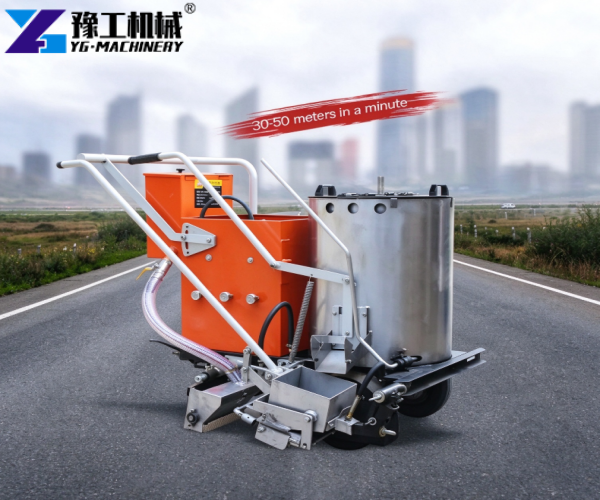
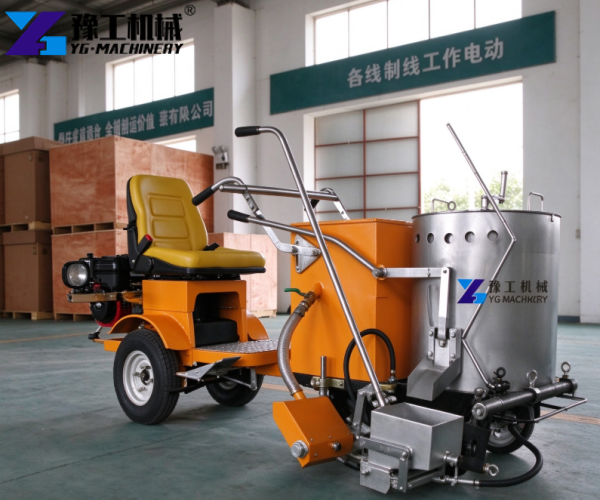
Material flow control: The synchronous clutch and adjustable gear system regulate material delivery during application.
Directional control: The guide system supports straight and curved marking routes.
Glass bead spreading: The adjustable spreader controls bead application for reflective markings.
Battery-powered movement: The lithium battery powers machine movement without a continuous external power connection.
Mechanical braking: The adjustable-tension drum brake supports speed control during operation.
Applications Of Road Marking Machine
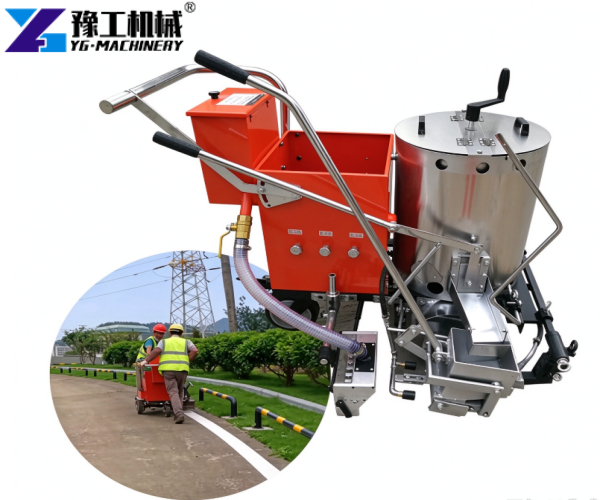
A road marking machine applies traffic lines and symbols to paved surfaces. Thermoplastic and cold paint equipment serve different coating processes.
Parking lots: Parking bay lines, directional arrows, and drive lanes.
Urban roads: Lane dividers and road edge markings.
Industrial parks: Internal traffic routes and loading area markings.
Commercial facilities: Parking areas and vehicle guidance lines.
Road maintenance: Renewal of worn markings and application of new traffic lines.
Thermoplastic equipment suits projects that specify hot-applied coatings. A cold paint marking machine serves projects that use compatible liquid paint.
How To Select A Thermoplastic Paint Machine For Sale
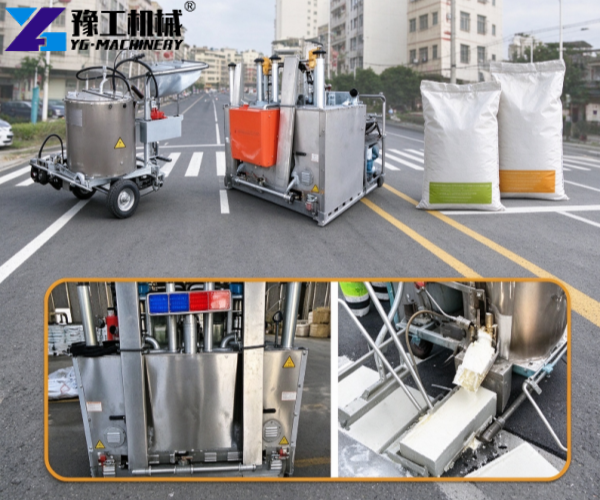
Purchasing decisions should start with the marking material and the required production output. These details determine the heating setup, application method, and machine configuration.
Paint type: Choose thermoplastic equipment for hot-melt compounds. Select a cold paint marking machine for compatible liquid coatings.
Daily marking area: Estimate the area, line width, and available working hours. These figures help establish the required production rate.
Marking specifications: Confirm line width, thickness, color, and reflective requirements before ordering.
Heating and material supply: Determine whether the project needs a separate thermoplastic kettle. Check its capacity and material delivery compatibility.
Site layout: Consider curves, turning space, transport access, and the distance between marking sections.
Spare parts and technical support: Request the equipment manual, maintenance information, parts list, and delivery terms.
For a thermoplastic paint machine for sale, the quotation should identify the selected model, included accessories, heating equipment if required, and shipping arrangements. This information gives buyers a clear basis for checking the complete order rather than comparing machine prices alone.
Contact YG Machinery For Road Marking Equipment
Looking for a thermoplastic paint machine for your road marking project? Contact YG Machinery for model specifications, available configurations, and technical documents. Need a quotation? Share your coating type, marking dimensions, daily workload, and thermoplastic kettle requirements.
FAQ
How much area can this machine cover in a day?
A typical reference range is 500–1,500 m² per day. Actual output changes with line width, road conditions, operator experience, and preparation time. Complex layouts and frequent stops reduce daily coverage.
What types of thermoplastic road marking machines are available?
Common options include hand-push machines, electric thermoplastic striping machines, electric vibrating machines, and thermoplastic kettle marking machines. A cold paint marking machine handles liquid road marking paint through a different application process.
What is the benefit of pairing a marking machine with a thermoplastic kettle?
A compatible kettle melts thermoplastic material before application and supplies molten paint to the marking machine. This setup reduces repeated material preparation during longer marking runs.
How can operators adjust marking thickness?
Standard thermoplastic road markings typically measure 1.5–1.8 mm thick, although project specifications vary. On equipment with an adjustable marking-head hanger, raising the head produces a thinner layer, while lowering it produces a thicker layer. Check the machine manual and measure the finished line against the specified thickness.