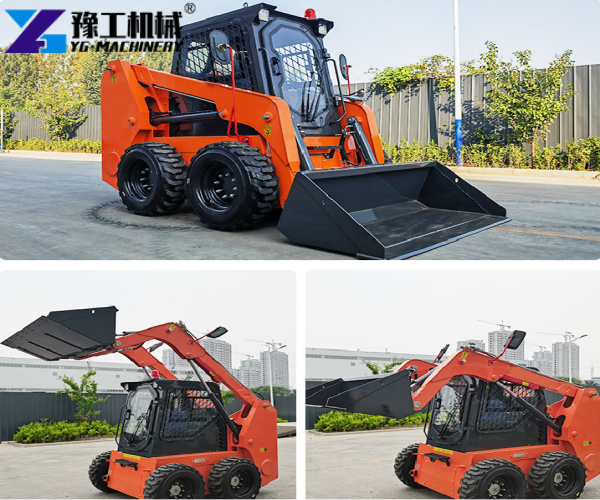
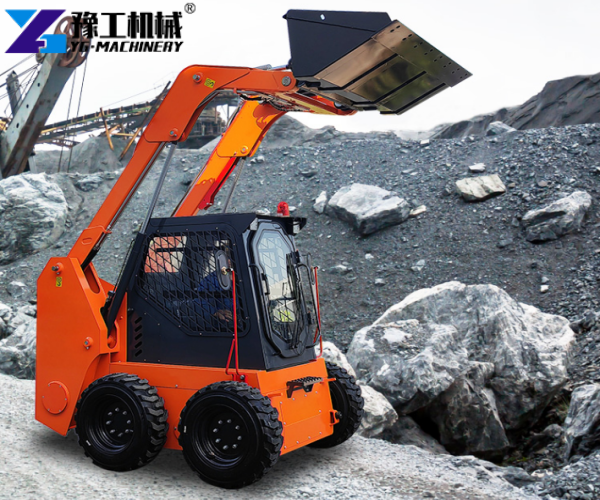
Small skid loaders use independent left- and right-side drive systems to maneuver in confined work areas. Hydraulic arms lift and lower a front bucket or compatible attachment for loading, carrying, and moving materials. Compact design makes these loaders useful on sites where larger equipment has limited access.
Small Skid Loader Parameters
| Model / Parameter Item | YG280 (Metric / US) | YG380 (Metric / US) | YG380C (Metric / US) |
| Undercarriage Type | Rubber Track | Chevron Engineering Tire | Chevron Engineering Tire |
| Max Working Height (H3) | 2065 mm / 81.3 in | 2143 mm / 84.37 in | 2143 mm / 84.37 in |
| Max Pin Height (H2) | 1803 mm / 71.0 in | 1884 mm / 74.17 in | 1884 mm / 74.17 in |
| Max Dumping Height (H1) | 1386 mm / 54.6 in | 1488 mm / 58.58 in | 1488 mm / 58.58 in |
| Max Dumping Distance (E) | 471 mm / 18.5 in | 348 mm / 13.7 in | 348 mm / 13.7 in |
| Max Dumping Angle (a3) | 32° | 30° | 30° |
| Ground Rollback Angle (a2) | 33° | 25° | 25° |
| Departure Angle (a1) | 18° | 11° | 16° |
| Total Machine Height (H) | 1309 mm / 51.5 in | 1233 mm / 48.54 in | 1265 mm / 50.0 in |
| Ground Clearance (F) | 123 mm / 4.8 in | 118 mm / 4.65 in | 118 mm / 4.65 in |
| Wheelbase (L1) | 690 mm / 27.2 in | 636 mm / 25.0 in | 636 mm / 25.0 in |
| Length w/o Bucket (L3) | 1778 mm / 70.0 in | 1752 mm / 69.0 in | 1980 mm / 78.0 in |
| Total Width (W) | 800 mm / 31.5 in | 1160 mm / 45.67 in | 1160 mm / 45.67 in |
| Bucket Width (B) | 920 mm / 32.3 in | 980 mm / 38.6 in | 980 mm / 38.6 in |
| Total Length w/ Bucket (L) | 2210 mm / 87.0 in | 2206 mm / 86.9 in | 2430 mm / 95.7 in |
| Forward Turning Radius (R) | 1237 mm / 48.7 in | 1307 mm / 51.5 in | 1307 mm / 51.5 in |
How Small Skid Steer Loaders Work
A small skid steer loader moves by controlling drive speed on each side of the chassis. The operator can drive both sides forward, reverse both sides, or vary their speeds to change direction.
Hydraulic power operates the lift arms and attachment. During loading, the bucket collects material and the arms raise it. The operator then moves to the unloading point and tips the bucket.
A typical loading cycle follows these steps:
- Approach the material and position the bucket.
- Lower the bucket and collect the load.
- Raise the arms and move toward the unloading point.
- Tilt the bucket to release the material.
- Return to the loading area.
Tracked and Wheeled Small Skid Steer Loaders
YG280 uses rubber tracks, while YG380 and YG380C use tires. Choose the undercarriage according to ground conditions and travel needs.
Tracked skid steer loader: Rubber tracks distribute machine weight across a wider contact area. They suit soft soil, muddy ground, and landscaping sites where traction is important.
Wheeled skid steer loader: Tires work well on firm surfaces such as concrete, asphalt, and compacted soil. They also suit jobs that require frequent movement between nearby work areas.
Consider the site surface, travel distance, turning space, and attachment requirements before selecting a configuration.
Main Features of Small Skid Steer Loaders
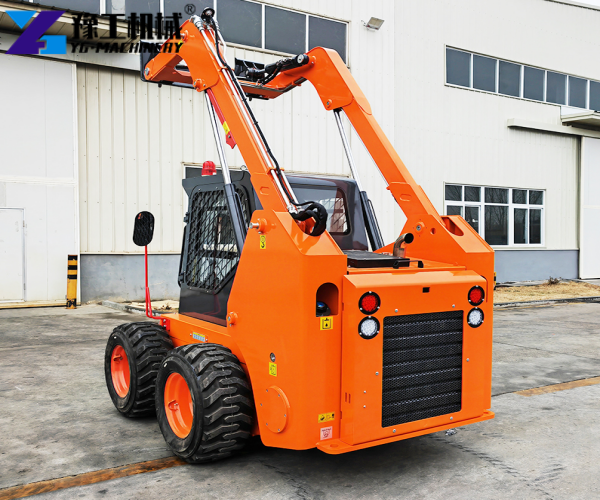
Compact Steering System
Separate left- and right-side drive control allows the loader to turn within a confined area. This supports work around buildings, stored materials, garden beds, and other obstacles.
Hydraulic Lift Arms
Hydraulic arms raise and lower the front attachment. A bucket handles loose materials, while compatible tools support other tasks. Check attachment mounting and hydraulic requirements before switching equipment.
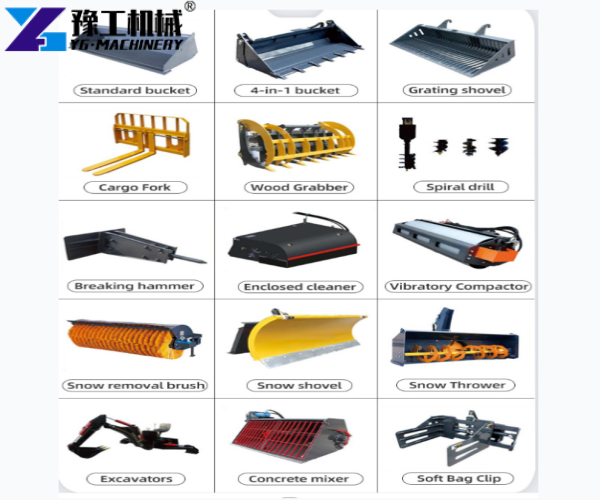
Compatible Attachments
A compact skid steer loader can handle different jobs with compatible attachments. Common options include:
- Bucket for soil, sand, gravel, and debris
- Fork attachment for pallets and bundled materials
- Grapple for branches, scrap, and irregular loads
- Auger for drilling holes
- Other tools matched to specific site tasks
Attachment availability depends on the mounting system and hydraulic setup.
Small Skid Loader Applications
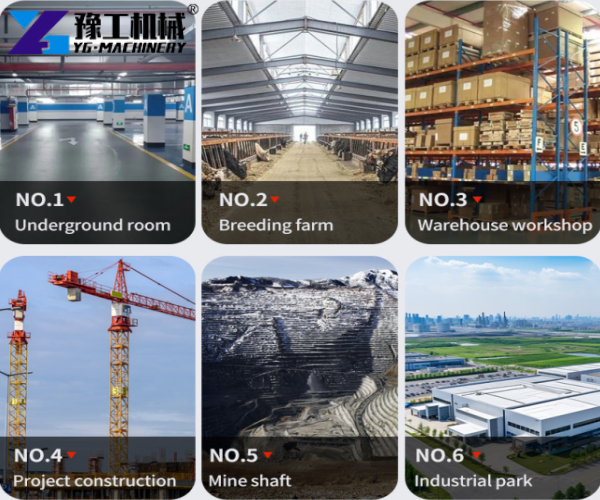
Small skid loaders serve construction, landscaping, farming, and material-handling work. Compact equipment can move materials around restricted work areas, while attachment choice determines the tasks it performs.
Construction: Move aggregate, clear site debris, and transport materials around buildings and renovation areas.
Landscaping: Handle soil, mulch, stones, and green waste across gardens and outdoor projects.
Farming: Move feed, bedding, manure, and supplies around barns and farmyards.
Material handling: Carry pallets and bundled goods with a compatible fork attachment.
Municipal maintenance: Move materials during grounds care and small repair jobs.
Select equipment according to the material, surface conditions, access limits, and daily work cycle.
Small Skid Loaders from YG Machinery
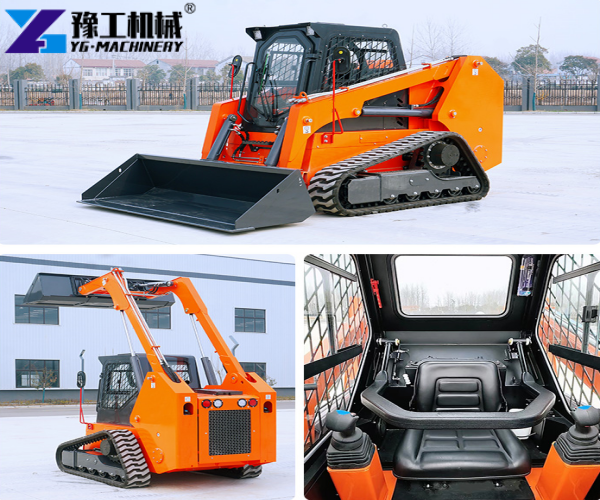
For contractors working in tight spaces, equipment access and attachment compatibility can affect job planning. YG Machinery can discuss available configurations, attachment options, and export arrangements for your order.
Need pricing for a small skid loader? Send your intended model, work application, preferred track or tire configuration, attachment needs, and destination port. Our team can prepare a quotation with relevant technical information and an estimated shipping schedule.
Contact YG Machinery on WhatsApp or submit an inquiry through the website to request a quote.
FAQ
Are Small Skid Loaders suitable for beginners?
Beginners can learn to operate a loader through proper instruction and supervised practice. Training should cover the controls, attachment operation, load limits, and site safety. Learning time varies with the operator and working conditions.
How do I choose between tracked and wheeled models?
Tracked models suit soft or uneven ground where traction matters. Wheeled models suit firm surfaces and frequent movement between nearby work areas. Consider site conditions, travel needs, and maintenance requirements.
What daily maintenance does a small skid steer loader need?
Before operation, inspect for leaks, visible damage, loose parts, and abnormal wear. Check fluid levels and inspect tracks or tires according to the operator’s manual. Follow the manufacturer’s service schedule for oil, filters, and other maintenance items.
How does a skid steer loader turn?
The loader changes direction by varying drive speed on its left and right sides. Separate control of each side lets it adjust its heading in tight spaces and move between loading and unloading points.