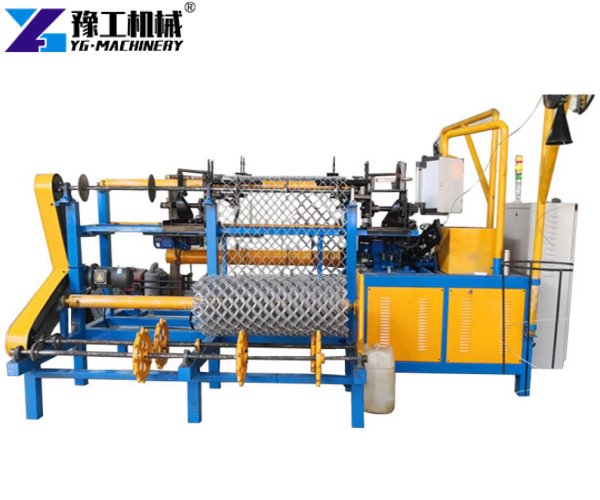
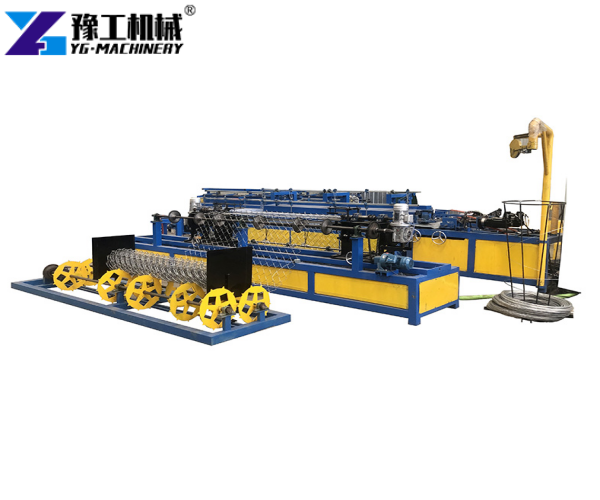
A diamond mesh making machine turns metal wire into diamond-pattern mesh for fences around homes, farms, sports courts, industrial sites, and construction areas. Different orders call for different mesh openings, wire gauges, and finished widths. Some plants focus on fine mesh for enclosed areas, while others produce wider-aperture fencing in larger volumes. These production patterns influence the choice of machine model and configuration.
Diamond Mesh Making Machine Specifications
| Model | YG-20-100 | YG-25-80 |
| Wire diameter | 1.6–4mm | 2–4mm |
| Mesh size | 20–100mm | 25–100mm |
| Mesh width | 0.5–4m | 0.5–4m |
| Speed | 70–80m²/h | 120–180m²/h |
| Mesh length | 30m, adjustable freely as per your request | — |
| Mesh side | Knuckled and twisted, or knuckle, or twisted | — |
| Raw material | Galvanized wire, PVC-coated wire, etc. | — |
| Machine size | 4.2*2.2*1.7m | 6.7*1.43*1.8m |
| Weight | 2000kg | 4200kg |
| Custom design | We can design the machine according to your wire diameter, mesh hole size, mesh width, and voltage. | — |
Selecting a Model for Regular Orders
For production centered on 20–25 mm mesh openings, the YG-20-100 is the stronger option because its listed range starts at 20 mm. It also supports wire diameters from 1.6 mm, which suits finer mesh products.
For orders using 50–100 mm openings and 2–4 mm wire, the YG-25-80 has the higher rated production speed. Its listed range is 120–180 m²/h, compared with 70–80 m²/h for the YG-20-100. Plants producing larger-opening mesh in substantial volumes may gain more from this speed advantage. Actual output varies with the selected product and operating conditions.
Both models list mesh widths from 0.5 to 4 m. A wider product also takes up more floor space during feeding, handling, and roll storage. Factory layout and finished-roll transport deserve attention before installation.
How Mesh Size and Wire Gauge Affect Production
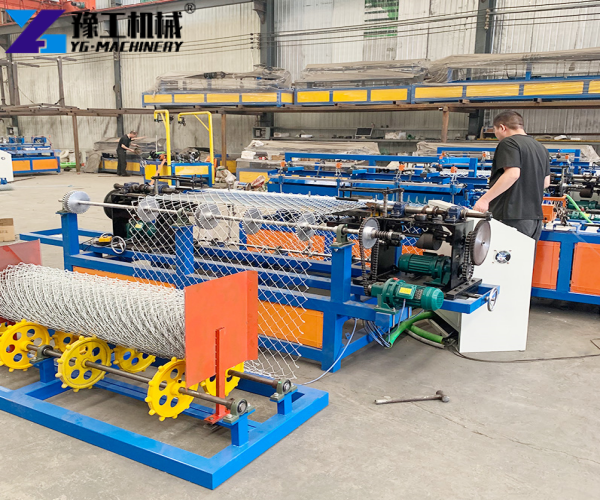
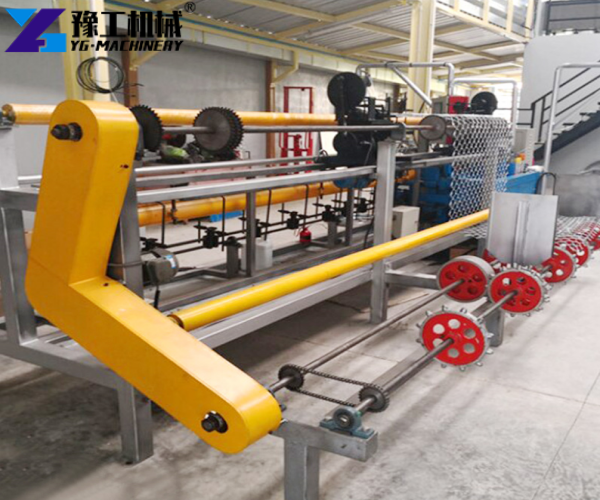
Mesh opening changes the density of the diamond pattern. Smaller openings create a tighter structure, while larger openings leave more open space between wires. Wire diameter affects finished mesh weight, rigidity, and steel consumption.
A 20–25 mm opening suits fencing that requires a finer pattern. Mesh with larger openings often appears around property boundaries, farms, sports facilities, and industrial sites. Fence height, support-post spacing, and site requirements also influence the finished design.
Thicker wire generally increases material use and roll weight. For example, a producer making both fine residential mesh and heavier industrial fencing must account for differences in wire gauge, opening size, and finished-roll handling. A machine’s rated speed alone does not show how quickly every product will run.
Galvanized Wire and PVC-Coated Wire
Galvanized wire has a zinc coating that protects steel from corrosion. PVC-coated wire adds a polymer layer and offers different color options for fencing.
For PVC-Coated chain link fence production, use the finished outside diameter when specifying wire for the machine. PVC increases the wire’s overall diameter, so the steel core measurement does not represent the full size of the coated wire. Coating thickness also affects the finished diameter and should appear in the wire specification.
Galvanized wire suits many standard fencing products. PVC-coated wire offers a colored finish for projects with specific appearance requirements. Both material types require consistent wire dimensions throughout a production run.
How a Chain Link Making Machine Forms Mesh
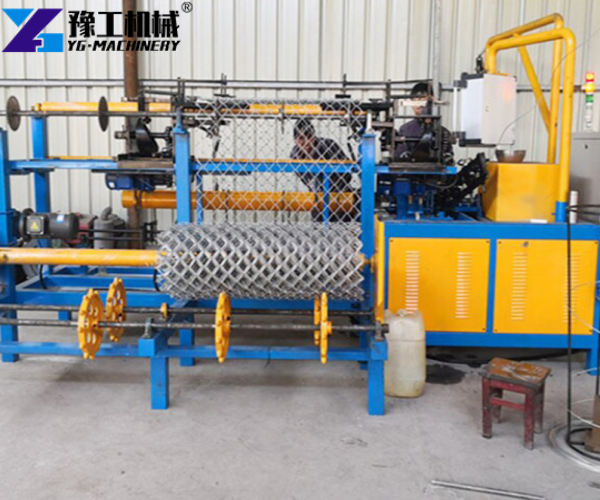
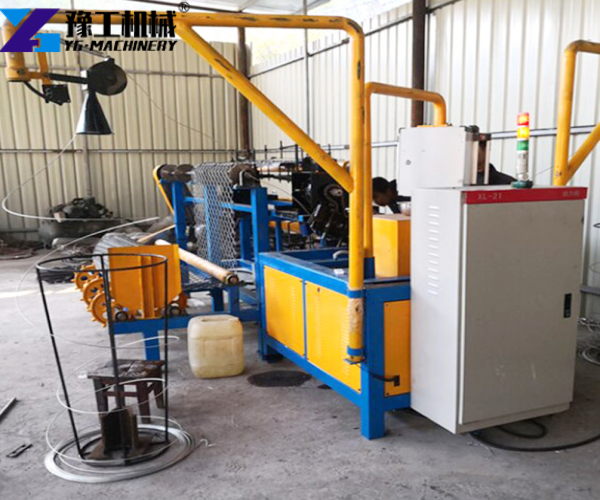
A chain link making machine shapes wire into spiral sections and interlocks them to create a continuous diamond pattern. The forming mechanism creates each section, and successive spirals join to build the mesh.
Wire feeding and forming work together throughout production. Inconsistent feeding or forming settings can affect opening uniformity, so setup matters when switching between wire sizes or mesh specifications. Cutting and winding arrangements follow the machine configuration and the factory’s handling process.
Unlike welded wire mesh equipment, a chain link machine does not join crossing wires at welded intersections. It creates the mesh by interlocking shaped wire, producing a flexible diamond-pattern structure.
Where Diamond Mesh Fence Is Used
- Residential properties: Separates gardens, yards, and shared property lines.
- Sports courts: Encloses tennis courts, outdoor training areas, and recreational spaces.
- Farms: Marks land boundaries and separates agricultural areas.
- Industrial sites: Defines storage zones, workshops, and restricted outdoor areas.
- Construction sites: Creates temporary or permanent boundaries around work areas.
Each application has different requirements. Sports fencing often prioritizes uniform openings and visibility. Industrial fencing may use thicker wire and stronger posts. Farm fencing varies with the area being enclosed and the animals or equipment involved.
Machine Configuration from YG Machinery
YG Machinery offers configurations based on wire diameter, mesh opening, mesh width, and operating voltage. These details shape the machine specification and its production range.
For PVC-coated wire, include the steel core diameter, coating thickness, and finished outside diameter. For a mixed product range, list the main mesh openings, wire gauges, widths, and estimated output for each product. This information gives the technical team concrete production details to work with.
FAQ
What factors affect the quality of finished diamond mesh?
Consistent wire feeding, accurate spiral forming, and uniform interlocking all affect mesh quality. Incorrect settings can create uneven openings or irregular mesh edges. Regular inspection during production helps maintain a consistent pattern across each roll.
Can the machine produce both knuckled and twisted mesh edges?
Yes. The YG-20-100 supports knuckled edges, twisted edges, or a combination of both. Edge style affects how installers handle and connect mesh sections, so specify the required finish when ordering.
Is galvanized wire suitable for outdoor fencing?
Galvanized wire suits many outdoor fencing applications because its zinc coating protects the steel from corrosion. PVC-coated wire offers another option when a colored finish is required. Exposure, maintenance needs, and project specifications influence material choice.
What should I consider when producing PVC-coated mesh?
PVC coating increases the wire’s outside diameter. Provide the steel core diameter and coating thickness so the finished wire size is clear. The coating must also remain intact during feeding and forming to preserve the finished surface.