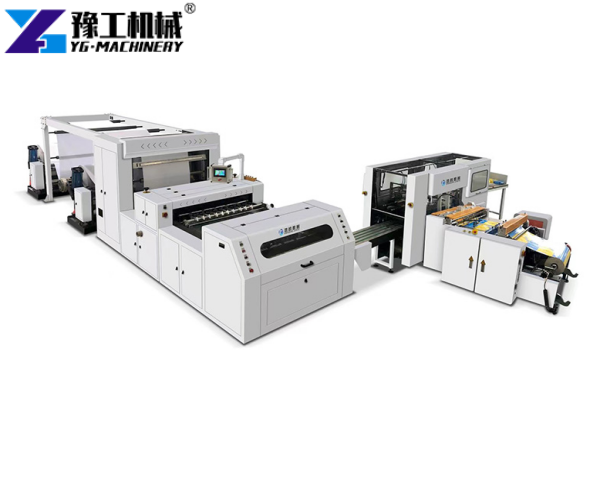
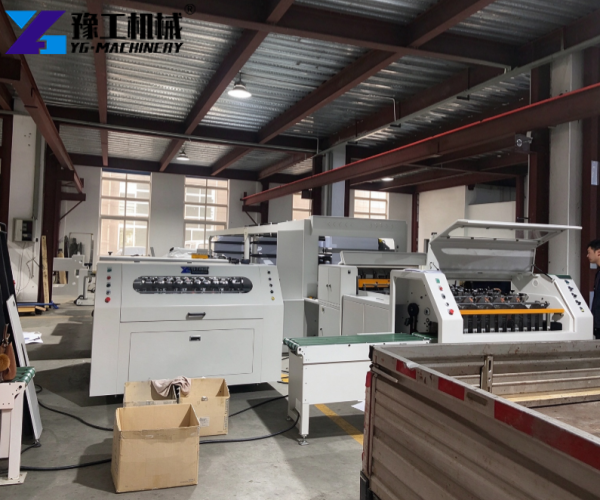
An A4 paper cutting and packing machine converts large paper rolls into A4 copy paper measuring 210 × 297 mm. The production process typically involves unwinding, slitting, cross-cutting, sheet stacking, counting, and ream packaging. Paper converting factories use this equipment to prepare copy paper for office supply brands, wholesalers, retailers, and export orders.
The required setup depends on jumbo roll dimensions, paper grammage, daily output, and packaging specifications. Some factories need only a cutting unit, while others require a complete production line that delivers counted and wrapped reams ready for distribution.
A4 Paper Cutting and Packing Machine Parameters
| Item | Specification |
| Max Working Width | 1100-2000mm |
| Raw Material Diameter | 800mm |
| Rewinding Diameter | 600mm |
| Cutting Precision | ±0.5mm |
| Slitting Speed | 0-350m/min |
| Dimensions | 2400×2300×1600mm |
| Weight | 1300kg |
| Power | 6kW |
From Jumbo Rolls to Packaged A4 Paper
Production starts when a jumbo roll enters the unwinding section. The paper web passes through guiding and tension control before longitudinal slitting divides it into narrower lanes. Cross-cutting then determines sheet length, producing individual A4 sheets.
The finishing process includes three main operations:
- Stacking and counting: Aligns sheets and groups them into the required quantity, such as 500 sheets per ream.
- Ream packaging: Wraps each counted batch in the specified paper or plastic material.
- Carton packing: Prepares wrapped reams for storage, palletizing, and shipment.
An A4 paper slitting machine performs longitudinal cutting, but it does not necessarily produce finished sheets or packaged reams on its own. Factories using an automatic slitting machine need to match its working width and feeding speed with downstream cutting and finishing equipment.
Cutting Accuracy and Paper Waste
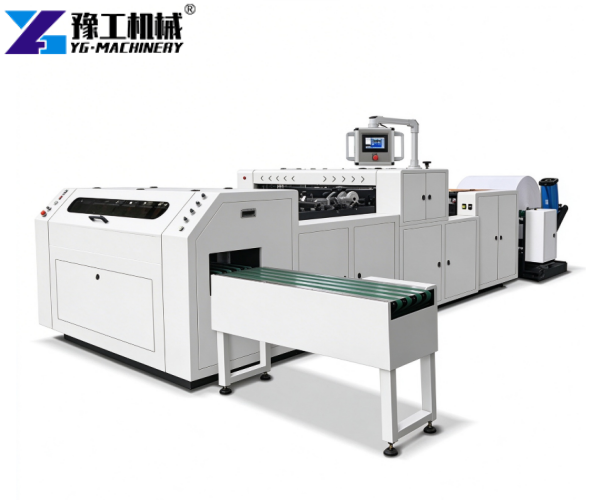
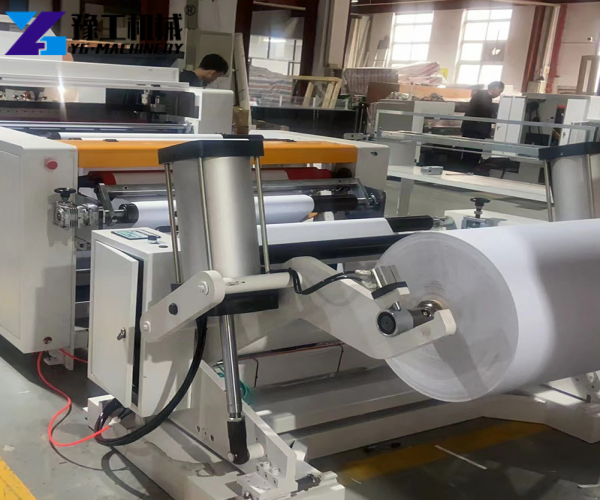
Copy paper needs consistent dimensions and clean edges to feed smoothly through printers and photocopiers. Poor web alignment, unstable tension, worn blades, and irregular raw paper edges can affect finished sheet quality.
During production trials, check the following:
- Sheet dimensions: Measure width and length across samples taken from different positions in the production run.
- Cutting edges: Inspect for uneven cuts, damaged corners, and excessive paper dust.
- Stack alignment: Check whether sheets remain aligned during counting and transfer.
- Paper waste: Record edge trimming, startup waste, and rejected sheets after adjustments.
The listed ±0.5 mm slitting accuracy also needs a clear definition. Slit-width tolerance and finished-sheet dimensional tolerance are different measurements. The acceptance document should identify the measurement method, sampling procedure, and permitted deviation.
Paper waste depends on the usable web width, cutting layout, raw material quality, and setup adjustments. For a 1600 mm roll, seven 210 mm lanes require 1470 mm of web width, leaving 130 mm before accounting for edge trimming and other layout considerations. The actual cutting arrangement determines how much material becomes finished paper and how much becomes trim waste.
Actual Output and Packaging Bottlenecks
The maximum slitting speed reaches 350 m/min, but finished output depends on both cutting capacity and downstream processing.
For a theoretical 1600 mm web, seven 210 mm lanes, a 297 mm cut length, and 500 sheets per ream, calculated output approaches 990 reams per hour before production losses. Actual output will be lower after accounting for trim, stoppages, adjustments, and equipment efficiency.
Packaging speed can impose a more immediate limit. A wrapper rated at 10 reams per minute handles 600 reams per hour at its nominal rate. If cutting and stacking produce reams faster than the wrapper can process them, the line must slow down or use sufficient buffer capacity to manage short interruptions.
When assessing line capacity, focus on three figures:
- Cutting output: Sheets or reams produced per hour.
- Stacking and counting capacity: Reams transferred accurately to packaging per hour.
- Wrapping capacity: Finished reams packaged per minute.
An integrated production test using the intended paper grammage and ream size gives a more realistic output figure than the maximum speed of any single unit.
Where A4 Paper Converting Equipment Is Used
Paper converting equipment serves businesses that turn jumbo rolls into finished copy paper for commercial distribution.
- Paper converting factories process parent rolls into standard office paper.
- Office supply brands produce private-label reams with specific sheet counts and packaging artwork.
- Wholesalers and export suppliers prepare bulk orders for retailers, offices, schools, and overseas customers.
- Existing paper mills add downstream cutting and packaging to expand their finished product range.
Order patterns influence the configuration. Large batches of one paper size favor continuous production, while frequent changes in sheet size or packaging require convenient adjustments and well-planned changeover procedures.
A4 Paper Cutting Machine Price and Equipment Scope
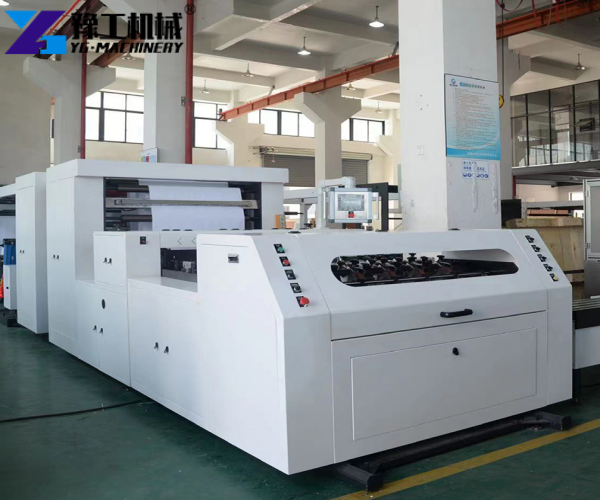
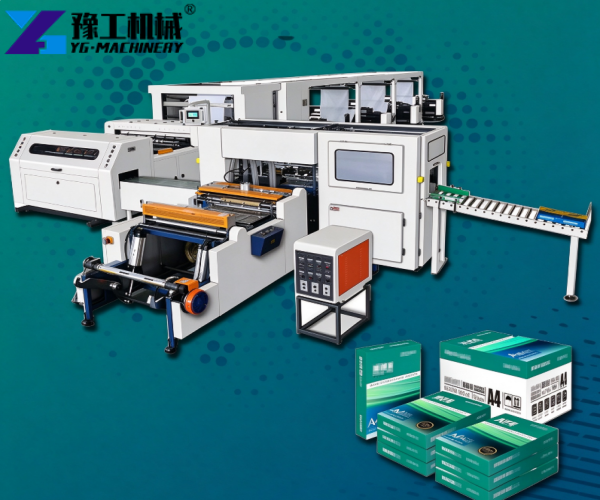
The A4 paper cutting machine price depends on working width, production capacity, automation, and included equipment. A standalone cutting unit and a complete line with stacking, counting, wrapping, and carton packing represent different levels of investment.
Before requesting a quotation, prepare these details:
- Raw paper: Grammage, roll width, roll diameter, and core size.
- Finished paper: Sheet dimensions, sheets per ream, and required cutting tolerance.
- Production target: Expected reams per hour and daily output.
- Packaging: Wrapping material, sealing method, labeling, and carton requirements.
- Supply scope: Main equipment, auxiliary units, accessories, installation support, and training.
An A4 paper packaging machine needs to match the ream dimensions, wrapping material, and required output rate. If carton packing is also required, include it in the equipment list rather than treating it as an unspecified later addition.
A detailed quotation should identify each unit, its rated capacity, and the services included. This makes the total investment and division of responsibilities clear before the order is placed.
Installation and Production Preparation
The factory layout needs sufficient space for jumbo roll loading, operation, maintenance, finished paper collection, and packaging material storage. Connected units also need compatible transfer heights and discharge directions to prevent paper jams between stages.
Before commissioning, arrange:
- Electrical connections that match the equipment specifications.
- Operator training for adjustment, cleaning, and routine maintenance.
- A production test using the intended paper grade and grammage.
- Acceptance criteria for sheet dimensions, paper waste, counting, and packaging.
- Operation manuals, electrical drawings, and maintenance documentation.
Testing the connected line as a complete system can reveal speed mismatches that would not appear when each machine operates independently.
FAQ
What limits the actual output of a production line?
The slowest stage usually sets the line’s output. Cutting speed, stacker capacity, counting accuracy, wrapper speed, and changeover time all affect finished reams per hour.
How long does it take to switch from A4 to A5?
Changeover time depends on cutting adjustments, web guiding, and packaging settings. Request a timed demonstration that includes adjustment, restart, and production of the first accepted batch.
How can paper waste be measured accurately?
Record incoming paper weight, finished output, edge trim, and rejected sheets during a defined production run. Keep startup waste separate from normal operating waste to identify where material losses occur.
What happens if the wrapping unit stops?
A buffer stacker can absorb some short interruptions if its capacity is sufficient. Otherwise, upstream equipment may need to slow down or stop. The control sequence and restart procedure should be checked during commissioning.
Which equipment should be included in the quotation?
Specify whether the offer covers cutting, stacking, counting, ream wrapping, and carton packing. Request separate prices and rated capacities for each unit to clarify the complete supply scope.
Request a Quote for Your A4 Paper Cutting and Packing Machine
YG Machinery supplies industrial machinery for manufacturing and processing applications. For an A4 paper project, the quotation should identify the required cutting configuration, downstream equipment, and production capacity.
Share your jumbo roll dimensions, paper grammage, finished sheet specifications, target output, and packaging format when discussing a project. These details allow the equipment configuration, included components, technical documentation, and service arrangements to be defined before delivery and installation.