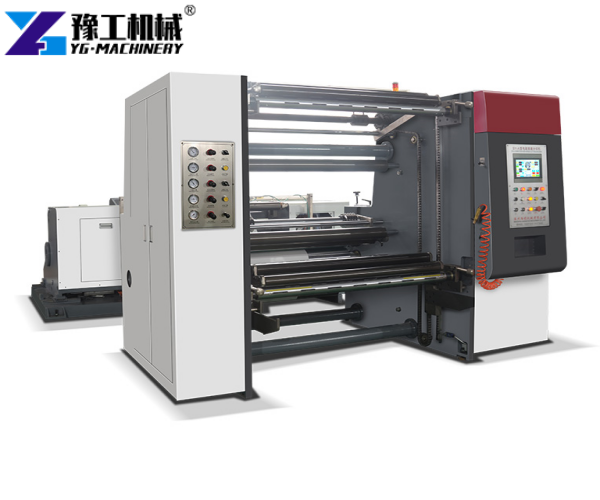
A4 Paper Cutting Machine Price depends on working width, cutting specifications, machine configuration, and production needs. Paper converters use cutting equipment to turn jumbo rolls into A4 sheets measuring 210 × 297 mm. Roll width, paper weight, cutting layout, and stacking capacity all affect equipment selection.
YG-800D, YG-1100D, and YG-1400D offer maximum cutting widths of 800, 1100, and 1400 mm. Each model has a different working width, so factories can select equipment around their paper rolls and order mix.
A4 Paper Cutting Machine Parameters
| Item | YG-800D | YG-1100D | YG-1400D |
| Max Diameter of Material | Φ1400mm | Φ1400mm | Φ1400mm |
| Max Cutting Width | 800mm | 1100mm | 1400mm |
| Min Cutting Width | 50-100mm | 50-100mm | 50-100mm |
| Cutting Length | 20-800mm | 20-800mm | 20-800mm |
| Paper Thickness | 0.05-1.2mm | 0.05-1.2mm | 0.05-1.2mm |
| Precision | ±0.2mm | ±0.2mm | ±0.2mm |
| Speed | 10-150 times/min | 10-150 times/min | 10-150 times/min |
| Power | 4.5kW | 4.5kW | 5.5kW |
| Weight | 2300kg | 2700kg | 3100kg |
| Dimensions (L×W×H) | 5000×1700×1200mm | 5000×1900×1200mm | 5000×2100×1200mm |
A4 Sheet Layout: 1100 mm Roll, 70 gsm Paper
Consider a production order using a 1100 mm-wide roll of 70 gsm paper. A five-lane layout uses 210 mm per lane:
5×210=1050mm
That leaves 50 mm for edge trimming and layout allowance. If trimming takes 20 mm from each side, only 10 mm remains for other allowances. Damaged roll edges could make five-lane cutting difficult.
Four lanes use 840 mm. This layout leaves more room for edge correction and web variation. In real production, a four-lane layout may be easier to run steadily, even with lower output per cut. Operators have more room to manage uneven edges and keep finished sheets aligned.
The trade-off is material use. Five lanes produce more sheets per cycle, but the narrow trim allowance leaves less room for correcting the web. A production trial can show which layout gives better usable output.
Output and Stacking in A4 Copy Paper Cutting
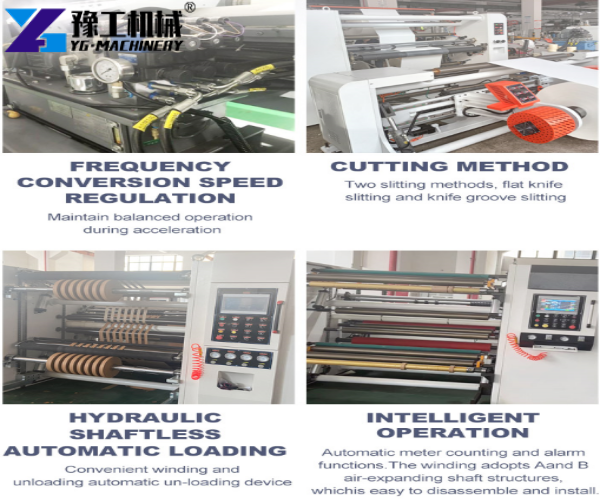
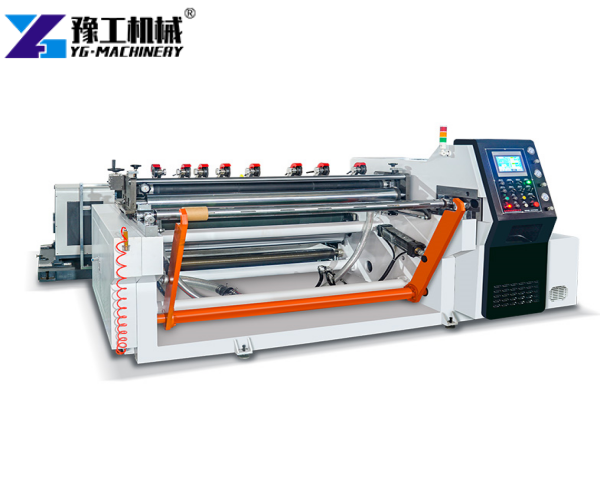
The listed cutting speed ranges from 10 to 150 cuts per minute. Each cutting cycle may produce several sheets across the web.
With five lanes, 150 cuts per minute gives a theoretical output of 750 sheets per minute. A 70 gsm A4 sheet weighs about 4.37 g. At that rate, paper output reaches roughly 196 kg per hour.
This is a theoretical calculation, not a guaranteed production rate. Feeding interruptions, trim loss, sheet alignment, stacking, and packing all affect finished output.
Stacking can become a bottleneck. If sheets arrive faster than workers or downstream equipment can align and remove them, the cutter may need to slow down. A line that runs at a lower speed with neat, stable stacks may deliver more usable product over a full shift than one that frequently stops.
Paper Handling: Tension, Static, and Cut Edges
Paper grammage affects handling. A4 sheets made from 70 gsm stock weigh less than sheets made from 80 gsm paper. Both use the same dimensions, but the heavier stock changes stack weight and handling.
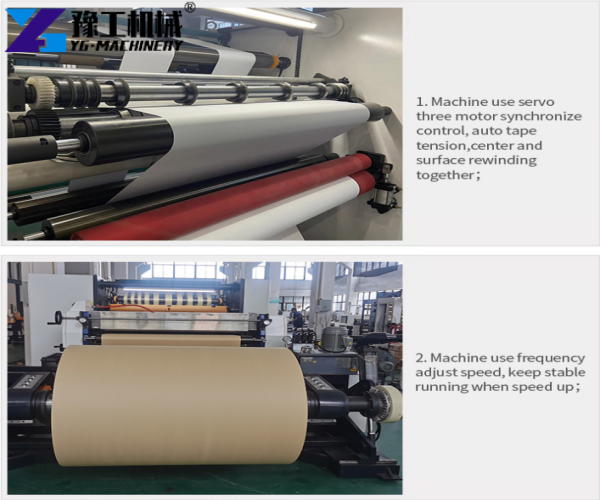
Web tension also matters. Uneven tension can cause paper to track poorly or shift during feeding. At the cutting section, inspect edge quality and sheet dimensions. A clean cut and consistent alignment matter more than a speed figure alone.
Static presents another practical concern, especially in dry conditions. Charged sheets may cling together or shift as they enter a stack. Static control can add cost, but omitting it without checking paper behavior may create stacking problems later. A trial with actual stock can reveal whether static control is necessary.
The supplied specifications do not state a supported grammage range or include static-control features. Factories using coated paper, art paper, or different copy-paper grades need to assess material compatibility during machine selection.
How Working Width Affects A4 Paper Cutting Machine Price
For A4 sheets arranged across the web at 210 mm per lane, theoretical layouts are:
| Usable web width | A4 lanes | Total sheet width |
| 800 mm | 3 | 630 mm |
| 1100 mm | 5 | 1050 mm |
| 1400 mm | 6 | 1260 mm |
Actual layouts need room for trimming and spacing. Paper orientation and edge condition also affect lane count.
YG-800D has a listed power rating of 4.5 kW and weighs 2300 kg. YG-1400D uses 5.5 kW and weighs 3100 kg. A wider machine offers more layout options, but it also needs more floor space and has a higher listed power rating.
When comparing A4 Paper Cutting Machine Price, consider the order mix, usable roll width, and layout—not just maximum machine width.
Choosing an A4 Paper Cutting Machine for a Production Line
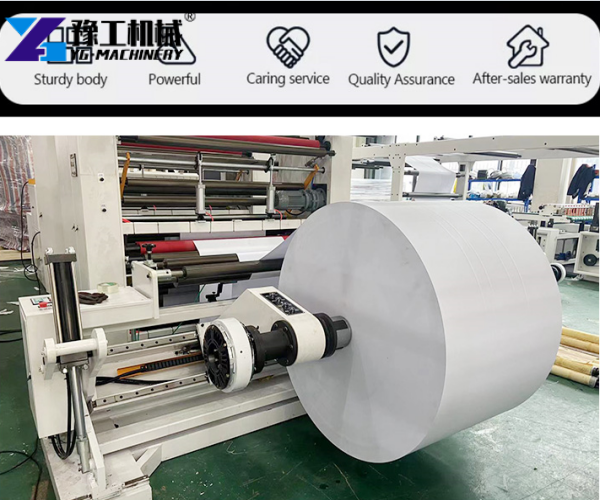
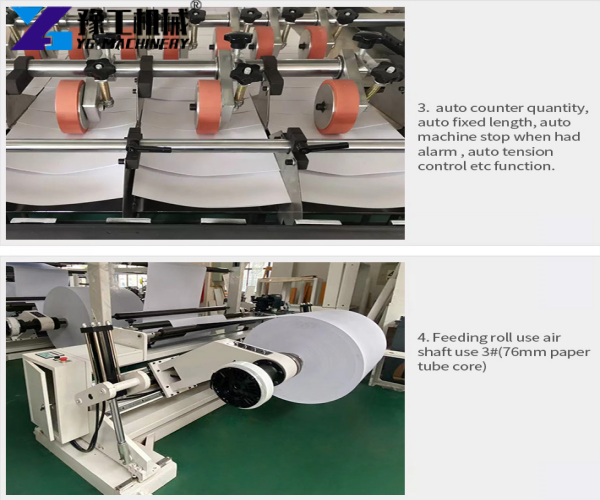
A factory running short orders across several paper sizes faces frequent setup changes. A plant producing long A4 copy-paper orders needs steady feeding and enough downstream capacity to handle continuous output.
A practical production plan connects four figures: jumbo-roll width, lane count, cutting cycles per minute, and stacking or packing capacity. These figures show whether cutter output matches the rest of the line.
An automatic slitting machine performs longitudinal cutting. It divides wide rolls into narrower rolls. Cross-cutting then produces sheets of a set length. A factory receiving pre-slit rolls may not need a separate slitting unit. A plant starting with jumbo rolls may need both operations.
YG Machinery can discuss equipment selection based on roll dimensions, paper type, cutting layout, and downstream handling. The listed model data does not show that every machine includes unwinding, slitting, counting, stacking, or packing units. Any additional equipment needs clear mention in the quotation.
What Should an A4 Paper Cutting Machine Price Quotation Include?
A standalone cutter and a complete paper-converting line have different supply scopes. One quotation may cover the cutting machine alone. Another may include feeding or sheet-handling equipment.
A detailed quotation should list:
- Machine model and working width
- Included feeding and cutting components
- Control and adjustment functions
- Stacking, counting, or packing equipment, if included
- Technical documents and installation guidance
- Packing, shipping, and delivery terms
Factories with existing upstream equipment may need only a cutter. New plants may need additional roll-handling and packing equipment. Compare quotations by included equipment and services.
Get Factory Pricing for an A4 Paper Cutting Machine
YG Machinery offers paper-cutting equipment in different working widths. Share jumbo-roll dimensions, paper grammage, target A4 layout, and expected output to discuss machine configuration and production-line requirements.
Contact YG Machinery for:
- Model and configuration recommendations
- Detailed quotations and supply scope
- Technical documents and operation manuals
- Installation guidance
- Shipping and delivery arrangements
- Production-line integration options
FAQ
Does an 1100 mm roll always allow five A4 lanes?
No. Five lanes of 210 mm occupy 1050 mm, leaving 50 mm for total trimming and layout allowance. Damaged edges or wider trim requirements may make four lanes easier to run.
What does a minimum cutting width of 50–100 mm mean?
The specification gives a range rather than one exact minimum. The actual value may depend on model or configuration. Factories producing narrow strips need the specific minimum width for their selected machine.
Can YG-800D produce A4 sheets?
YG-800D has an 800 mm maximum cutting width and a cutting-length range of 20–800 mm. A4 dimensions fall within the listed length range. The cutting layout still depends on web width, feeding direction, and trim allowance.
Can these machines handle 70 gsm or 80 gsm copy paper?
The supplied specifications do not state a grammage range. A trial with actual paper can reveal feeding, tension, static, edge, and stacking behavior. This is especially useful when a factory plans to switch between paper grades.
Does maximum cutting speed equal finished output?
No. At 150 cuts per minute, a five-lane layout gives a theoretical 750 sheets per minute. Trim loss, feeding interruptions, stack removal, and packing speed can reduce actual output.