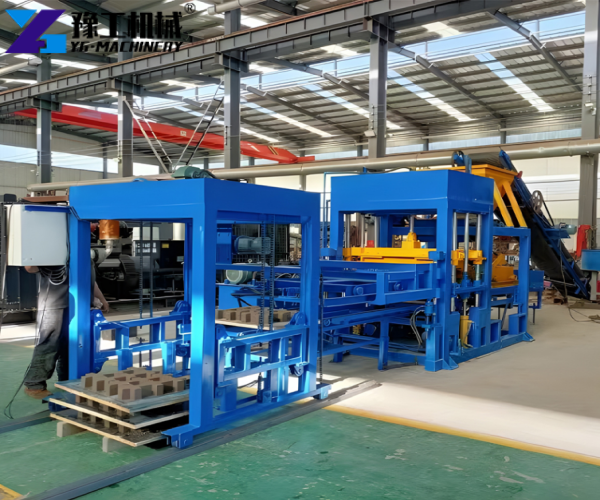
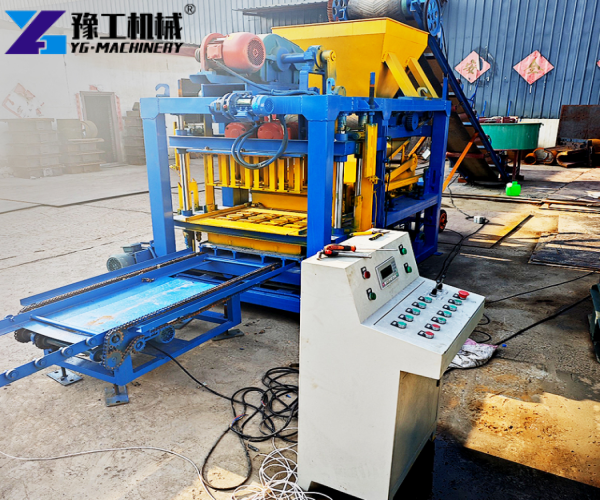
A hollow block making machine turns a mix of cement, sand, and stone powder into hollow concrete blocks for walls, foundations, and other masonry work. The mold decides the block’s size and the shape of its cavities; vibration and pressure do the rest of the work, compacting the wet mix into a solid, uniform block.
If you run a building-material business, the appeal is simple: with the right molds, one machine can produce hollow blocks, porous blocks, standard bricks, and paving blocks. You get several product lines out of a single investment.
Hollow Block Making Machine Specifications
| Block Name | Size (L×W×H) mm | Molding Cycle | QTY/Mould | QTY/hour | Qty/8hr |
| Hollow block | 400×200×200 | 15-20s | 6pcs | 1080-1440pcs | 8640-11520pcs |
| Hollow block | 400×150×200 | 15-20s | 7pcs | 1260-1680pcs | 10080-13440pcs |
| Hollow block | 400×100×200 | 15-20s | 11pcs | 1980-2640pcs | 15840-21120pcs |
| Porous block | 240×115×90 | 15-20s | 15pcs | 2700-3600pcs | 21600-28800pcs |
| Standard brick | 240×115×53 | 15-17s | 30pcs | 6300-7200pcs | 50400-57600pcs |
| Paver | 225×112.5×60 | 20-25s | 15pcs | 2160-2700pcs | 17280-21600pcs |
Smaller blocks run faster per cycle simply because more of them fit in each mold. Keep that in mind when you’re estimating daily output for a specific product.
What a Hollow Block Making Machine Is Made Of
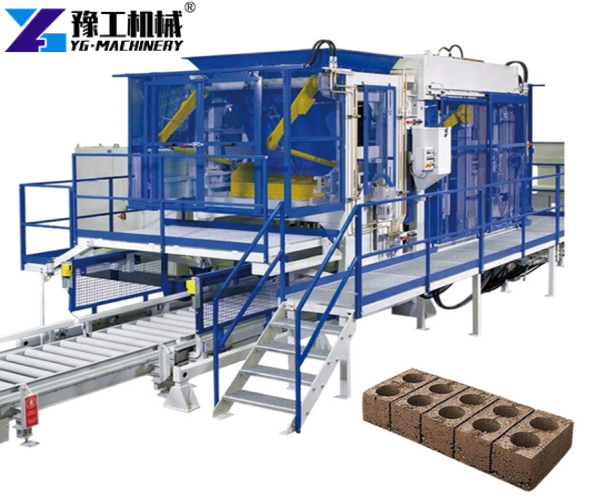
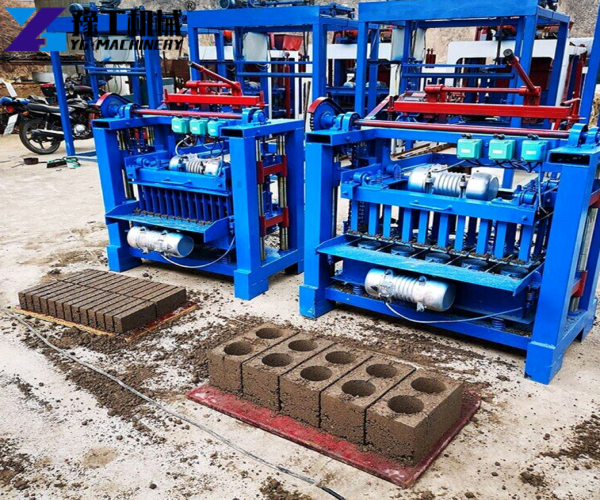
A hollow block machine has three systems working together: the mechanical parts that move material, a hydraulic system that supplies pressing force, and an electrical system that controls the sequence. Here’s what each piece does.
- Material hopper holds the raw mix before it’s fed into the mold.
- Feeding device meters the mix evenly into the mold cavity.
- Vibration and pressing mechanism compacts the mix so the block comes out dense and uniform.
- Hydraulic system powers the pressing and demolding stages.
- Electrical control system coordinates the whole production sequence.
- Pallet feeder slides pallets into place to receive the freshly formed blocks.
- Demolding mechanism pushes the finished blocks out of the mold.
- Machine frame holds everything together and keeps the machine stable while it runs.
Maintenance matters more than most buyers expect. The moving parts, hydraulic lines, and electrical connections all need regular attention, and a buildup of leftover mix in the hopper will quietly slow down feeding if you don’t clean it out.
How a Hollow Block Machine Works
The process is straightforward once you see it broken down:
- Power transmission. A motor drives a reducer through belts and pulleys; a coupling and gear set then turn the main shaft.
- Feeding. The feeding device moves the concrete mix into the mold cavity.
- Vibration and pressing.The vibration and pressing system compacts the mixture inside the mold.
- Demolding. An ejection mechanism pushes the finished blocks out of the mold and onto a pallet.
- Repeat. The mold is refilled and the next cycle starts.
One thing many operators overlook is the raw material. Too much water, the wrong proportions, or poorly graded aggregate will show up as defects in the finished block and weaker strength. Getting the mix right — and following the proper curing time before the blocks go to site — matters as much as the machine itself.
Where Hollow Blocks Are Used
Hollow block production lines feed several construction markets:
- Houses and residential buildings use hollow blocks for load-bearing and partition walls.
- Factories and boundary walls rely on blocks for industrial structures and perimeter fencing.
- Municipal projects use block products in public buildings and infrastructure.
- Roads and paving use paver blocks for outdoor surfaces, plus specially designed blocks for retaining walls and slope protection.
If you plan to produce several of these products, an automatic block making machine with the right molds and handling equipment will cut down on manual labor. Just make sure your yard has room for block transfer, curing, and finished-product storage — the space around the machine is part of the setup cost.
Hollow Block Making Machine for Sale
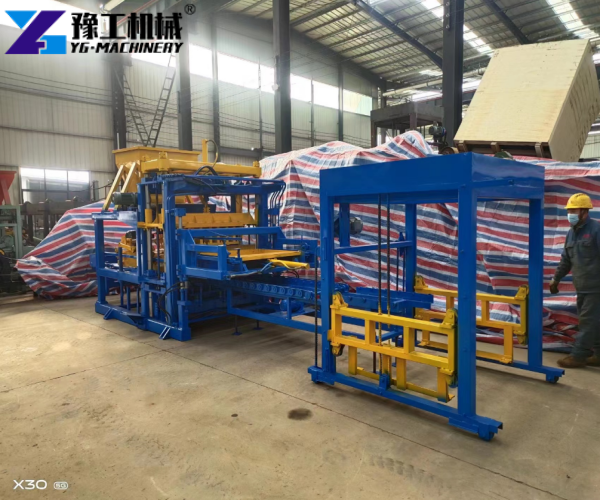
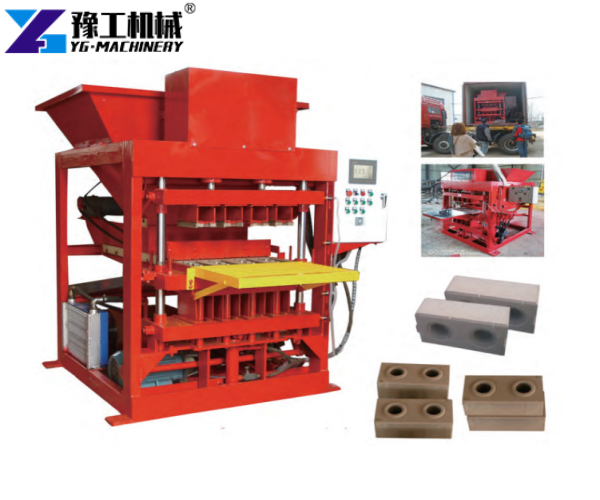
If you’re setting up a new block plant or expanding an existing one, a reliable supplier makes the difference. YG Machinery manufactures hollow block machines for domestic and overseas buyers, with production and assembly handled in-house. Its machines are already running in Nigeria, Ghana, Kenya, Tanzania, and Uganda, with markets in Europe, North America, and Australia also relevant to its international business.
Before you buy, ask the supplier for the full specification sheet and production-line layout, not just the machine price. The right configuration depends on the block types you want to make and your target daily output.
Related equipment from YG Machinery
Beyond hollow block production, construction projects may also require equipment for concrete pumping, wall finishing, and road paving. YG Machinery offers a range of machines for these tasks, including:
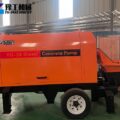
- Mini Concrete Pump Machine — moves wet concrete to the block machine’s hopper or straight to the pour site with a compact, easy-to-tow frame.
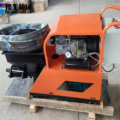
- GRC Spray Machine — applies glass-reinforced concrete for panels and decorative elements on the same site.
- Mortar Spraying Machine — speeds up wall rendering and masonry pointing once the blocks are laid.
- Curb and Gutter Machine — pours concrete curbs and gutters in one pass, a natural complement to paver blocks for road and pavement work.
- Mini Road Roller — compacts the base and sub-base before paving blocks are laid, so the finished surface stays level.
These machines serve different stages of construction and complement hollow block production in projects involving masonry, concrete work, and road development.
FAQ
How much does a hollow block making machine cost?
Price depends on automation level, mold types, and output capacity, so there’s no single figure. Send us your target block sizes and daily volume and we’ll quote a configuration that matches — without pushing you into equipment you don’t need.
Can one machine make hollow blocks, bricks, and pavers?
Yes, as long as the model supports those molds. If you tell us which products you plan to sell, we’ll confirm the machine can handle all of them before you commit.
What’s the difference between semi-automatic and fully automatic machines?
A semi-automatic model needs an operator to move pallets and handle blocks between cycles, while a fully automatic line handles feeding, demolding, and pallet transfer on its own. For a small operation, semi-automatic is more affordable; for high daily output, the labor savings of an automatic line usually pay for themselves.
How do I get consistent block quality from a hollow block machine?
Quality starts with the mix, not just the machine. Use the right water-cement ratio, properly graded aggregate, and enough vibration time to compact each block fully. Keep molds clean and check hydraulic pressure regularly — small deviations here are the most common cause of weak or misshapen blocks.
How long do hollow blocks need to cure before they can be used?
Blocks typically need several days of moist curing to reach usable strength — usually at least 7 days before handling, and closer to 28 days for full design strength. Curing is part of the production process, so plan your storage space for it when sizing your operation.