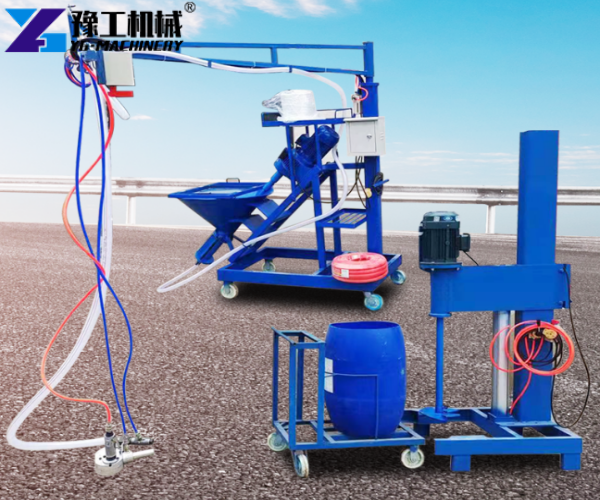
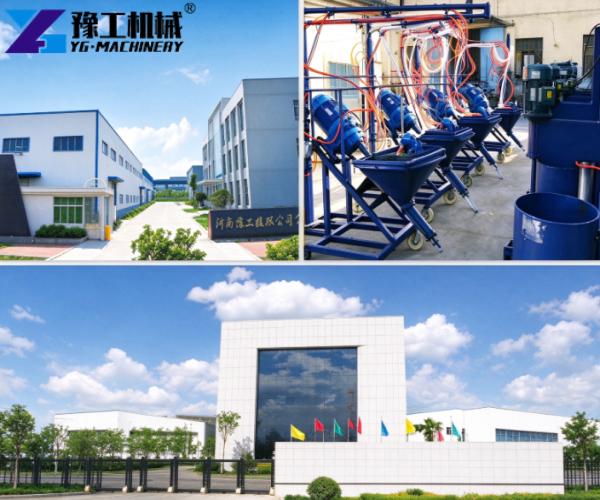
A GRC Spray Machine applies glass fiber reinforced concrete to architectural panels, decorative façades, columns, screens, and moulded components. Unlike manual application, a screw feeding system keeps material delivery steady while an adjustable motor lets operators control output during spraying. This GRC spraying machine suits workshops and construction sites that need repeatable coverage and efficient GRC production.
GRC Spray Machine Parameters
| Item | Specification |
| Machine Name | Screw GRC Shotcrete Machine |
| Voltage | 380v, 3phase |
| Frequency | 50hz |
| Power | 2.2-4.0kw step-less speed regulation motor |
| Rotating speed | 20-200r/min, speed regulation when the machine is running |
| Work area | 4.5M (Horizontal boom radius) |
| Delivery capacity | 300-1600kg/h |
| Capacity | 60L |
| Working pressure | 0.6-0.8mpa |
| Productivity | 200-400㎡/h |
| Machine size | 140010002200mm |
| Machine Weight | 220kg |
Advantages of YG GRC Spraying Equipment
Controlled Material Feeding
GRC mixtures need stable feeding to maintain an even layer across a mould. Step-less speed adjustment allows operators to change material flow without repeatedly stopping production. For curved panels or decorative pieces, workers can slow feeding when they approach edges and increase it across broader sections.
Efficient Architectural Production
A GRC shotcrete machine reduces repetitive manual placement during panel and decorative component production. Workers can concentrate on mould preparation, surface finishing, and quality checks while continuous spraying handles material application.
Flexible Site Operation
A 4.5 m horizontal working radius gives crews useful reach around larger components. Compact dimensions also make workshop positioning easier. For contractors moving between production areas, a GRC sprayer offers a practical alternative to fixed application systems.
Applications of GRC Spraying Machine
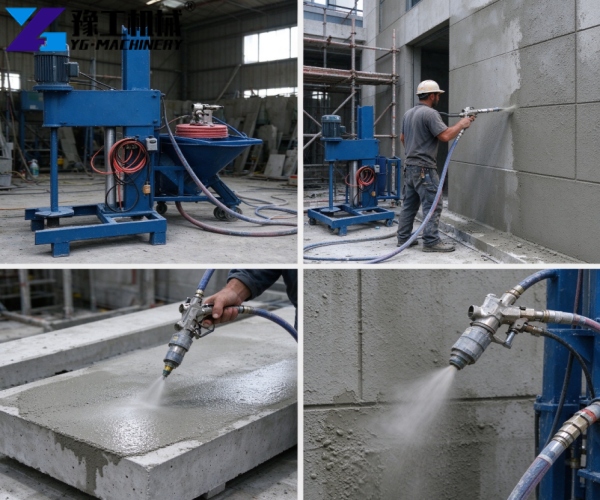
GRC works well for architectural designs that require light, shaped, or decorative cement-based components. Common applications include GRC facade panels, wall cladding, columns, cornices, arches, decorative screens, domes, and moulded exterior features.
Façade and Wall Panel Production
Manufacturers use GRC wall panels for villas, hotels, commercial buildings, and public projects. Repeated spraying helps production teams maintain a consistent application process across multiple moulds.
Decorative Components
Architectural contractors can use glass fiber reinforced concrete spray machine technology for curved columns, ornamental mouldings, entrance features, and complex façade details. Operators can adjust application according to geometry instead of using one fixed feeding rate.
Bahrain GRC Project Case
A practical Bahrain project involved a villa and commercial façade contractor in Manama that planned GRC cladding and decorative elements for a 2,400 m² exterior area. Hot weather, strong sunlight, and coastal humidity influenced material handling and daily work scheduling.
The contractor selected a YG screw GRC shotcrete machines for workshop fabrication of façade panels and decorative screens. Production teams prepared moulds indoors, applied GRC by spraying, and moved finished components to the construction site after curing and quality inspection.
For this project, the crew targeted about 250–300 m² of spraying output per working day. A four-person team handled mixing, spraying, mould work, and finishing. The planned production period covered about 12 working days, excluding curing and installation time.
Workers scheduled spraying during cooler morning and late-afternoon periods when possible. After application, they followed the project’s curing procedure and protected fresh components from direct sunlight. This approach suited Bahrain’s climate better than leaving newly sprayed surfaces exposed during peak daytime heat.
The project also used repeated decorative screens and façade sections, so consistent material feeding mattered more than maximum output. Operators adjusted screw speed according to component geometry and surface thickness, while finishing workers checked edges and corners before curing.
Choosing a GRC Spray Machine for Sale
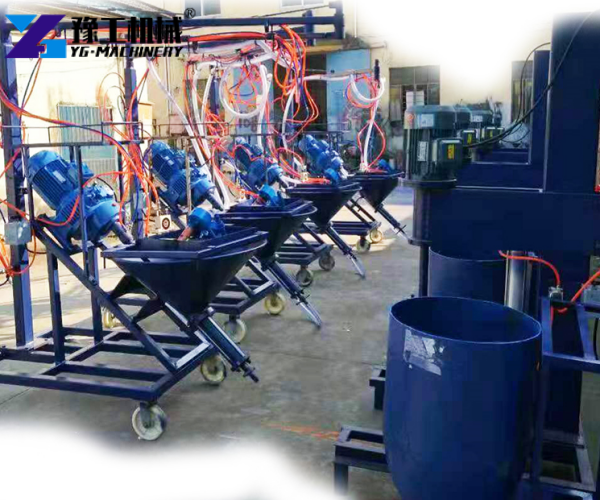
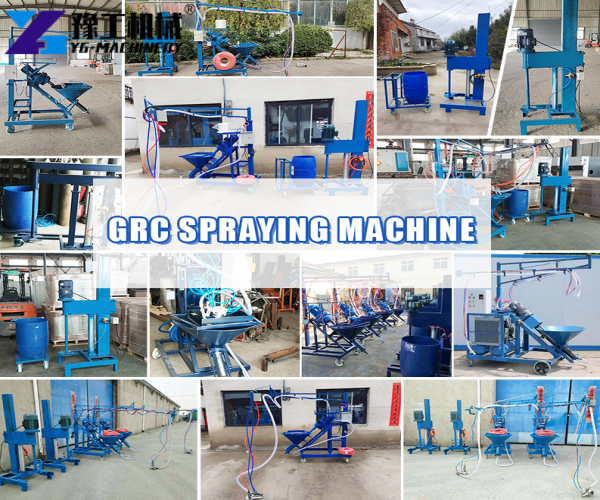
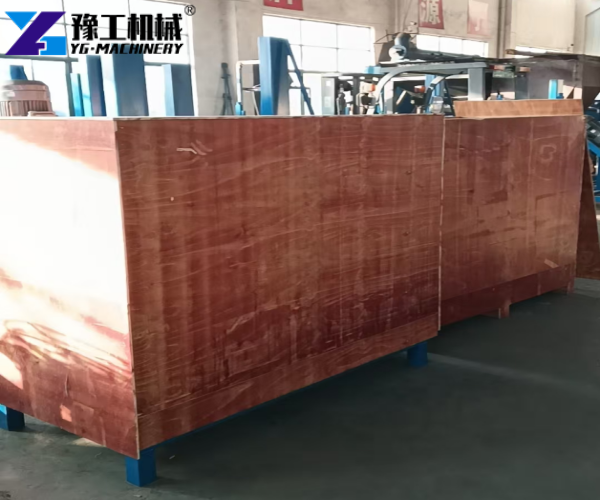
Customers comparing a GRC spray machine for sale should look beyond the initial price. Material formulation, required output, component dimensions, electrical supply, spraying distance, and available working space all affect the final choice. YG can review these project details and recommend a configuration that matches the intended application.
When comparing GRC spray machine price, buyers should also consider material preparation, operation, maintenance, spare parts, and technical support. Shipping conditions and machine configuration can also affect the final quotation, so providing complete project information helps avoid unsuitable comparisons.
For overseas projects, choosing an experienced GRC spray machine manufacturer also makes equipment selection easier. YG manufacturer also supplies other construction machine products, including drilling machine, road machine, steel machine, prefab house, and environmental machine solutions. If you are planning a GRC project, contact us with your application, required output, component size, and local power supply to discuss a suitable machine and request a quotation.
FAQ About GRC Spray Machine
Can a GRC sprayer handle decorative moulds?
Yes. Suitable moulds can include flat panels, curved sections, columns, screens, and other architectural shapes. Operators should adapt spraying technique to each mould.
What affects final GRC surface quality?
Mix consistency, fibre distribution, mould preparation, spray technique, layer thickness, finishing, and curing all influence surface quality.
How should a buyer prepare for overseas delivery?
Provide local voltage and frequency, intended application, component dimensions, expected workload, and destination port. These details help suppliers prepare a suitable quotation and shipping plan.
Does GRC spraying replace finishing work?
No. Spraying applies GRC efficiently, but workers still need to inspect surfaces, correct edges, complete finishing, and follow the required curing process.