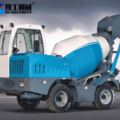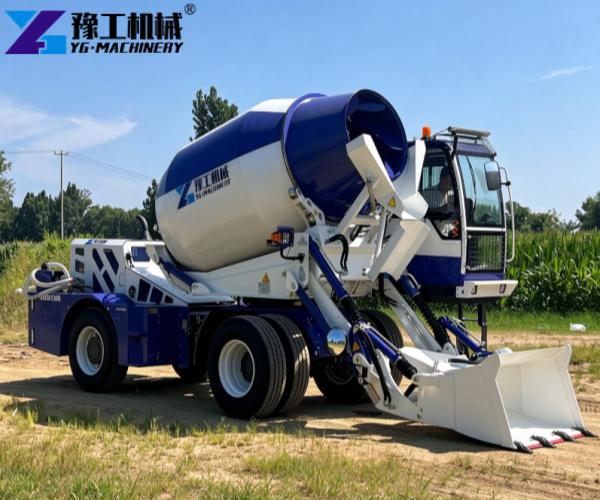
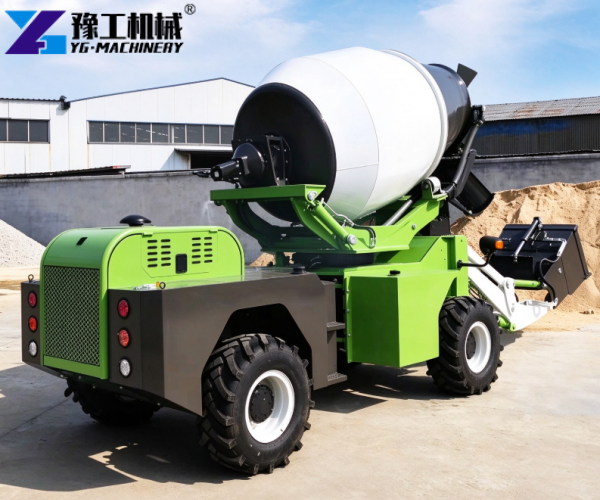
A self-loading concrete mixer for sale loads aggregates, mixes concrete, transports the batch, and discharges it at the pouring point. It combines several tasks in one vehicle and requires only one operator. For projects with scattered pours and daily demand of 2–20 m³, it reduces the need for separate loading and mixing equipment. Common applications include foundations, road repairs, drainage channels, and rural infrastructure. These jobs often involve small batches or remote locations beyond the practical reach of ready-mix trucks.
Self-Loading Concrete Mixer Specifications
| Model | YG1.8 | YG2.6 C | YG3.5 C | YG4.0 C |
| Output per Lot | 1.6 m³ | 2.6 m³ | 3.5 m³ | 4.0 m³ |
| Production Capacity | 8 m³/h | 11 m³/h | 15.5 m³/h | 18 m³/h |
| Engine Power | 78 KW | 78 KW | 85 KW | 91 KW |
| Climbing Capacity | 30° | 30° | 40° | 40° |
| Weight | 6300KG | 7000KG | 8250KG | 9000KG |
| Length/width/height | 6700x2340x2700mm | 6650x2700x3200mm | 7300x2750x3350mm | 7700x2950x3400mm |
| Wheelbase | 2500mm | 2770mm | 2750mm | 2950mm |
Working Principle of a Self Loading Concrete Mixer
Self-loading concrete mixer has a hydraulically driven loading bucket at the front. It scoops sand and coarse aggregates from ground-level stockpiles. The bucket then lifts and feeds the materials into the mixing drum.
Operators add cement from bags or a site silo. An onboard water tank supplies water according to the approved mix design. The rotating drum blends the ingredients during mixing and transport. This arrangement combines several operations into one working cycle.
The cycle has four main stages:
- Loading. The bucket collects aggregates and empties them into the drum. Operators can count bucket loads to control material quantities. This method saves time, but it does not replace accurate batching when strict mix proportions are required.
- Mixing. Operators add cement and the required water. The drum typically rotates for three to five minutes to blend the materials. Actual mixing time depends on the mix design and operating conditions.
- Transport. The vehicle travels to the pouring point while the drum keeps rotating. Continuous rotation helps maintain a uniform mix during short trips over uneven ground.
- Discharge. The operator reverses the drum to discharge concrete through the chute. Common destinations include footing trenches, floor forms, drainage beds, and pavement repairs.
Aggregate moisture remains an important factor in concrete quality. Sand can retain extra water after overnight rain. If operators add the full design water without adjustment, the concrete may become too wet. This can affect workability and strength. Crews should assess aggregate moisture and adjust the added water to maintain the specified mix proportions.
Applications of a Self Loading Concrete Mixer Machine
This machine suits projects with small, separated concrete pours. Such jobs may not justify ready-mix deliveries or manual mixing.
- Building foundations. It handles footings, column bases, ground beams, and floor slabs. These projects often require several small pours across a single site.
- Road construction and maintenance. Typical jobs include curbs, culvert headwalls, drainage channels, and pavement patches. A 40 m kerb-and-channel repair requiring 6 m³ of concrete needs two batches with a YG3.5 C.
- Rural infrastructure. The machine supplies concrete for retaining walls, small bridge decks, community buildings, and village roads. It reduces dependence on distant batching plants.
- Remote projects. It suits sites with unpaved access, weight-limited bridges, or long transport distances. Crews can mix concrete near the work area instead of relying on frequent deliveries.
- Scattered pours. The vehicle moves between fence posts, manhole surrounds, and duct encasement sections. Crews can prepare each batch near the next pouring point.
Batch size affects the number of mixing cycles required. A 1.6 m³ model suits small repairs and short pour schedules. A 4.0 m³ model reduces cycle counts on larger jobs. For a 30 m³ foundation, the latter requires fewer batches. Site access and turning space also determine which model can operate efficiently.
Advantages of a Self-Loading Concrete Mixer
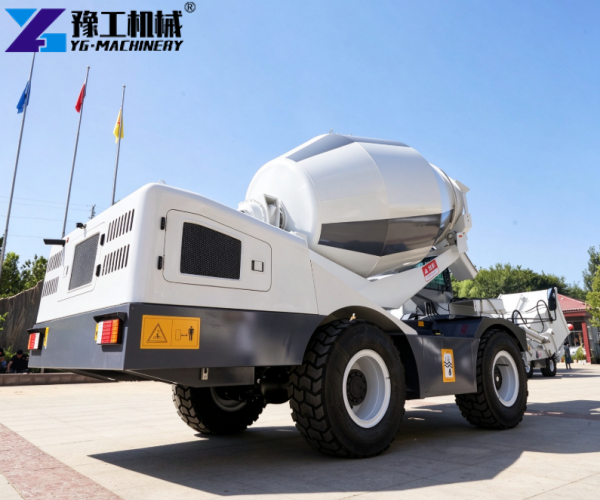
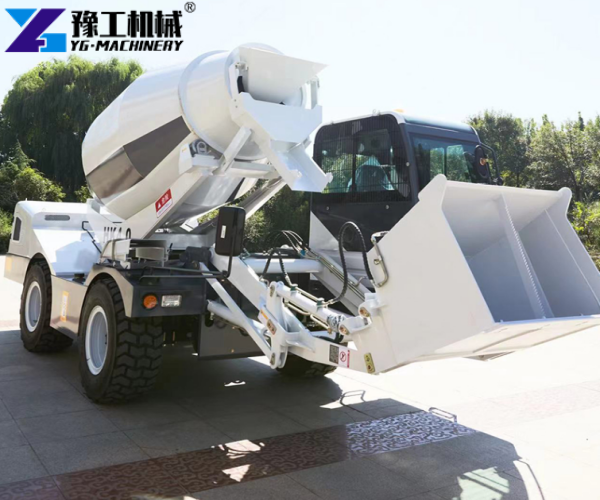
Loading and Mixing in One Machine
A single machine eliminates the need for a separate loader. It also reduces equipment coordination and operator requirements. This arrangement suits confined sites with limited space for stockpiles and machinery. Crews can manage material loading and mixing within one operating area.
Concrete Production Near the Pouring Point
Ready-mix deliveries follow the batching plant’s schedule. Crews must coordinate truck arrivals and place concrete within the permitted delivery window. On-site mixing offers more control over batch timing. For example, drainage crews can prepare separate batches as each channel section becomes ready. They do not need to schedule a separate truck for every section.
Batch Options for Different Workloads
The available models produce 1.6–4.0 m³ per batch. Their rated output ranges from 8 to 18 m³/h. Actual production depends on loading time, mixing duration, travel distance, and discharge time. Short travel distances and efficient loading can increase the number of completed cycles.
Self-Loading Concrete Mixer Case in Singapore
Singapore’s urban construction sites often have limited space for separate loaders and mixers. A contractor working on a low-rise building project selected a YG2.6 C for foundation and floor concrete preparation. The machine combined aggregate loading and mixing within one vehicle.
Three factors influenced the selection. Its 2.6 m³ batch capacity matched the planned foundation pours. Its rated output of 11 m³/h also covered the project’s daily concrete demand. Second, the contractor assessed the machine’s dimensions before confirming the order. The vehicle measures 2,700 mm wide and 3,200 mm high. These measurements mattered because the site had a restricted entrance and delivery route. Then combined loading and mixing functions reduced the number of machines required on site. This left more room for material storage and construction activities.
Rainfall also affected daily operation. Wet aggregates contained additional moisture, so the operator adjusted the added water to suit the material condition. This practice helped maintain consistent concrete workability during changing weather.
Self-Loading Concrete Mixer for Sale from YG Machinery
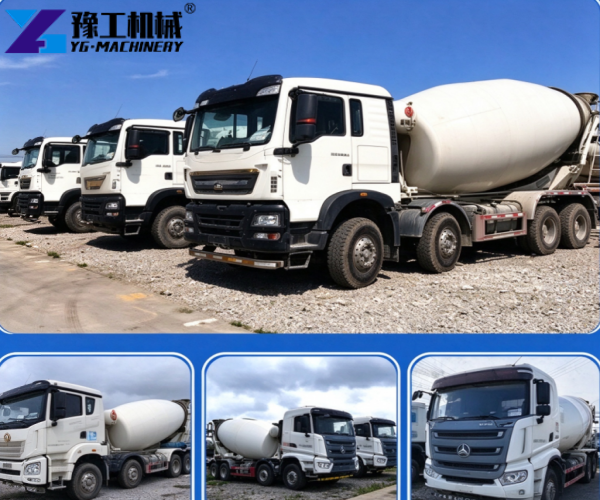
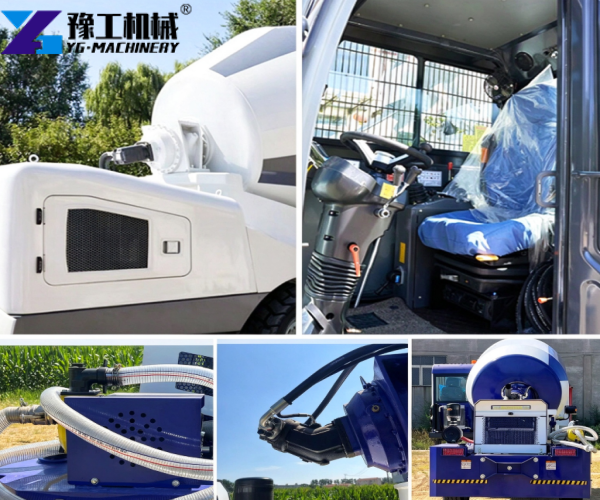
YG Machinery supplies the four models listed above for construction projects with different concrete output requirements. Its wider concrete equipment range includes diesel concrete mixers, mobile concrete placing booms, pile breakers, and electric wall saws. These machines serve different stages of concrete preparation, placement, and structural work.
When requesting a quotation, provide three details:
- Daily concrete demand: Estimate the total volume required for the project.
- Project location: Specify the delivery destination.
- Site access dimensions: Provide the entrance width, height clearance, and tightest turning point.
These details allow the sales team to assess model requirements and prepare a quotation with delivery costs.
FAQ
What benefits does the two-way driving system bring?
The two-way driving system allows forward and reverse travel without a U-turn. It suits narrow roads, indoor renovation sites, and village lanes with limited turning space.
Can this machine work with pump equipment?
A self-loading concrete mixer can work alongside compatible concrete pumping equipment. The pump configuration must match the required delivery distance, height, and concrete output.
What projects suit a self-loading concrete mixer with a pump?
Typical applications include rural housing, tunnel construction, water conservancy, and mine slope reinforcement. These projects may involve steep access routes or locations far from batching plants.
Why choose imported spare parts?
Imported hydraulic and transmission components may offer different maintenance and performance characteristics. Their service life depends on component quality, operating conditions, and maintenance practices.
What is the difference between 30° and 40° climbing capacity models?
The YG1.8 and YG2.6 C have a stated climbing capacity of 30°. The YG3.5 C and YG4.0 C have a stated capacity of 40°. Actual operation on slopes depends on ground conditions, traction, load, and site safety requirements.