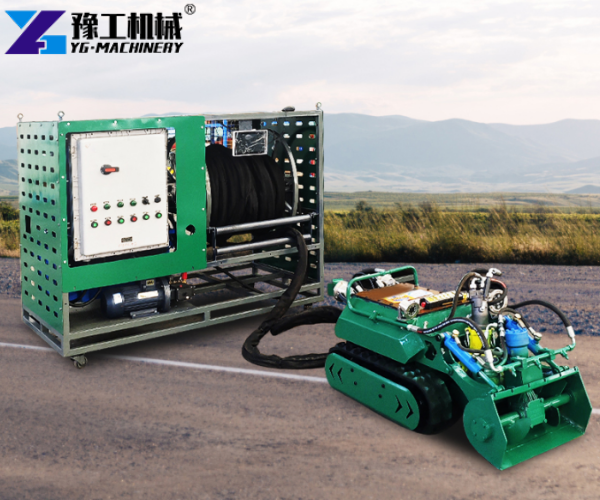
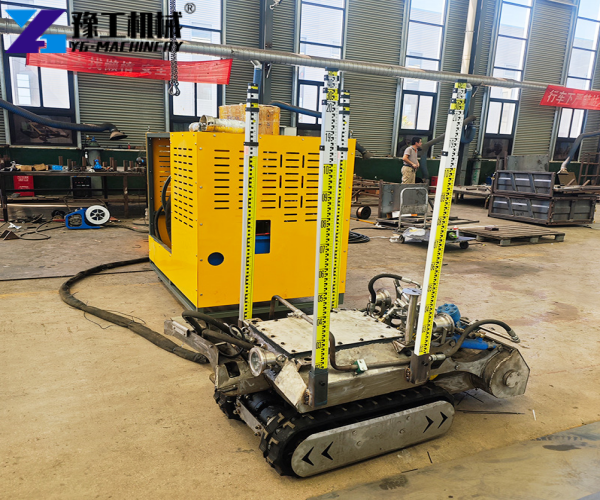
A dredging robot removes underwater mud, sand, and sediment from rivers, reservoirs, port basins, and industrial sedimentation tanks. Crawler tracks move the machine along the bottom, while a slurry pump transfers collected material through a discharge pipeline. Wireless remote control supports shore-based operation and reduces the need for divers during routine dredging tasks.
Dredging Robot Technical Specifications
| Parameter | YG-500 | YG-600 | YG-700 | YG-800 | YG-900 | YG-1200 |
| Robot dimensions (mm) | 1500×500×650 | 1500×600×650 | 1600×700×650 | 1600×850×700 | 1650×960×750 | 1900×1200×750 |
| Dredging width | 500 mm | 600 mm | 700 mm | 800 mm | 900 mm | 1200 mm |
| Track travel speed | 3–15 m/s | 3–15 m/s | 3–15 m/s | 3–15 m/s | 3–15 m/s | 3–15 m/s |
| Robot weight | 320 kg | 350 kg | 380 kg | 400 kg | 420 kg | 500 kg |
| Pump outlet diameter | 3 in | 3 in | 4 in | 4 in | 4 in | 4 in |
| Pump flow rate (m³/h) | 100 | 100 | 200 | 200 | 200 | 200 |
| Hydraulic station dimensions (mm) | 2200×1200×1700 | 2200×1200×1700 | 2200×1200×1700 | 2200×1200×1700 | 2200×1200×1700 | 2120×1240×1200 |
| Main motor power | 22 kW | 22 kW | 30 kW | 30 kW | 30 kW | 45 kW |
| Hydraulic system pressure | 0–16 MPa | 0–16 MPa | 0–16 MPa | 0–16 MPa | 0–16 MPa | 0–16 MPa |
| Particle size (max) | 15 mm | 15 mm | 38 mm | 38 mm | 38 mm | 60 mm |
| Reeling system speed | 0–10 r/min | 0–10 r/min | 0–10 r/min | 0–10 r/min | 0–10 r/min | 0–10 r/min |
| Hydraulic hoses | 50 m (standard) | 50 m (standard) | 50 m (standard) | 50 m (standard) | 50 m (standard) | 50 m (standard) |
| Control system | Wireless remote control | Wireless remote control | Wireless remote control | Wireless remote control | Wireless remote control | Wireless remote control |
| Lighting system | 2× underwater LED lights | 2× underwater LED lights | 2× underwater LED lights | 2× underwater LED lights | 2× underwater LED lights | 2× underwater LED lights |
How Does a Dredging Robot Work?
A crawler dredging robot uses hydraulic power to travel along the underwater surface and operate its dredging head. The slurry pump draws sediment mixed with water into a discharge pipeline and transfers it to a designated treatment or disposal area.
The operating process includes:
Positioning: Lower the machine into the work area and connect the hydraulic station and discharge hose.
Moving: Use wireless remote control to guide the crawler across the sediment.
Collecting: The dredging head gathers deposited material.
Pumping: The slurry pump transfers the mixture through the pipeline.
Continuing: Move the robot to the next section and repeat the process.
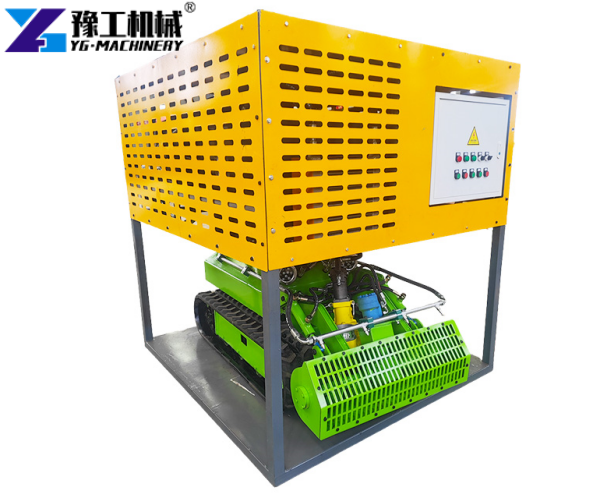
A shore-based hydraulic station supplies power, eliminating the need for an onboard diesel engine.
Core Features of a Dredging Robot
1. Crawler Movement on the Bottom
Crawler tracks move across submerged surfaces. Models cover dredging widths from 500 mm to 1200 mm for different working areas.
2. Remote Operation
Wireless remote control lets operators guide the machine from shore or another safe position, reducing direct personnel exposure during underwater dredging.
3. Hydraulic Drive System
The hydraulic station powers the crawler and dredging components. Motor power ranges from 22 kW to 45 kW, with hydraulic pressure rated at 0–16 MPa.
4. Slurry Pumping
Pump outlets measure 3 or 4 inches, with flow rates of 100 or 200 m³/h. Maximum particle size ranges from 15 mm to 60 mm across the model series.
5. Multiple Dredging Widths
Dredging widths range from 500 mm to 1200 mm. Narrower models serve confined areas, while wider models cover more bottom area per pass.
6. Underwater Lighting
Two underwater LED lights support remote observation in dim conditions. Water clarity and suspended sediment also affect visibility.
7. Modular Equipment Layout
The crawler, hydraulic station, control system, and pumping components form the main operating arrangement, supporting transport, setup, and maintenance access.
Applications of a River Dredging Robot
River and Reservoir Sediment Removal
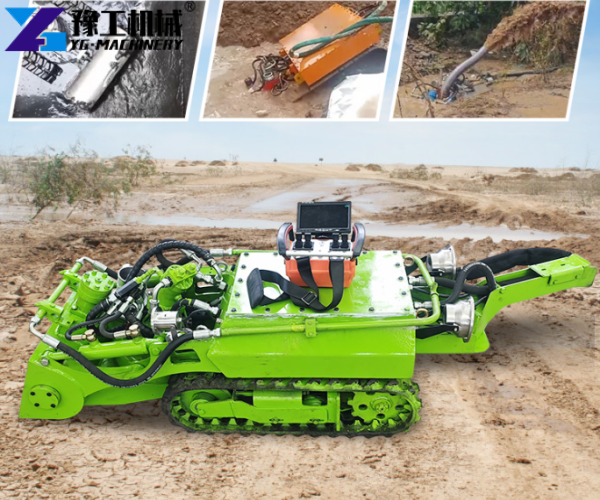
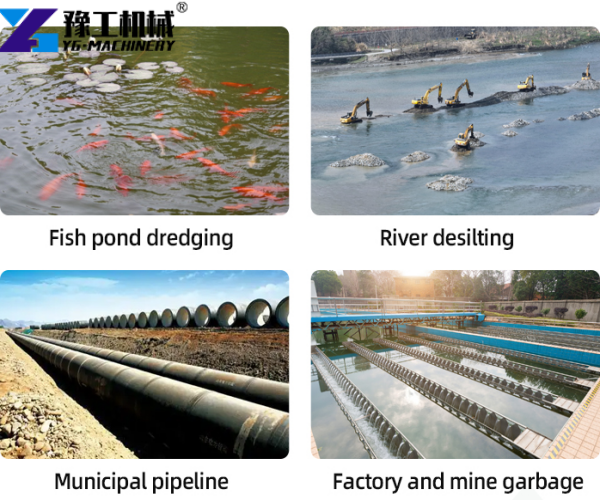
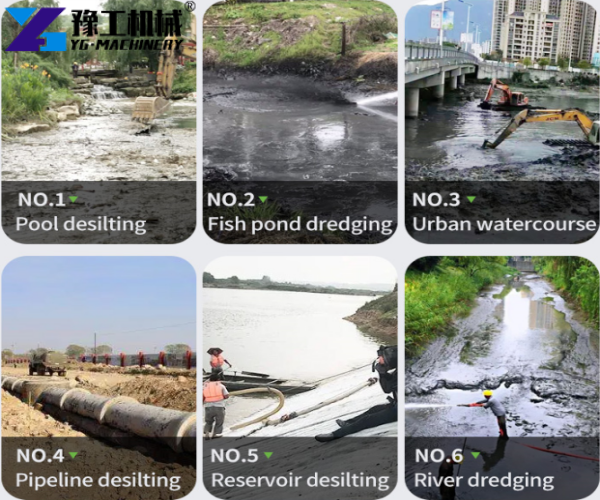
A river dredging robot removes deposited mud from river channels, reservoirs, shallow waterways, and water-intake zones. The discharge pipeline carries collected slurry away from the dredging area.
Typical tasks include:
- Removing accumulated river sediment
- Clearing reservoir deposits
- Maintaining shallow waterways
- Cleaning selected water-intake areas
Port Basins and Inland Waterways
Ports and inland waterways accumulate sediment through runoff and natural deposition. A remotely operated dredging robot targets selected areas and pumps sediment through a connected pipeline.
Industrial Sedimentation Tanks
A sedimentation tank dredging robot removes settled sludge from wastewater tanks and industrial settling basins. Its compact crawler structure supports access to confined spaces, while the pump transfers sludge toward treatment or disposal facilities.
Underwater Dredging Project Planning
Model selection starts with the work area and sediment conditions. Key details include:
- Work area: River section, reservoir zone, port basin, or tank dimensions
- Sediment: Mud, sand, sludge, or mixed deposits
- Dredging depth: Required removal depth and underwater terrain
- Discharge route: Pipeline length, elevation, and destination
- Site access: Water depth, tank openings, and setup space
Standard equipment does not list autonomous navigation, sonar, or sediment crushing. Projects requiring these functions need a separately specified configuration.
Would you like to take a look at this dredging robot sold in Malaysia?
Request a Dredging Robot for Your Project
As a dredging robot manufacturer, YG Machinery has built these machines for over twenty years. Our factory in Zhengzhou produces key components in-house. We machine the hydraulic stations, assemble the crawler frames, and integrate the wireless control systems. Every unit undergoes a full pressure test before shipping. Buyers receive a test report and video with their machine. We stock spare parts in Houston and Rotterdam. Common items ship within 24 days. Every machine includes a 12-month warranty and lifetime remote support. We also manufacture silt removal machine,fog cannon machine.
FAQ
What is a dredging robot used for?
A dredging robot removes underwater sediment from rivers, reservoirs, port basins, and industrial sedimentation tanks.
How does a crawler dredging robot move underwater?
Hydraulic power drives the crawler tracks, while an operator guides the machine through the work area using wireless remote control.
Can a dredging robot pump sludge through a pipeline?
Yes. The slurry pump transfers sediment mixed with water through a discharge hose. Pump flow, particle size, and pipeline arrangement affect material handling.
Does a dredging robot include autonomous navigation?
Autonomous navigation is not part of the standard configuration described here. Projects requiring autonomous control, sonar, or other special functions need a separately specified system.