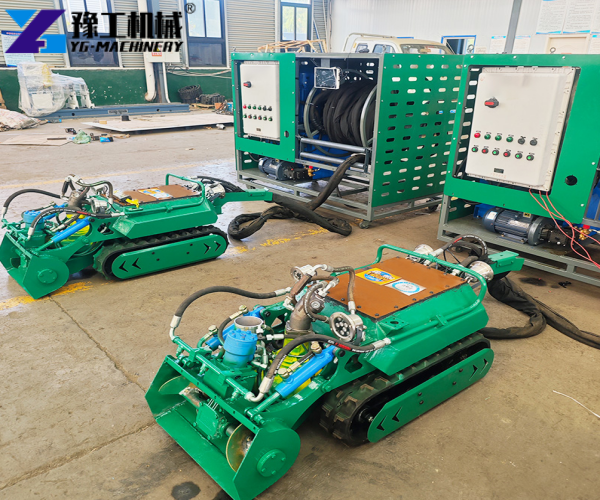
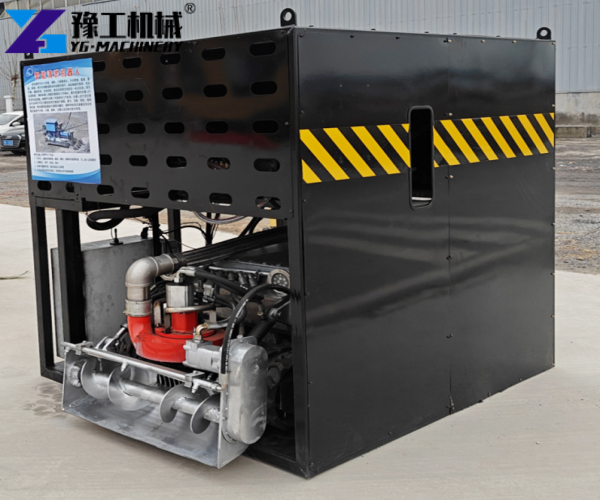
Mud, sludge, sand, and organic waste build up in fish ponds, drainage channels, reservoirs, and wastewater tanks. These deposits reduce water depth, restrict drainage, and affect pond management. An underwater dredging robot uses a tracked chassis and slurry pump to collect underwater sediment and transfer it through a discharge pipeline. Operators control the machine remotely from shore, reducing the need for divers during routine dredging work. Its compact design also suits selected sites where large dredging vessels have limited access.
Underwater Dredging Robot Specifications
| Parameter | YG500 | YG600 | YG700 | YG800 | YG900 | YG1200 |
| Robot dimensions (mm) | 1500×500×650 | 1500×600×650 | 1600×700×650 | 1600×850×700 | 1650×960×750 | 1900×1200×750 |
| Dredging width (mm) | 500 | 600 | 700 | 800 | 900 | Suitable for large culverts |
| Travel speed | 3–15 m/s | 3–15 m/s | 3–15 m/s | 3–15 m/s | 3–15 m/s | 0–17 m/min |
| Pump diameter (in) | 3 | 3 | 4 | 4 | 4 | 4 or 6 |
| Pump flow (m³/h) | 100 | 100 | 160 | 160 | 200 | 250 |
| Pump head (m) | 0–30 | 0–30 | 0–25 | 0–25 | 0–25 | 0–30 (horizontal: 100–150 m) |
| Hydraulic station dimensions (mm) | 2200×1200×1700 | 2200×1200×1700 | 2200×1200×1700 | 2200×1200×1700 | 2200×1200×1700 | 2120×1240×1200 |
| Main motor power (kW) | 18 | 18 | 22 | 22 | 22 | 45 kW (50 kW) electric or 76 kW (123 kW) diesel |
| Hydraulic system pressure (MPa) | 0–16 | 0–16 | 0–16 | 0–16 | 0–16 | Not specified |
| Particle size (mm) | 15 | 15 | 40 | 40 | 50 | 0–40 (customizable) |
| Winch speed (r/min) | 0–10 | 0–10 | 0–10 | 0–10 | 0–10 | 0–10 |
| Pipe length (m) | 30–50, optional | 30–50, optional | 30–50, optional | 30–50, optional | 30–50, optional | 30 m/pack, 20 kg pressure resistant, optional |
| Control system | Wireless remote | Wireless remote | Wireless remote | Wireless remote | Wireless remote | Wireless remote |
| Lighting system | 2× underwater LED | 2× underwater LED | 2× underwater LED | 2× underwater LED | 2× underwater LED | 2× underwater LED |
How the Underwater Dredging Robot Works
The tracked chassis moves along the bottom of a pond, channel, or tank. A dredging pump draws in sediment mixed with water, then pushes the slurry through a pipeline to a designated discharge area.
This layout suits locations where a conventional dredging boat cannot maneuver easily. For example, a fish pond may have shallow water and narrow banks, while a drainage culvert offers little room for large equipment. The tracked machine moves along the bottom instead of relying on a floating platform. Wireless remote control lets the operator manage movement and pumping from outside the water.
The discharge pipeline also affects site planning. At a pond or wastewater facility, the operator needs a clear route to transfer slurry away from the work area without blocking access roads or nearby operations.
Choosing Underwater Dredging Robot for Different Dredging Tasks
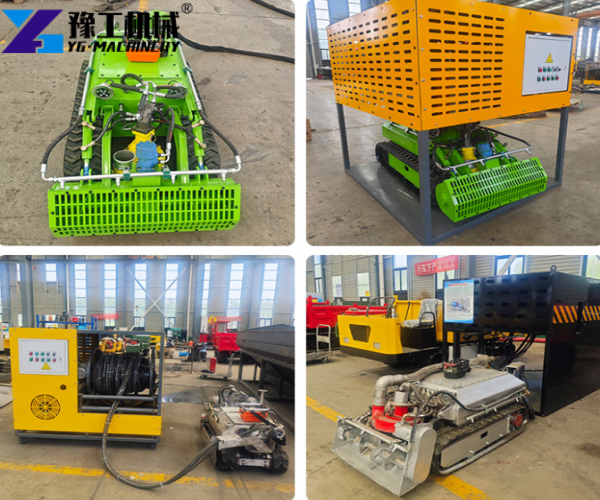
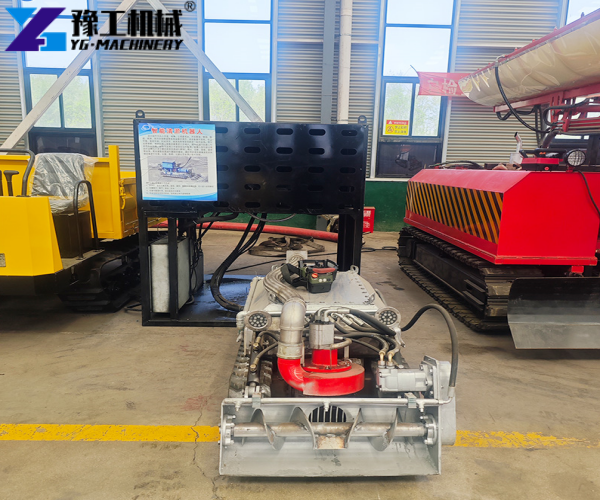
The six models cover different working widths and rated pumping capacities. Buyers can start with the dimensions of the work area, the type of sediment, and the distance to the discharge point.
- YG500 and YG600: Both models list a flow of 100 m³/h and a particle size limit of 15 mm. Their compact dimensions suit smaller fish ponds and narrow drainage channels where a wider machine has less room to move.
- YG700 and YG800: Both list a flow of 160 m³/h and a particle size limit of 40 mm. They offer higher rated flow for sites with greater sediment loads or wider working areas.
- YG900: This model lists a flow of 200 m³/h and a particle size limit of 50 mm. It suits projects that need a wider working area and higher rated pumping capacity.
- YG1200: The largest listed model offers a flow of 250 m³/h and a 4-inch or 6-inch pump option. Its specifications identify large culverts as an application, making it an option for selected confined-channel projects.
Rated flow does not equal guaranteed daily output. Slurry concentration, sediment properties, pipe length, and discharge conditions affect actual production. For a fish pond with soft organic sludge, buyers should describe the sediment and required discharge route before selecting a pump. Sites with coarse sand or larger particles need particular attention to the listed particle size limits.
Applications of the Underwater Dredging Robot
Fish ponds and aquaculture farms: Feed residue, organic waste, and fine sediment accumulate on pond bottoms. Removing these deposits can restore water depth without requiring a large dredging vessel to enter the pond. The selected model must match the pond’s dimensions and the material being pumped.
Drainage channels and culverts: Sediment buildup narrows water passages and restricts drainage. A tracked machine can work in selected channels where a boat cannot operate. The YG1200 model is listed for large culverts.
Wastewater treatment tanks: Sludge settles at the bottom of treatment and settling tanks. Pump capacity and particle size limits matter because thick sludge and coarse debris behave differently during suction and transport.
Reservoirs and small lakes: The machine collects bottom deposits and transfers them to a designated discharge area. Pipeline routing and access to the water’s edge are important when planning a dredging operation.
Underwater Dredging Robot Price and Purchase
The Underwater Dredging Robot price depends on model size, pump capacity, power system, pipeline configuration, and requested options. When evaluating a dredging robot for sale, buyers should consider the complete operating setup rather than the machine price alone.
Prepare these details when requesting a quotation:
- Pond, channel, tank, or culvert dimensions
- Water depth and available access space
- Sediment type and approximate particle size
- Distance from the dredging area to the discharge point
- Preferred electric or diesel power
- Delivery destination and spare-parts requirements
These details help match the crawler width, pump, and pipeline to the actual worksite. They also help avoid paying for pumping capacity that the project does not require.
Remote Control Dredging Robot Operation and Maintenance
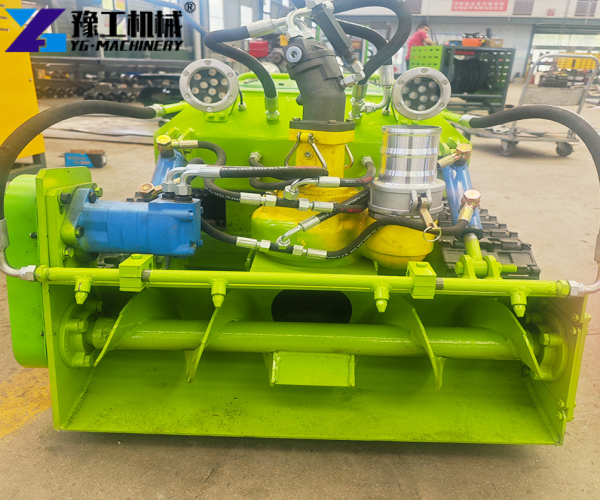
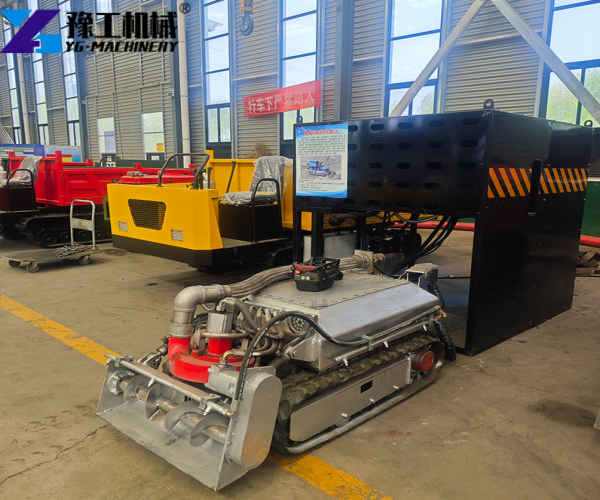
Sand and other abrasive solids can wear pump components during repeated dredging work. After operation, remove residual mud from accessible parts and inspect the pump, hoses, pipeline connections, tracks, and hydraulic system. Check the wireless remote-control functions before the next shift.
For sites that regularly handle coarse sediment, ask about wear-part materials and replacement intervals. Keep the discharge line clear, and isolate the power supply before maintenance. Release hydraulic pressure according to the equipment instructions before servicing hydraulic components.
Wanna learn about the dredging cleaning robot sold to USA?
Request an Underwater Dredging Robot Quotation
If you are looking for a safe, efficient, and eco-friendly solution for river desilting, pond cleaning, urban waterway renovation, or shallow water sand extraction, YG intelligent dredging robot is your better choice. Replacing risky manual diving and bulky traditional dredgers, this unmanned small dredge delivers dead-angle-free underwater cleaning, high-efficiency slurry pumping, and stable long-term operation. With multiple models covering different working widths and flow rates, it adapts perfectly to municipal, agricultural, and environmental projects. Featuring wear-resistant parts, low maintenance, and wireless remote control, it greatly cuts labor costs and project downtime. Stop relying on outdated dredging methods. Contact YG Machinery today to get professional project matching, customized solutions, and the latest quotation for your ideal dredging robot!
YG Machinery also supplies complementary environmental machinery, including fog cannon machine and electric road sweeper for dust control and site cleaning at construction and industrial facilities. Water cannon dust suppression equipment is also available for projects that need additional dust-control measures.
FAQ
How is an underwater dredging robot deployed at a project site?
Deployment involves transporting the machine to the water’s edge, lowering it into the working area, positioning the discharge pipeline, and testing the remote-control system before dredging begins. Site access and available lifting equipment affect setup arrangements.
Can an underwater dredging robot operate continuously for a full work shift?
Operating time depends on the power supply, motor configuration, working conditions, and maintenance schedule. For long shifts, buyers should discuss continuous-duty requirements, cooling arrangements, and routine inspection intervals with the supplier.
What training is required before operating the machine?
Operators need training in remote-control functions, machine positioning, pipeline setup, emergency shutdown, and routine maintenance. Training should also cover the response to blocked pipelines, abnormal pump noise, and loss of remote-control communication.
Can the machine be customized for a specific dredging project?
Configuration options can be discussed according to site layout, power availability, pipeline requirements, and operating conditions. Buyers should provide drawings, site photos, or access measurements so the supplier can review the requested setup.