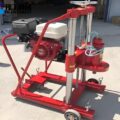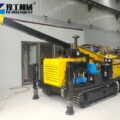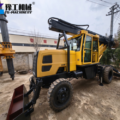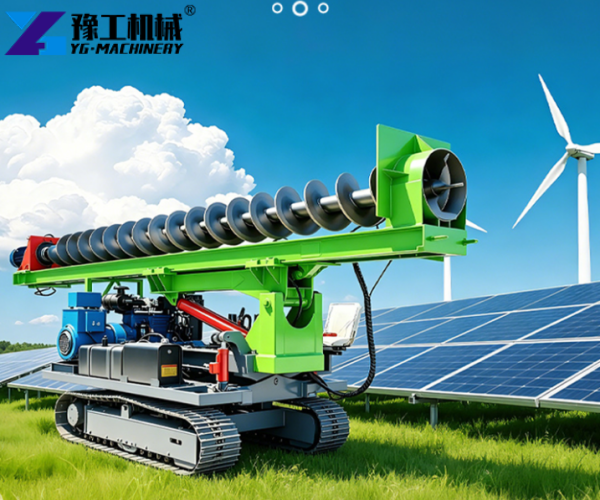
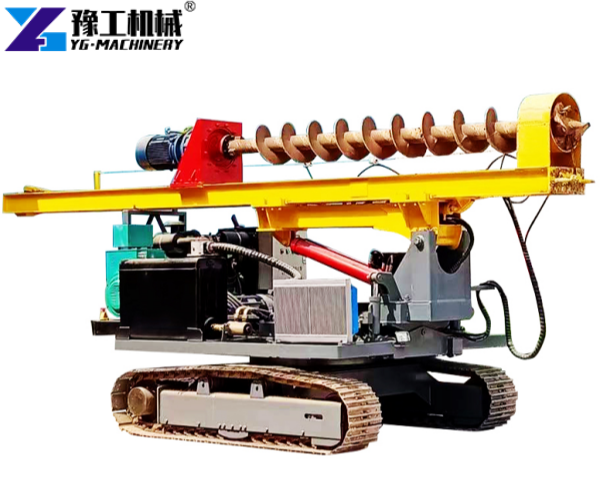
Installing screw piles requires controlled torque, accurate positioning, and sufficient ground penetration. A helical pile driver uses hydraulic power to rotate piles into soil for solar foundations, fences, greenhouses, and small buildings. Unlike impact piling equipment, rotary installation uses continuous rotation and downward pressure. This method reduces excavation, concrete work, and curing time. Compact equipment also suits projects with narrow access routes and scattered foundation points.
Helical Pile Driver Parameters
| Item | Parameter |
| Model | YG-32S helical pile driver |
| Rig weight | 1.2T |
| Dimensions (L×W×H) | 230013002200mm |
| Engine power | 32HP |
| Rotary head torque | 3500N.m |
| Hydraulic oil pump | Single pump |
| Hydraulic loading system | Cylinder chain pressure |
| Hydraulic working pressure | 20Mpa |
| Way of walking | Crawler gearbox walking |
| Walking speed | 7-15km/h |
| Cooling system | Hydraulic cooler |
| Carriage travel distance | 2.8m |
| Piling height | 1-3m |
| Borehole diameter | 50-300mm |
| Borehole depth | 1-30m |
| Air consumption | 6m³/min |
| Adapt to rock types | Medium hard rock, F=8-12 |
| Hydraulic legs | 4 |
| Climbing ability | 35° |
How a Screw Pile Machine Works
Hydraulic power drives the rotary head, which turns each screw pile into the ground. Helical plates cut through the soil as rotation and downward pressure advance the pile.
Installation follows five steps:
- Positioning: Mark pile locations according to foundation drawings.
- Connection: Attach the pile to the rotary head and inspect the connection.
- Installation: Adjust rotation speed and pressure according to ground resistance.
- Extension: Add extension shafts when greater depth is required.
- Inspection: Check depth, alignment, and installation torque against project requirements.
Installation torque helps engineers assess pile performance. Soil conditions, pile dimensions, and foundation calculations also determine load capacity.
Features of a Portable Ground Screw Installer
1. Modular Transport
A ground screw installer with modular components simplifies transport and site access. Depending on component dimensions and weight, crews may use a pickup truck or small trailer. Check payload limits and lifting requirements before delivery.
2. Crawler Travel
YG-32S uses a crawler gearbox and four hydraulic legs. Its rated climbing ability reaches 35°. Ground traction, slope conditions, and machine stability determine actual climbing performance.
3. Hydraulic Drive
The 32 HP engine powers a hydraulic system with a working pressure of 20 MPa. The rotary head delivers rated torque of 3,500 N·m. Operators must match working settings to pile dimensions and ground resistance.
4. Reduced Excavation
A screw pile machine drives piles directly into the ground. Compared with many concrete foundation methods, this process reduces excavation, soil removal, and curing time. It also limits site restoration work.
Applications of a Photovoltaic Piling Rig
1. Solar Foundations
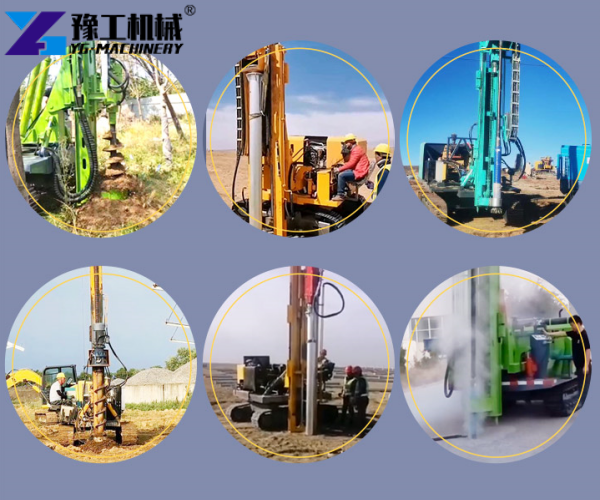
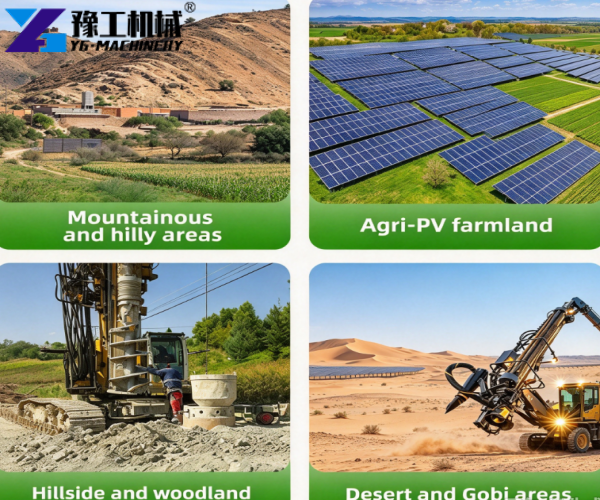
A photovoltaic piling rig installs screw piles for ground-mounted solar panels, distributed photovoltaic projects, agrivoltaics, and hillside solar farms. A solar foundation machine reduces the need for concrete foundations. Site access, pile alignment, and ground conditions remain important selection factors.
2. Fences and Boundaries
Farm fences, industrial boundaries, and safety barriers use individual foundation posts. Rotary installation places piles along planned boundaries without continuous trench excavation. Compact equipment also suits narrow fence lines.
3. Greenhouses and Agricultural Facilities
Greenhouse frames, orchard supports, and agricultural shelters require foundations that match structural loads and soil conditions. Compact piling equipment works between structures and along narrow field access routes.
4. Small Buildings
Wooden cabins, decks, gazebos, container buildings, and temporary structures may use screw pile foundations. Some projects also require removable foundations. Workers must inspect pile condition before reuse.
Other applications include communication poles, surveillance poles, and solar streetlights. Helical anchors also serve certain slope stabilization and uplift resistance projects when engineers specify suitable designs.
How to Choose a Crawler Piling Machine
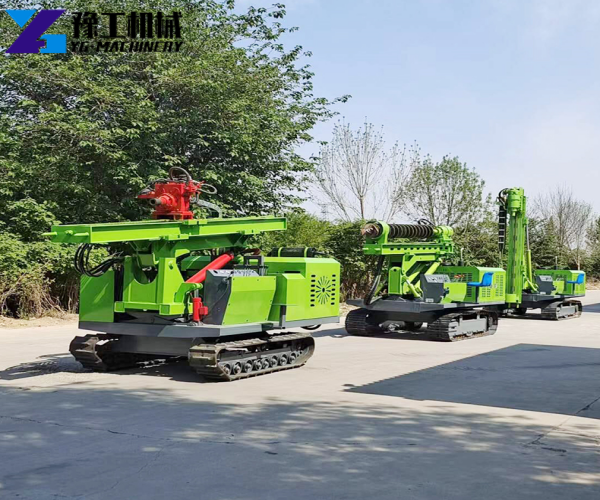
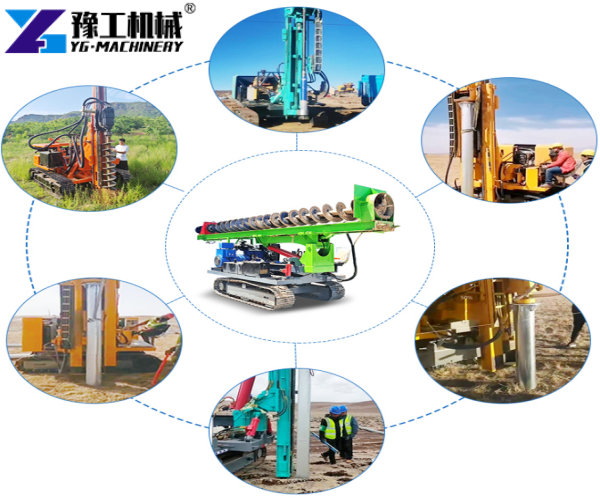
When selecting a crawler piling machine, assess the following factors:
- Torque: Match rotary torque to pile diameter, ground resistance, and foundation loads. YG-32S delivers 3,500 N·m.
- Installation depth: Review geological data, pile length, and extension shaft requirements. Borehole depth does not automatically equal achievable pile installation depth.
- Site access: Check passage width, turning space, slope, and ground bearing capacity.
- Attachments: Match rotary heads, connectors, and extension shafts to the pile type.
- Total cost: Include equipment purchase, transport, labor, maintenance, attachments, and site restoration.
Hard rock, large gravel, and deep piles may require higher torque or pre-drilling. Confirm machine capacity against actual ground conditions before purchase.
Why Choose YG Portable Piling Equipment
YG Machinery supplies construction equipment for foundation and infrastructure projects. Buyers evaluating a portable piling rig should consider transport, site access, and pile compatibility.
- Flexible transport: Modular construction simplifies component handling and delivery.
- Restricted site access: Compact dimensions suit selected hillside sites, greenhouses, and fence lines.
- Less ground disturbance: Rotary installation reduces extensive excavation and concrete work.
- Shorter schedules: Crews avoid concrete curing time and proceed after piles meet design requirements.
- Flexible attachments: Compatible rotary heads and extension shafts support different pile specifications within machine capacity.
Provide pile diameter, required depth, ground conditions, foundation loads, and site access details when requesting a quotation. YG Machinery can assess the YG-32S configuration against project requirements.
FAQ
Can screw piles resist uplift forces?
Yes. Engineers use screw piles and helical anchors for certain uplift applications. Design calculations must account for soil conditions, anchor geometry, installation depth, and required load capacity.
Can workers remove and reuse screw piles?
Some screw piles allow removal when project conditions permit. Inspect shafts, helical plates, connections, and corrosion protection before reuse.
What affects screw pile service life?
Soil corrosion, groundwater, steel grade, protective coatings, installation quality, and structural loads all affect service life.
Which documents should buyers request before shipment?
Request the equipment manual, maintenance instructions, spare parts information, applicable conformity documents, packing list, and shipping details.
For solar foundations, fences, agricultural facilities, and small buildings, a helical pile driver offers rotary installation with limited excavation. Match YG-32S specifications and attachments to ground conditions, pile design, and project requirements before ordering.