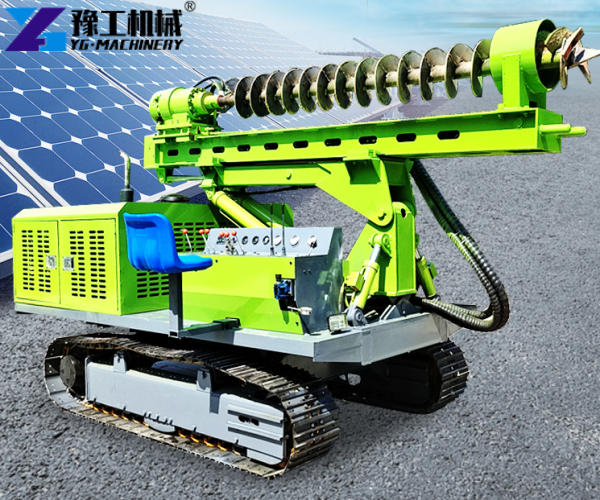
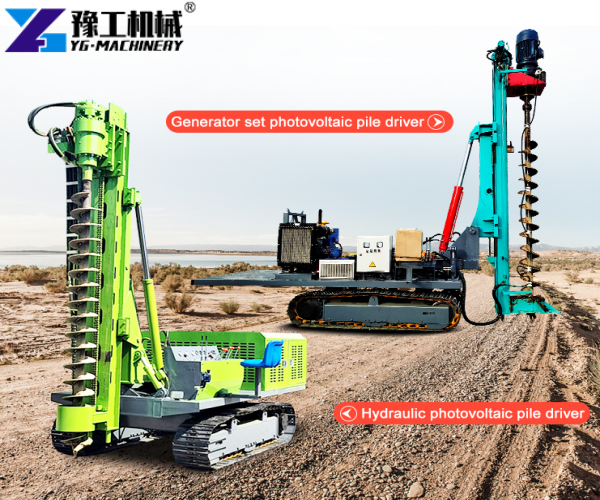
A solar pile driver installs foundation piles for ground-mounted photovoltaic (PV) systems. Depending on the foundation design, crews use rotary drilling to prepare holes or hydraulic impact driving to drive piles into the ground. YG Machinery offers hydraulic and crawler photovoltaic pile driver configurations for solar projects with different pile dimensions, ground conditions, and access requirements.
Solar Pile Driver Specifications
| Parameter | Hydraulic photovoltaic pile driver | Crawler photovoltaic pile driver |
| Overall dimensions | 4700×2100×2800mm | 4700×2200×2800mm |
| Track shoe width | 400mm | 400mm |
| Motor | 4108 | 4108 |
| Generator power | – | 88kW Motor |
| Drilling diameter | 80-500mm | 80-600mm |
| Drilling depth | 0-6m | 0-6m |
| Reducer torque | 13000N·m | – |
| Mainstream pump | triple pump | – |
| Oil pump | 40/40/32 | 40/40/32 |
| Drill pipe rotational speed | 180r/min | – |
| Gradability | 30° | – |
| Rock hardness | 6-20F | – |
| Slide tilt angle | 120° | – |
| Drill arm swing angle | left and right 150° | – |
| Slide swing angle | left and right 40° | – |
| Driving speed | 0-3km/h | 3km/h |
| Hydraulic hammer flow | – | 50-110L/min |
| Impact frequency | – | 350-800BPM |
| Hydraulic system pressure | – | 25MPa |
| Strong wind for heat dissipation | – | yes |
Choosing a Solar Pile Driver for Your Project
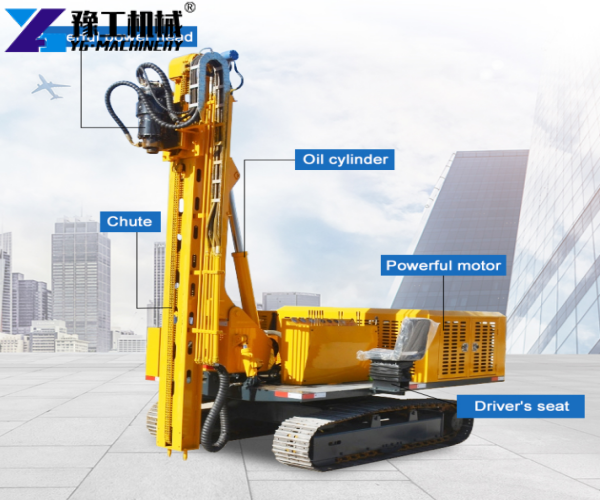
The hydraulic and crawler models have different listed features. The hydraulic model specifies reducer torque, drill pipe speed, and drill arm movement. The crawler model lists a larger maximum drilling diameter and hydraulic hammer parameters.
When selecting a photovoltaic pile driver, start with the foundation method. Rotary drilling and impact driving require different tools and operating settings. Then check pile dimensions, required depth, ground conditions, and access at the solar farm.
Solar Pile Driver for Rocky Ground
Rock type and formation affect drilling progress, tool wear, and the foundation method. A solar pile driver for rocky ground needs drilling tools matched to the site rather than relying on torque figures alone.
The hydraulic model lists 13,000 N·m reducer torque, drill pipe speed of 180 r/min, and a stated rock hardness range of 6–20F. These specifications offer a starting point for evaluating the machine. Actual performance also depends on the rock formation, bit selection, hole diameter, and required depth.
On rocky sites, geological records and foundation drawings give YG Machinery information for reviewing the drilling tools and machine configuration. Include the planned pile type and installation method in the inquiry.
Solar Pile Driver for Mountain Solar Farms
Mountain PV projects often have sloping ground, narrow access routes, and uneven working areas. The hydraulic model lists 30° gradability, 150° drill arm swing to either side, and 40° slide swing to either side.
These machine specifications do not establish a safe operating slope for every site. Ground stability, travel routes, and working-platform conditions also matter. For mountain projects, include slope measurements, access width, surface conditions, and pile layout when discussing equipment.
Pile Installation and Damage Control
Solar foundations use different pile installation methods. Rotary drilling prepares holes for foundation piles, while a hydraulic hammer drives piles into the ground. The method must match the pile design and site conditions.
The crawler model lists hydraulic hammer flow of 50–110 L/min, impact frequency of 350–800 BPM, and hydraulic system pressure of 25 MPa. These figures describe its hammer system; they do not guarantee compatibility with every pile.
Pile damage can occur when the hammer does not match the pile, the pile sits out of alignment, or impact settings do not suit the ground. Review pile drawings, cross-sections, and material specifications before selecting the attachment and operating settings.
Transport and Site Access
The hydraulic model measures 4700 × 2100 × 2800 mm. The crawler model measures 4700 × 2200 × 2800 mm. Both list 400 mm track shoes, while the crawler model is 100 mm wider overall.
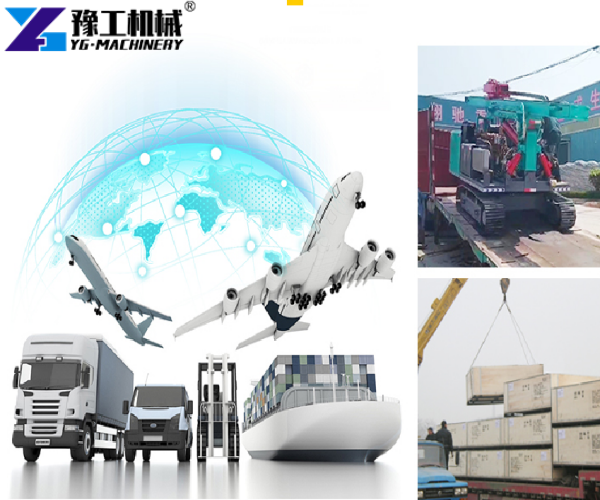
Check gate openings, site roads, turning space, and unloading access before arranging transport. Overseas inquiries should also request shipping and loading details from YG Machinery and account for local road restrictions.
Solar Pile Driver Applications and Pile Types
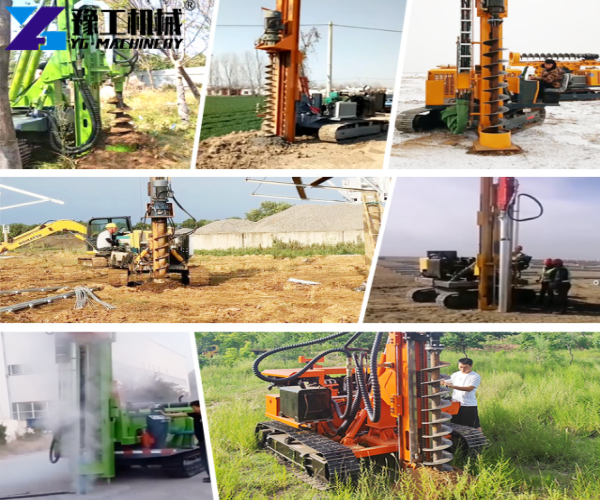
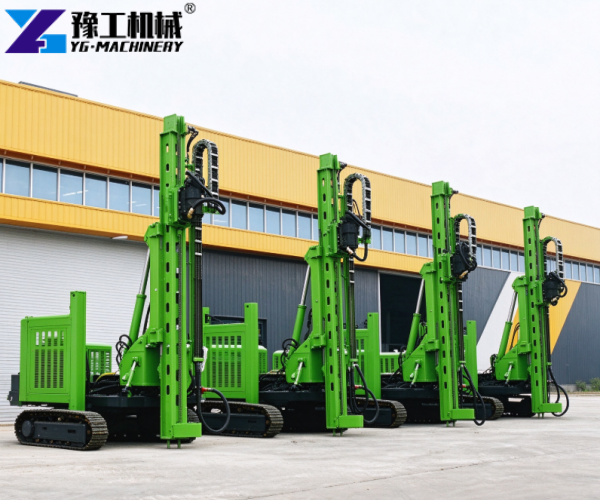
A solar pile driving machine serves ground-mounted PV foundation work. Project requirements vary with the pile design, installation method, and site conditions.
Typical applications include:
- Ground-mounted solar farms on relatively level sites
- PV arrays on sloping or mountainous terrain
- Foundation work in rocky ground with suitable drilling tools
- Projects using compatible photovoltaic screw piles, C-section steel piles, or H-section steel piles
Pile dimensions, material, and installation method determine the required attachment and machine setup. Confirm compatibility with YG Machinery before choosing a configuration.
Why Choose YG’s Solar Pile Driver Over Other Suppliers?
YG’s hydraulic model uses a triple-pump design to deliver hydraulic power to the machine’s systems. Its 4108 engine is a familiar engine type in construction equipment, which can make routine maintenance and spare-parts sourcing more straightforward in markets where parts are available. These practical considerations matter on solar projects where maintenance access and equipment downtime affect site work.
The right configuration still depends on the project. Share the pile specifications, geological conditions, required installation depth, and site access details with YG Machinery. The team can review the application and provide a quotation and available configuration information. If you are interested, please contact YG at any time.
FAQ
What types of piles can a solar pile driver install?
A compatible setup may install photovoltaic screw piles, C-section steel piles, or H-section steel piles. Pile dimensions, material, and installation method determine the attachment and machine configuration. Confirm compatibility before ordering.
Can a solar pile driver work in rocky ground?
The hydraulic model lists 13,000 N·m reducer torque and a stated rock hardness range of 6–20F. The appropriate drilling tools also depend on the rock formation, hole diameter, and required depth. Geological records help clarify the site conditions.
What should I consider when choosing a pile driver for a mountain solar farm?
Review the terrain, ground stability, access width, pile layout, and installation method. The hydraulic model lists 30° gradability and drill arm and slide movement specifications, but these figures do not replace a site-specific assessment.
How can a project reduce pile damage during installation?
Select a hammer or drilling attachment that matches the pile and ground conditions. Maintain pile alignment and use suitable operating settings. Incorrect impact settings or poor alignment can deform piles.