In May 2026, a commercial building renovation project in Mississauga, Ontario, required new openings through reinforced concrete walls and floor slabs. The openings supported plumbing, electrical conduits, and ventilation duct installation.
The concrete sections reached 180 mm in thickness, while the required hole diameters ranged from 30 mm to 200 mm. The crew had six working days to complete 86 openings. Two workers operated one rig platform across two shifts each day, while the team selected the machine specification according to each hole diameter.
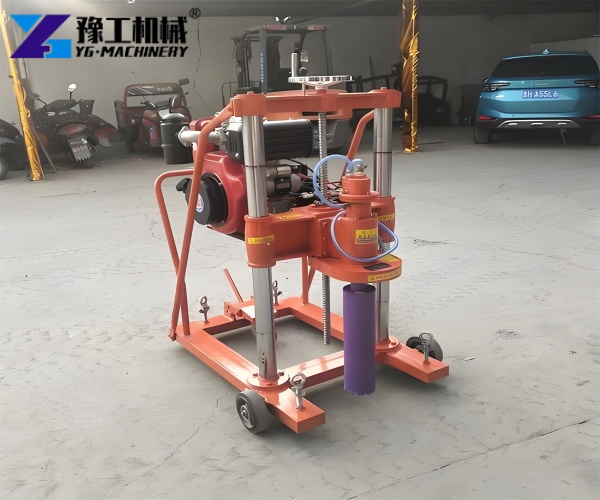
Core Drilling Rig Specifications Used in the Project
The Ontario site supplied 120 V/240 V, 60 Hz power. YG Machinery’s equipment supports 110–240 V, 50/60 Hz, which covers the site’s available power range.
For larger openings, the crew connected the drill to a suitable 240 V circuit. In addition, the site used GFCI devices where required as part of its electrical protection measures.
| Drilling Range | Rated Voltage | Rated Frequency | Rated Input Power | No load Speed |
| Ø15 135 mm | 110 240 V | 50/60 Hz | 1500 W | 0 980 rpm |
| Ø15 165 mm | 110 240 V | 50/60 Hz | 3200 W | 0 800 rpm |
| Ø15 185 mm | 110 240 V | 50/60 Hz | 3380 W | 0 750 rpm |
| Ø15 205 mm | 110 240 V | 50/60 Hz | 3650 W | 0 700 rpm |
| Ø15 255 mm | 110 240 V | 50/60 Hz | 3950 W | 0 580 rpm |
| Ø15 305 mm | 110 240 V | 50/60 Hz | 4350 W | 0 760 rpm |
Motor speed may vary between 50 Hz and 60 Hz. Confirm the actual no-load speed for the selected configuration.
Finding Safe Drilling Positions
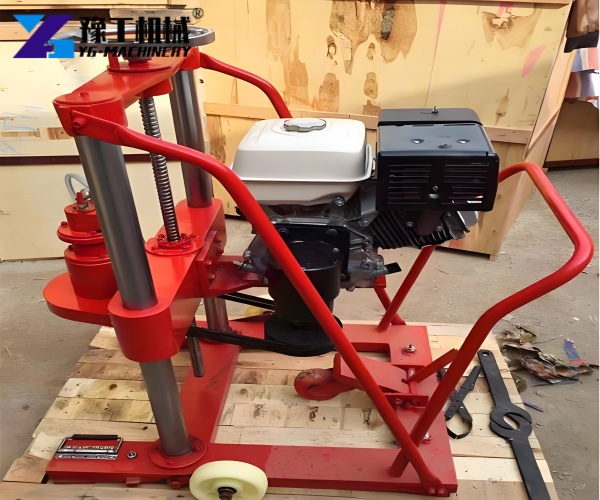
Before drilling, the crew scanned every marked position for rebar, electrical conduits, water pipes, and post-tension cables. This step helped the operators identify concealed services before starting the core drilling work.
Most positions matched the renovation drawings. However, one planned opening sat too close to a concealed service. The team therefore moved the opening approximately 150 mm and obtained project engineer approval before drilling.
This approach allowed the crew to keep the planned installation layout while avoiding unnecessary interference with existing building services.
86 Openings in Three Main Sizes
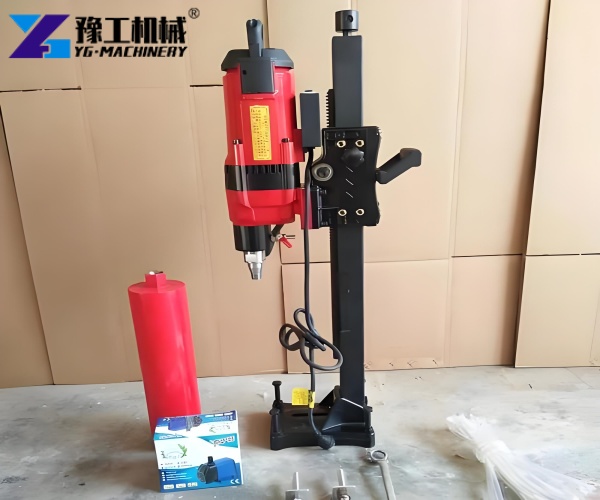
The project included approximately 60 holes at 50 mm, 20 holes at 100 mm, and 6 holes at 200 mm. The team mainly used the larger openings for ventilation ducts.
| Hole Diameter | Project Quantity | Typical Drilling Time | Drill Bit |
| 50 mm | 60 holes | 15 20 min/hole | Thin wall diamond core drill |
| 100 mm | 20 holes | 30 45 min/hole | Diamond core drill |
| 200 mm | 6 holes | 2 3 h/hole | Segmented diamond core bit |
The operators selected the drill and bit according to the required hole diameter. For example, the smaller 50 mm openings required less drilling time, while the 200 mm holes required substantially longer cutting cycles.
Meanwhile, the crew changed segmented bits during the larger-hole work as the cutting segments wore. This helped maintain the required cutting performance throughout the project.
Wet Core Drilling Through Reinforced Concrete
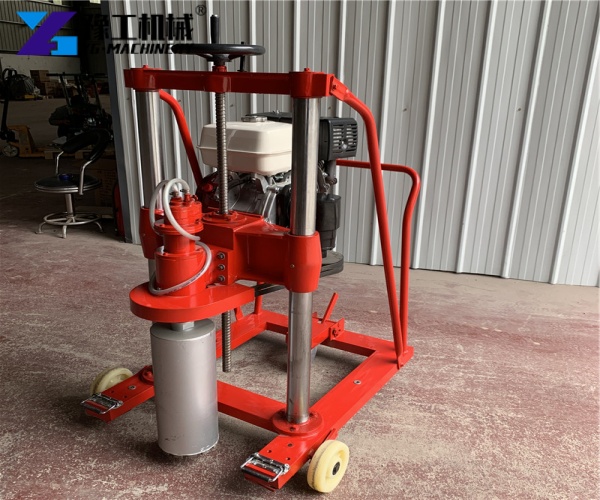
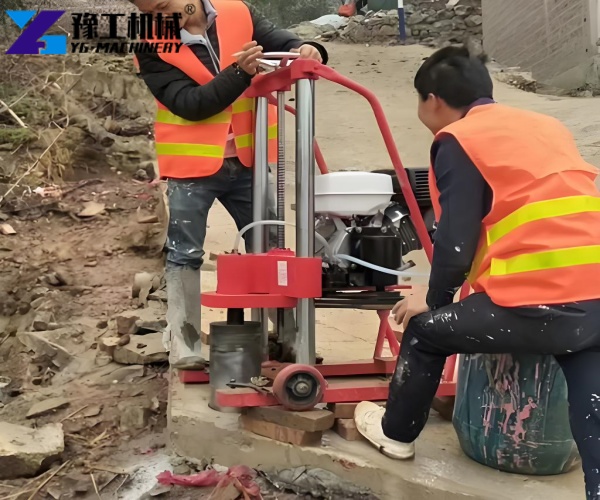
The team used wet core drilling to control heat and reduce airborne dust during cutting. At the same time, workers collected the water and drilling slurry produced during the operation.
When the diamond bit reached reinforcement, the operator reduced the feed pressure rather than forcing the drill through the steel. For the larger 200 mm openings, the crew also used firmer anchoring to improve drill stability.
As the site supervisor explained, “The main benefit was switching machine settings instead of bringing in a second rig.”
Therefore, one rig platform could handle the project’s different hole sizes while the operators adjusted the machine configuration to match the drilling requirements.
Checking the Finished Openings
After drilling each opening, the crew checked its diameter and position before the installation team started its work. The operators compared each opening with the approved drawings and visually inspected the concrete edges.
During the inspection process, the team found one opening with a small positional deviation. The crew corrected the opening before the related installation work began.
As a result, the final inspection found no drilling-related rework requirements.
Project Result in Mississauga
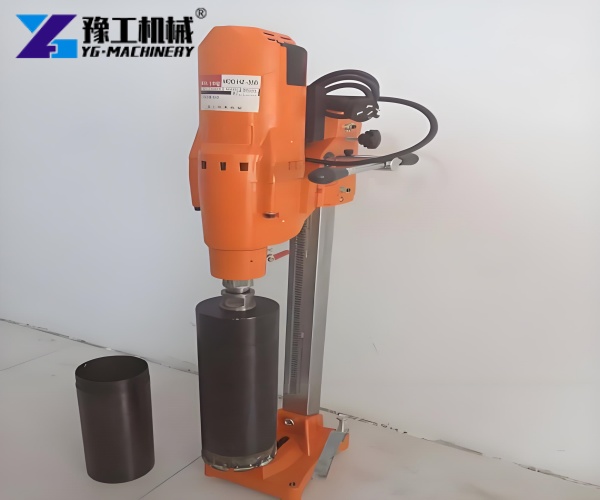
The crew completed 86 concrete openings in six working days with one rig platform and two operators. The team selected different machine specifications according to the required hole sizes and site conditions.
- 86 total openings
- 60 × 50 mm holes
- 20 × 100 mm holes
- 6 × 200 mm holes
- Up to 180 mm concrete thickness
- 6 working days
- 1 rig platform with multiple specifications
- 2 operators
- 120 V/240 V, 60 Hz site power
The completed openings met the project’s requirements for plumbing, electrical, and ventilation installation. In addition, the crew completed the final inspection without drilling-related rework.
For contractors planning to use a concrete core drill, several factors require attention before work begins. These include hole diameter, concrete thickness, reinforcement, available power supply, fixing method, and diamond bit selection.
If you are planning core drilling concrete work in Canada, send YG Machinery the required hole diameter, concrete thickness, available power supply, and site conditions. The YG team can then help select a suitable Core Drilling Rig and diamond core drill configuration for the application.