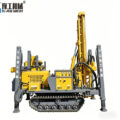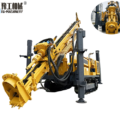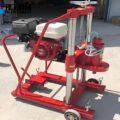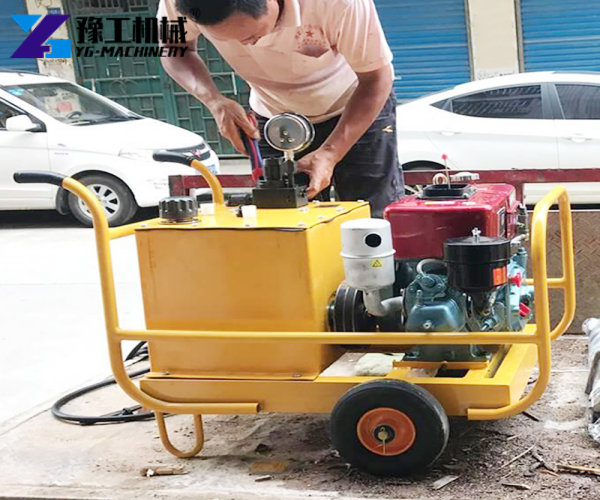
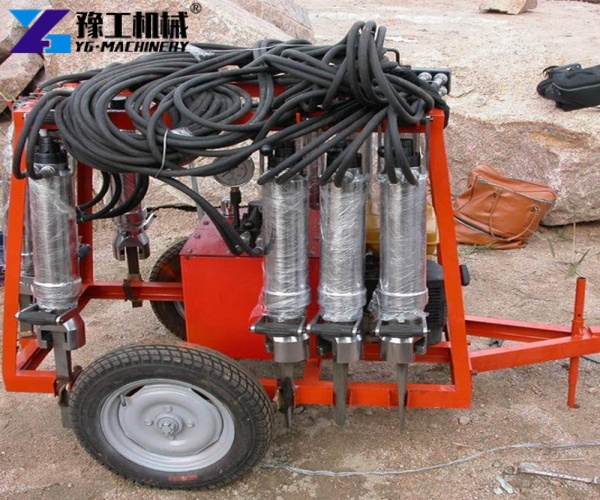
A Hydraulic Rock Splitter provides a controlled method for breaking large rocks and stone blocks. Unlike blasting and impact breaking, it uses drilling and hydraulic force to create and expand cracks in the target area. This reduces strong impact and helps control the breaking range near buildings, pipelines, and other facilities.
The machine is suitable for urban renovation, foundation excavation, road construction, quarrying, and sites with limited working space. YG Machinery integrates drilling, pushing, and splitting into one machine. It has 24 kW drilling power, a 1600 mm maximum drilling depth, a 120 mm hole diameter, and a 1000 mm splitting depth. The maximum splitting force is 8000 T, with a 120° rotation angle, and the machine requires an excavator above 25 t.
Hydraulic Rock Splitter Specifications
| Item | Specification |
| Rock Drilling Machine Power | 24 kW |
| Drilling Hole Diameter | 120 mm |
| Maximum Drilling Depth | 1600 mm |
| Drilling Speed | 1 m/min |
| Splitting Depth | 1000 mm |
| Splitting Force | 8000 T |
| Rotation Angle | 120° |
| Rock Drilling Maximum Propulsion | 25 kN |
| Splitting Maximum Pullout Force | 70 kN |
| Excavator Requirement | >25 t |
How Does Hydraulic Rock Splitting Work?
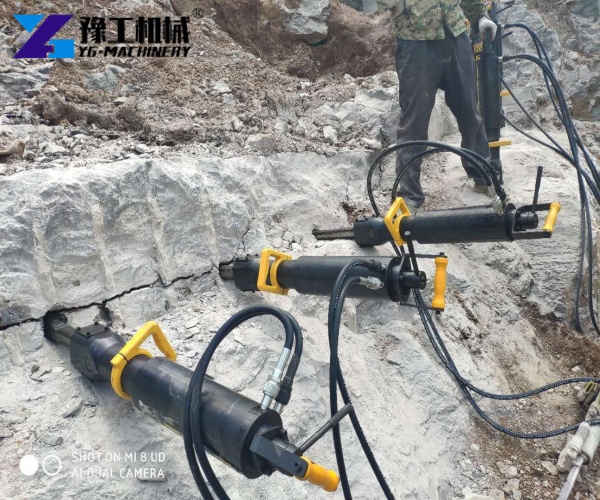
The Hydraulic Rock Splitter uses static hydraulic force instead of direct impact. It does not rely on strong impact to break the rock. The drilling positions determine the main cracking area. The standard operation includes the following steps:
Positioning: The drilling points are set according to the rock shape and the planned splitting line. This helps control the splitting direction.
Drilling: The integrated drilling system creates holes with the required diameter and depth.
Splitter Placement: The splitting mechanism is placed inside the drilled hole.
Hydraulic Pressurization: The hydraulic system applies stable lateral pressure inside the rock.
Rock Separation: Continuous hydraulic force causes cracks to form and extend. The rock then separates along the affected area.
This static splitting method reduces strong vibration and impact during operation. It can be used near buildings, pipelines, and other sensitive facilities where controlled rock breaking is required.
Rock Splitter Applications in Construction and Quarrying
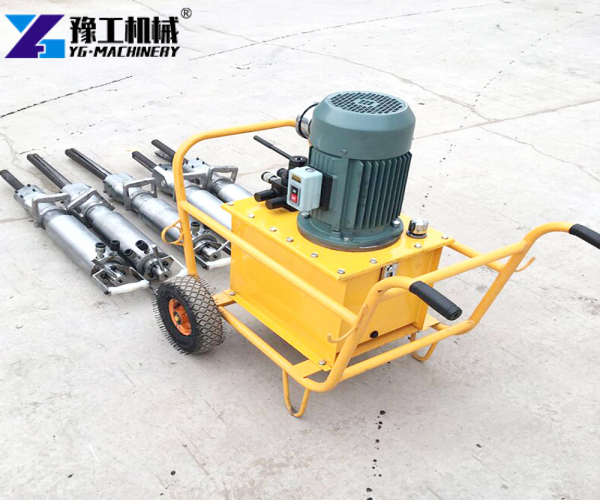
The equipment splits large and solid rocks in a controlled manner. It is not designed for ordinary small-stone breaking. Typical applications include:
- Quarrying and Stone Processing: Workers can divide large blocks of natural stone before handling, cutting, or further processing. They can plan the splitting area according to the required block size.
- Foundation Excavation: Contractors can split large hard rocks in foundation pits into smaller sections. Excavators can then remove the separated blocks.
- Urban Construction: Contractors can use the equipment for road renovation, underground pipeline installation, and building foundation work. Controlled splitting helps reduce disturbance to nearby structures and facilities.
- Tunnel and Infrastructure Projects: Workers can split local hard rock in tunnels and trenches according to the excavation profile. The equipment can also work in areas with limited space.
In stone processing, this type of equipment may also be called a stone splitter. The specific configuration depends on stone size, structure, and required splitting depth.
What Are the Advantages of Static Rock Splitting?
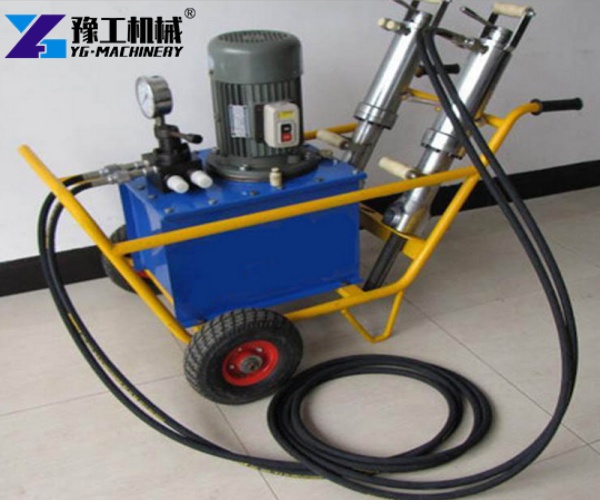
Contractors should select rock-breaking equipment according to actual site conditions. For example, hydraulic breakers may not suit sites with strict vibration limits. A Hydraulic Rock Splitter uses planned drilling positions to control the main splitting area.
The machine can handle large rock blocks that require controlled separation. In addition, its static hydraulic process reduces strong impact during breaking. For this reason, it suits work near buildings, pipelines, and other structures.
How to Choose the Right Model?
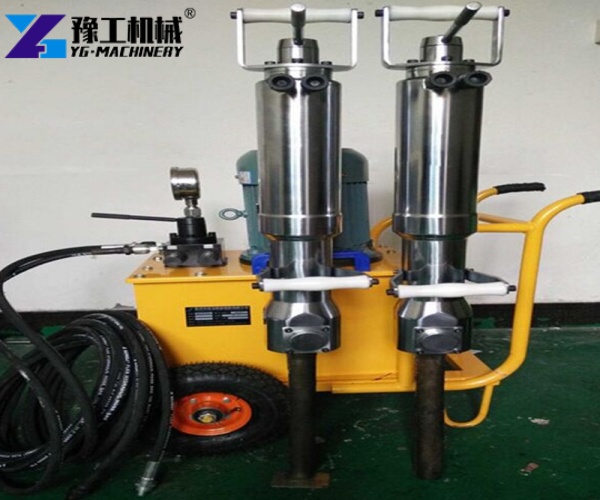
Selection should be based on the actual working conditions. The main factors include:
- Rock type and structure
- Rock size
- Required splitting depth
- Required drilling depth
- Drilling hole diameter
- Excavator model
- Available working space
Different rock conditions require different drilling layouts and operating methods. When selecting the equipment, contractors should also match the drilling system, hydraulic system, and excavator properly.
YG Machinery integrates drilling, pushing, and splitting functions into one machine. The equipment handles controlled rock breaking in different hard-rock applications. Customers can provide rock conditions, project requirements, and excavator specifications to confirm the suitable equipment configuration.
Hydraulic Rock Splitter FAQ
Q1: What is a Hydraulic Rock Splitter used for?
It mainly splits large rocks, stone blocks, and some concrete structures. The equipment uses controlled static splitting.
Q2: What are the maximum drilling and splitting depths?
The maximum drilling depth is 1600 mm. The drilling hole diameter is 120 mm, and the effective splitting depth is 1000 mm.
Q3: What size excavator is required?
The machine requires an excavator above 25 t. Contractors should also check the excavator hydraulic system for compatibility before purchase.
Q4: What is the difference between a Rock Splitter and a Hydraulic Rock Drill?
A Hydraulic Rock Drill drills holes, while a Rock Splitter uses hydraulic force to create cracks and separate the rock. This integrated machine combines both functions for drilling and splitting.