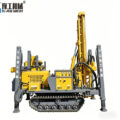
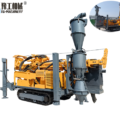
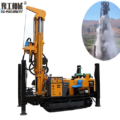
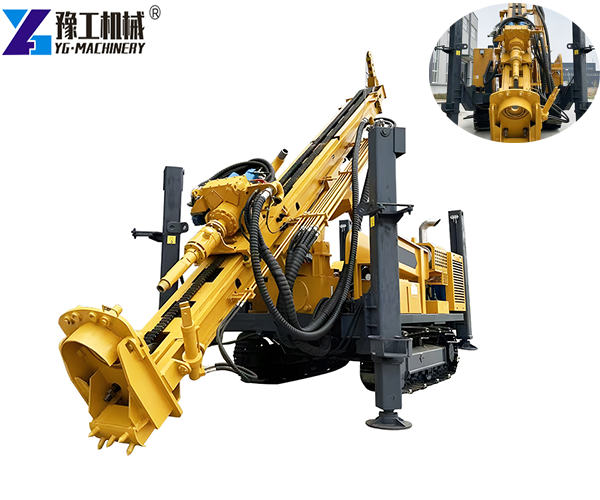
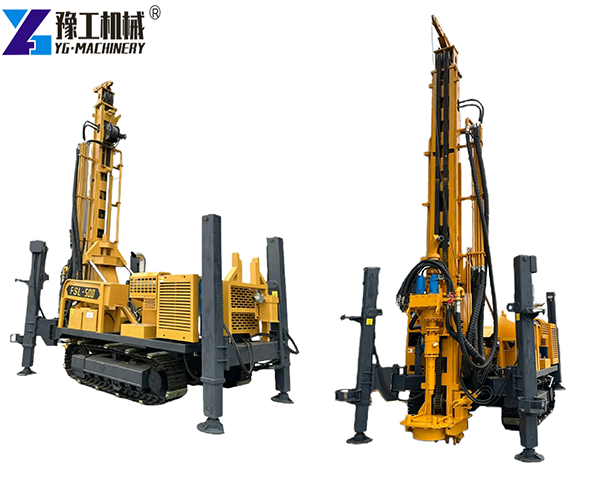
Drilling for mineral exploration sounds simple. But many drilling contractors struggle with slow penetration, contaminated samples that lead to wrong decisions, and high water usage in dry areas. An RC drill rig solves these problems fast. This reverse circulation drilling machine uses dual-wall drill pipes and compressed air to bring clean samples to the surface in seconds. No water needed. No sample mixing.
YG Machinery offers the YG150RC reverse circulation drill rig for mining companies, exploration teams, and geotechnical contractors worldwide.
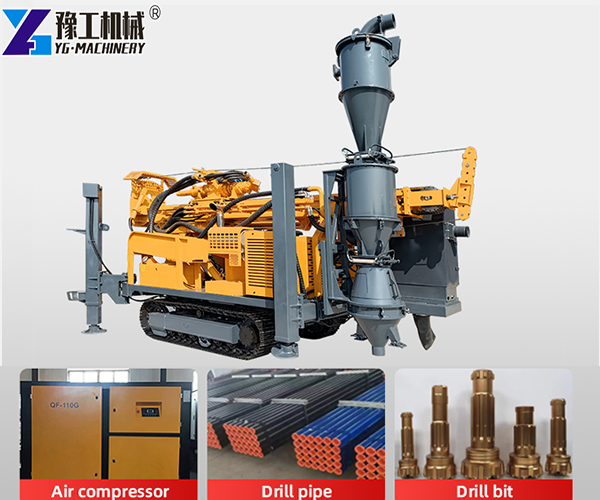
Technical Parameters of RC Drill Rig
| Parameter | YG150RC |
| Drill rig weight (crawler) | 9000 kg |
| Engine power | 125 kW (Cummins 6BTA5.9-C125) |
| Dimensions (normal) | 6750×2200×2950 mm |
| Ambient temperature | -10°C to 38°C |
| Nominal drill depth | 150 m |
| End-hole diameter | 110-250 mm |
| Drill angle | -10° to 90° |
| Horizontal hole height | 1.85-2.8 m |
| Max output torque | 8000 N.m |
| Rotation speed (continuous) | 30/60, 54/108 rpm |
| Feed stroke | 3500 mm |
| Thrust force | 45 kN |
| Lifting capacity | 65 kN |
| Track walk speed | 1.2 km/h |
| Climb ability | ≥20° |
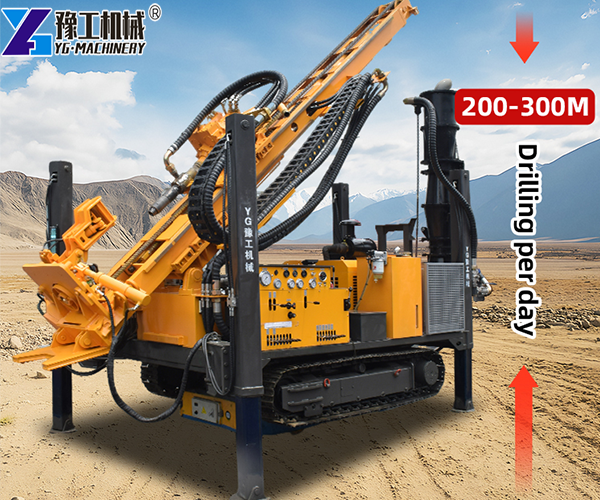
How a Reverse Circulation Drill Rig Works?
The RC drilling machine works on a simple but clever principle. It uses dual-wall drill pipes instead of single pipes.
Step 1: Air goes down – High-pressure compressed air (up to 3 MPa) flows down through the outer pipe channel to the drill bit at the bottom of the hole.
Step 2: Rock breaks – The down-the-hole hammer pounds the bit into the rock. The impact breaks the rock into small chips.
Step 3: Samples come up – The air picks up the rock chips and pushes them up through the inner pipe channel of the dual-wall pipe. This is the “reverse circulation” path. The samples never touch the borehole wall.
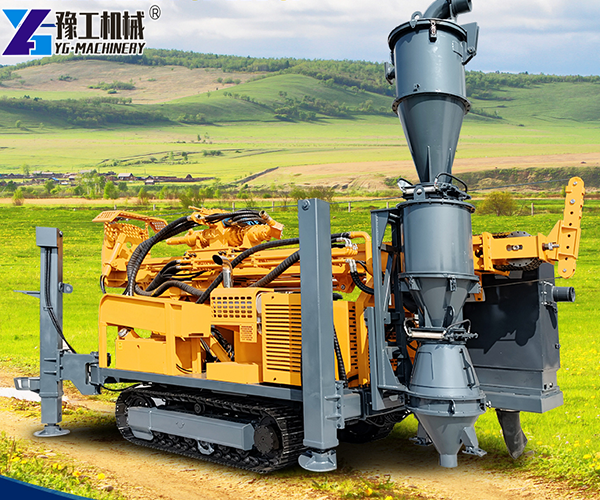
Step 4: Collection – When the air and rock chips reach the surface, they pass through a cyclone separator. The separator spins the air. Heavy rock chips fall into a sample bag. Clean air is released.
This process keeps samples clean and dry. No mud. No contamination from different depths. Every sample comes from exactly where you drilled.
RC Drill Rig vs Conventional Drilling
Traditional drilling methods have serious problems for exploration work. This comparison shows why the RC rig wins.
| Comparison | RC Drill Rig | Conventional (Mud/Forward) |
| Sample path | Inside inner pipe, no wall contact | Outside pipe, touches borehole wall |
| Sample contamination | Very low | High (mixing from different depths) |
| Water usage | None or minimal | High (mud required) |
| Drilling speed in hard rock | Fast (10-25 m/h) | Slow (3-8 m/h) |
| Sample recovery | Continuous, dry chips | Wet, often mixed |
| Suitability for dry areas | Excellent | Poor |
| Cost per meter | Lower | Higher |
For mineral exploration, sample accuracy is everything. A contaminated sample can make a good deposit look poor or a poor deposit look good. The RC drilling machine gives you data you can trust.
Key Advantages of RC Drilling Equipment
Fast penetration – The down-the-hole hammer combined with reverse circulation removes cuttings instantly. No waiting. No re-drilling. Speed is 10-25 meters per hour in hard rock.
Clean, uncontaminated samples – Samples travel up the inner pipe. They never contact the borehole wall. No mixing between depths. Your geological data is accurate.
No water needed – Compressed air does the work. Perfect for dry regions, deserts, and sites where water is expensive or unavailable. No mud disposal issues.
Low operating cost – Less labor. No water trucks. No mud pumps.The RC rig drills faster and cheaper per meter.
Versatile drilling angles – Drill from -10° to 90°. Vertical holes, angled holes, or horizontal holes for road cuts and slope stability.
Crawler mobility – The 9000kg machine walks on tracks at 1.2 km/h. Move between drill pads without a truck. Works on slopes up to 20 degrees.
Built for hard rock – 8000 N.m of torque and 45 kN of thrust force. The Cummins engine delivers reliable power all day.
Applications of Reverse Circulation Drill Rig
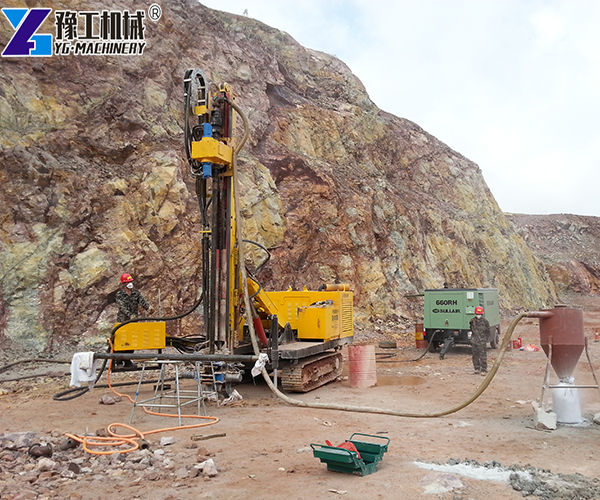
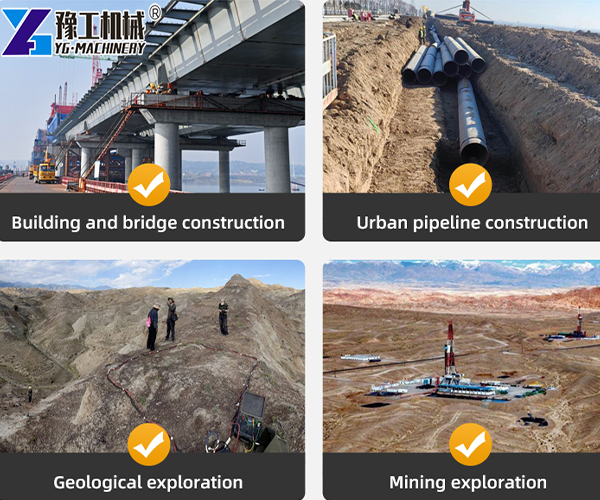
Mineral exploration – This is the main job for RC drill rigs. Gold, copper, iron ore, lithium, and other metals. Drill holes to evaluate deposits before mining.
Grade control in open-pit mines – After a mine starts production, you need to know exactly where the ore is. RC rigs drill short holes to map ore boundaries.
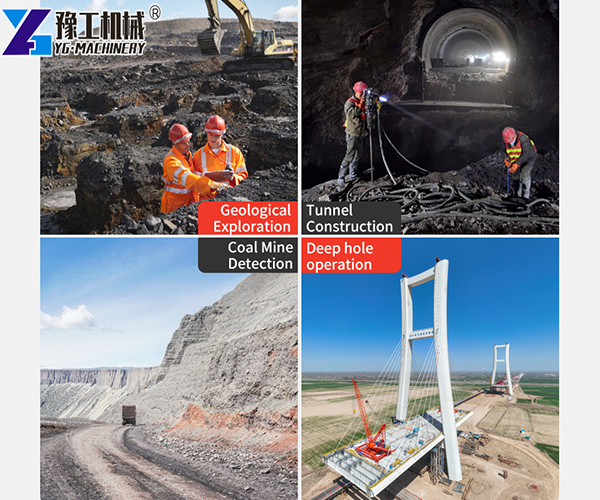
Geotechnical investigations – Before building bridges, tunnels, or dams, you need soil and rock data. RC drilling provides clean samples for lab testing.
Water well drilling – In remote areas, RC rigs drill deep water wells. No mud means cleaner water from the start.For smaller water well projects, a small water well drilling rig may be more suitable.
Environmental site assessment – Test for soil contamination at industrial sites. Collect samples at exact depths without cross-contamination.
Quarry development – Drill blast holes or evaluate stone quality before opening a quarry.
One reverse circulation drilling rig serves all these industries. You do not need different machines for each job.
Customer Case 1: Gold Exploration in West Africa
A junior mining company held exploration licenses in a remote region of West Africa. The area was dry, with no reliable water source. Conventional mud drilling was not possible. The company needed to drill 5,000 meters of exploration holes to define a gold deposit before raising investment.
They purchased a YG150RC reverse circulation drill rig. The rig was shipped by sea, then trucked to the site. Local workers received training from YG’s online support team.
The results:
- Drilling started immediately. No water sourcing needed
- Average penetration rate was 18 meters per hour in hard quartzite
- Samples were clean and uncontaminated. The lab reported consistent, reliable assays
- The deposit was confirmed as economically viable.
- The rig later moved to a second project 200km away. Same fast results
The exploration manager said: “In this dry region, RC drilling was our only option. But even if water was available, I would still choose RC. The sample quality is better, and we drill twice as fast.”
Customer Case 2: Geotechnical Investigation for a Tunnel Project
An engineering firm in Southeast Asia was designing a highway tunnel through a mountain. They needed soil and rock samples from the proposed tunnel alignment. Conventional drilling was slow and the samples were often mixed, making it hard to tell where rock layers started and ended.
They rented a YG150RC reverse circulation drilling machine for the project. The crawler tracks let the rig work on steep mountain slopes.
The results:
- The rig drilled 30 holes along 2km of tunnel alignment
- Clean samples from each meter of depth. The geology team could see exact contacts between layers
- The project finished drilling in 4 weeks instead of 10 weeks
- The engineering design used the accurate data to save money on tunnel supports
The project engineer said: “With conventional drilling, we would still be guessing where the weak rock zones are. RC gave us clean samples we could trust. The tunnel design is better and safer because of it.”
For similar drilling applications, check our crawler water well drilling rig series.
How to Choose the Right RC Drill Rig?
| Your requirement | Why YG150RC fits |
| Drill depth up to 150 meters | Nominal depth rating 150m |
| Hole diameter 110-250mm | End-hole diameter covers your range |
| Hard rock formation | 8000 N.m torque, DTH hammer compatible |
| Dry site with no water | Air-powered reverse circulation |
| Steep terrain | Crawler tracks, 20° climb ability |
| Need angled holes | Drill angle from -10° to 90° |
| On-site mobility | 1.2 km/h walk speed, move between pads |
Still not sure? Tell us your target depth, rock type, and site conditions. YG will recommend the right reverse circulation drill rig for your project.
In addition to RC drill rigs for mineral exploration, YG Machinery also offers RC drill rigs in West Africa for gold and copper exploration projects, crawler water well drilling rigs for deep water well drilling, small water well drilling rigs for compact and portable drilling operations, pneumatic water well drilling rigs for air-powered drilling in remote areas, and hydraulic rock splitters for breaking oversize rocks after drilling.