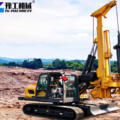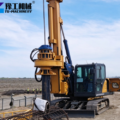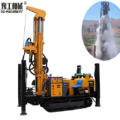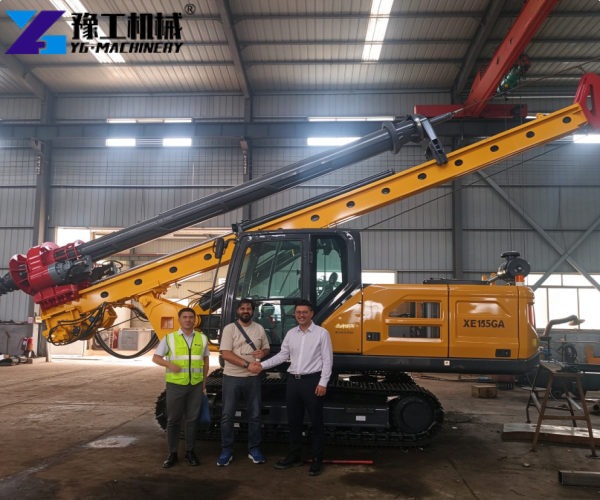
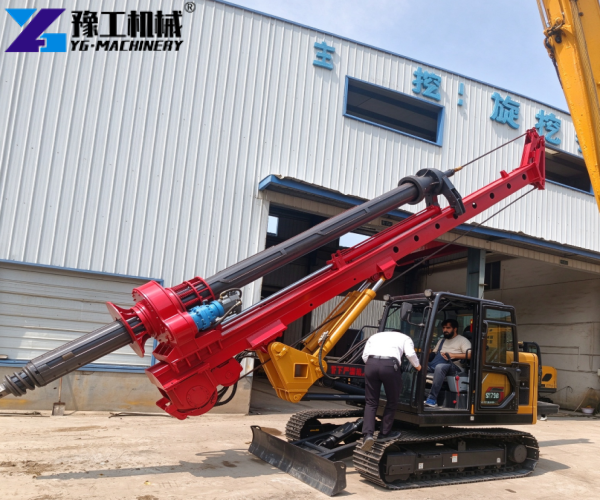
A rotary drilling rig machine uses rotary force to create boreholes in soil and other ground materials. Construction teams commonly use this equipment to prepare holes for bored piles in building and infrastructure projects. During operation, a rotary head drives the drilling tool while the mast guides its movement. The selected machine, drilling tools, and ground conditions all affect the final result.
Rotary Drilling Rig Machine Parameters
| Model | YGLD-13 | YGLD-15 | YGLS-16 | YGLD–20 |
| Max.Drilling Diameter | 1000mm | 1600mm | 1500mm | 1600mm |
| Max.Drilling Depth | 13m | 15m | 16m | 20m |
| Max. Rotary torque | 50KN.m | 45kN.m | 46KN.m | 36KN.m |
| Rotary angle | 360° | 180° | 180° | 360° |
| Rotary speed | 10-45r/min | 17-45r/min | 20-46r/min | 22-43r/min |
| Dimension(m) | 3.1×1.92×3.5m | 6.8×2.27×3.2m | 10 × 2.3× 3.2 m | 9.5×2.6×3.5m |
| Weight | 9ton | 13 ton | 11 ton | 17.8 ton |
Features of Rotary Drilling Rig Machine
Rotary Drilling Mechanism
Torque travels from the rotary head through the drill string to the cutting tool. As the tool turns, it loosens or cuts ground material and gradually forms a borehole. Operators adjust drilling methods to suit ground resistance and foundation requirements.
For bored pile construction, crews drill individual holes at designated foundation positions. Once drilling reaches the required depth, workers install reinforcement cages and place concrete according to the engineering plan.
Adaptability to Construction Sites
Ground conditions vary considerably between projects. Loose soil, compacted layers, gravel, and weathered rock present different levels of drilling resistance, making tool selection an important part of the work.
Before equipment arrives, site teams need to assess several factors:
- Entrance width and turning space
- Overhead clearance and working height
- Ground stability around the drilling position
- Space for drill pipes, tools, and excavated material
- Access for concrete delivery and supporting equipment
Adequate preparation reduces positioning difficulties and unnecessary delays once the rig reaches the site.
Operation and Transportation
Stable ground and sufficient working clearance provide a safer environment for drilling operations. Operators also need to manage excavated material, handle drilling tools correctly, and inspect relevant mechanical or hydraulic systems according to the manufacturer’s maintenance schedule.
Transport planning involves a separate set of requirements. Trailer capacity, loading equipment, road restrictions, and unloading arrangements all affect delivery. If working dimensions differ from shipping dimensions, the supplier and buyer need to establish which measurements apply to transport.
Components of Rotary Drilling Rig Machine
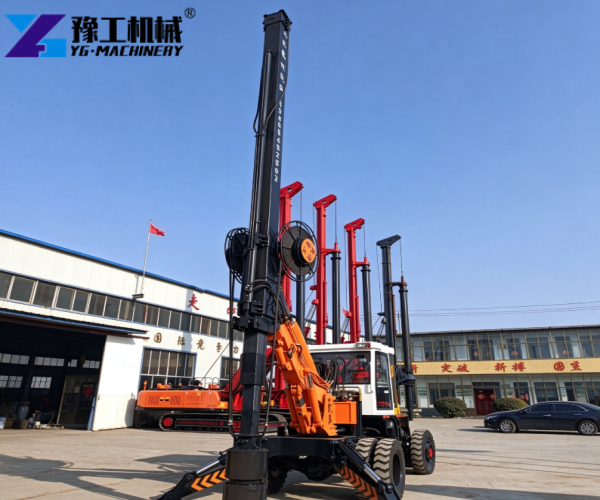
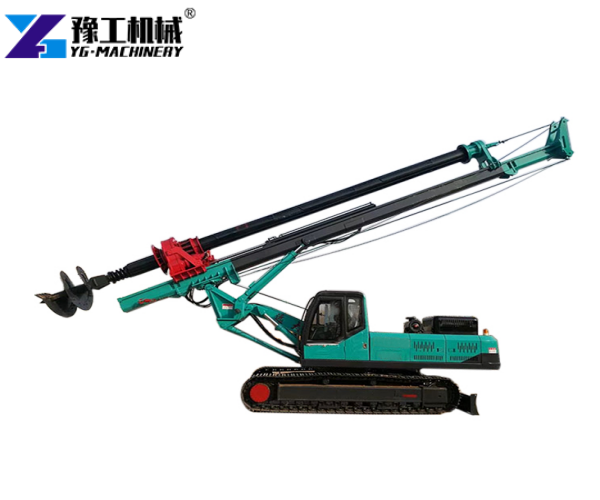
Rotary drilling rigs contain structural, power, and drilling components. Their exact arrangement varies by model, so the equipment documentation provides the definitive component list.
Mast and Power System
- Mast: Supports the drilling assembly and guides its movement during operation.
- Power system: Supplies energy to the rotary mechanism and other operating functions. Depending on machine design, the system may use a diesel engine or an electric motor.
Rotary Head, Drill String, and Drill Bit
- Rotary head: Transfers rotational force to the drill string.
- Drill string: Carries rotational force from the rotary head to the drilling tool.
- Drill bit: Cuts or loosens soil and rock at the bottom of the borehole.
Ground conditions influence bit selection. A tool designed for loose soil may perform poorly in hard rock, so drilling teams need to match the bit to the expected geology.
Hoisting System
During drilling operations, the hoisting system raises and lowers tools and allows crews to remove the drill string for maintenance or replacement. Operators must keep loads within the system’s rated capacity.n.
Applications of Rotary Drilling Equipment
Building and Infrastructure Foundations
Bored piles transfer structural loads into suitable ground layers. Typical applications include:
- Commercial and residential buildings
- Industrial facilities and warehouses
- Selected bridge and infrastructure foundations
- Other structures that use bored pile foundations
Engineering drawings specify pile dimensions, while geological conditions influence the drilling method. On unstable ground, casing or drilling fluid may be necessary to maintain borehole stability.
Water and Geothermal Drilling
Water wells provide access to underground water-bearing formations. Geothermal projects also require boreholes, although their drilling methods and equipment configurations may differ significantly from those used for foundation work.
Specialized well drilling may require dedicated drill strings, fluid circulation systems, or other components. A foundation piling rig does not automatically include these features, so equipment suitability depends on the intended application.
Mineral Exploration
Mining teams drill into underground formations to investigate geological structures and locate potential mineral deposits. Some exploration programs use core drilling to recover cylindrical rock samples for analysis.
A rotary drilling machine for mineral exploration needs a configuration suited to the required sampling method. General diameter and depth ratings alone do not establish whether a machine can recover intact core samples.
Geotechnical Investigation
Before engineers design foundations, retaining structures, or slope stabilization systems, geotechnical teams investigate the soil and rock. Fieldwork may involve:
- Collecting soil and rock samples
- Conducting in-situ ground tests
- Preparing boreholes for groundwater monitoring
- Examining geological layers before construction
A geotechnical drilling rig must accommodate the investigation tools and procedures specified for the project.
Choose YG as Your Rotary Drilling Rig Machine Supplier
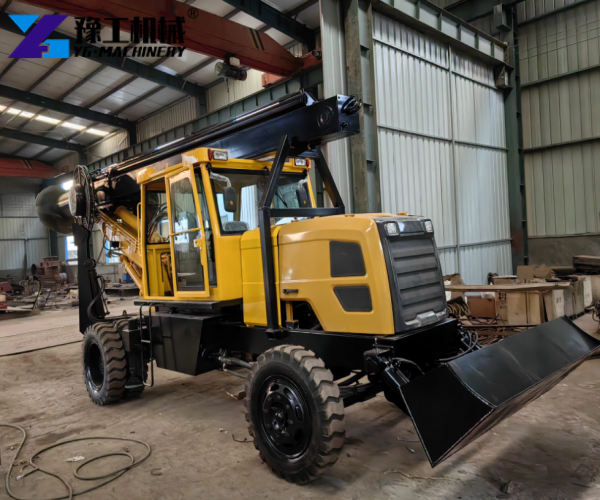
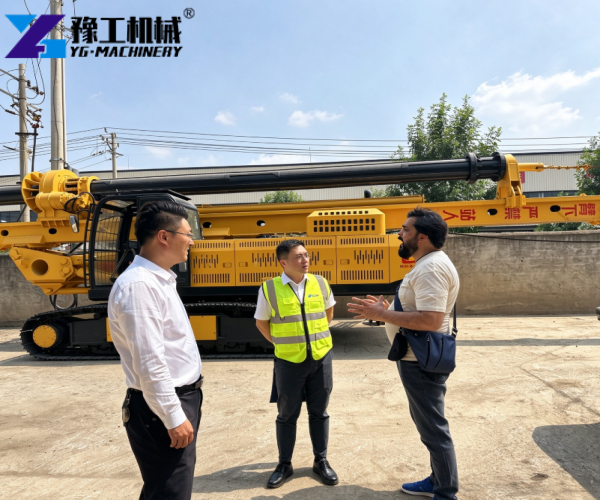
YG Machinery supplies rotary drilling equipment alongside a range of construction and industrial machinery. Our team reviews project requirements and discusses suitable equipment configurations with customers.
When discussing a drilling project, share the intended application, borehole design, ground information, and site access conditions. These details give our engineers a basis for reviewing model suitability and preparing a quotation within 24 hours. OEM customization, delivery arrangements, and after-sales service are also available for discussion.
Other products in the YG Machinery range include:
- Hydraulic scissor lift platforms
- Mini concrete pumps
- Small electric forklifts
- 20ft expandable container houses
- Hydraulic rock splitters
- Pile breakers
Contact YG Machinery with your project details to discuss a suitable rotary drilling rig machine that meets your actual construction needs
FAQ
1. How do ground conditions affect rotary drilling?
Soil density, gravel content, rock strength, and groundwater conditions influence drilling resistance and borehole stability. The drilling tool and operating method need to match the conditions encountered underground.
2. Can one drill bit handle every type of ground?
No. Different bits suit different materials and drilling tasks. Projects that encounter both soil and rock may require more than one type of drilling tool.
3. What site preparations are necessary before delivery?
Prepare a suitable access route, stable working ground, sufficient clearance, and space for unloading equipment. Restricted entrances, overhead obstacles, and limited turning areas may also affect transportation.
4. What information does a rotary drilling rig quotation include?
A quotation typically lists the machine model, technical configuration, included accessories, price, delivery terms, and warranty conditions. Optional drilling tools and customized components should also appear clearly in the quotation.