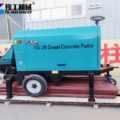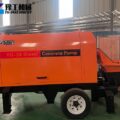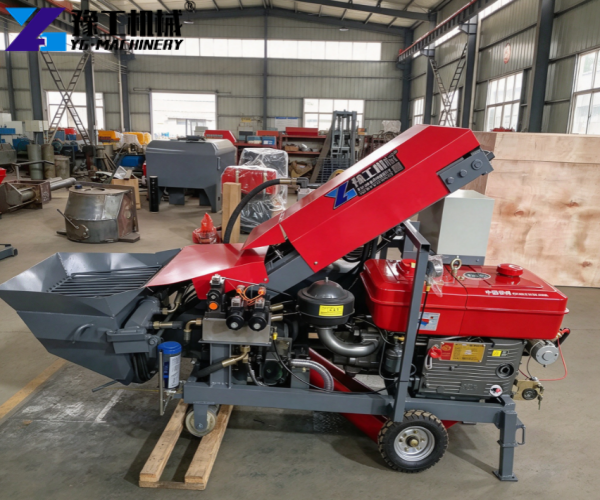
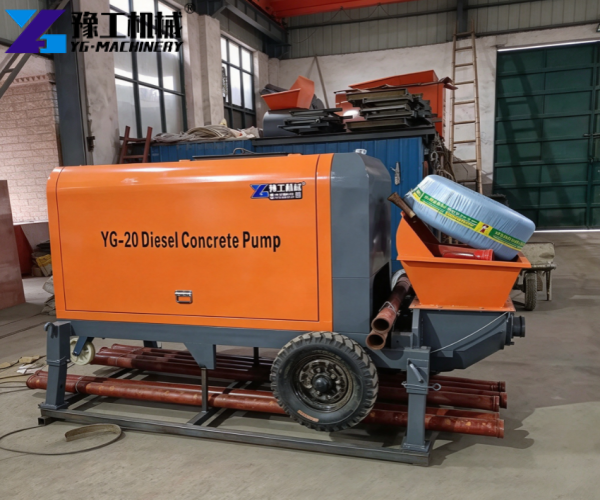
A mini concrete pump machine transfers fresh concrete from a hopper to a pouring point through pipes and hoses. It fits house extensions, foundations, floor slabs, renovation work and other small construction projects.It is useful when a concrete truck cannot reach the actual pouring position. Model selection depends on concrete type, aggregate size, required output, conveying distance, lifting height and available power.
Mini Concrete Pump Machine Technical Parameters
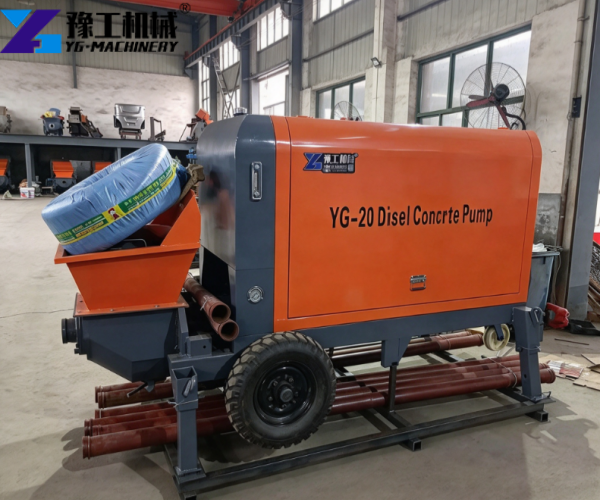
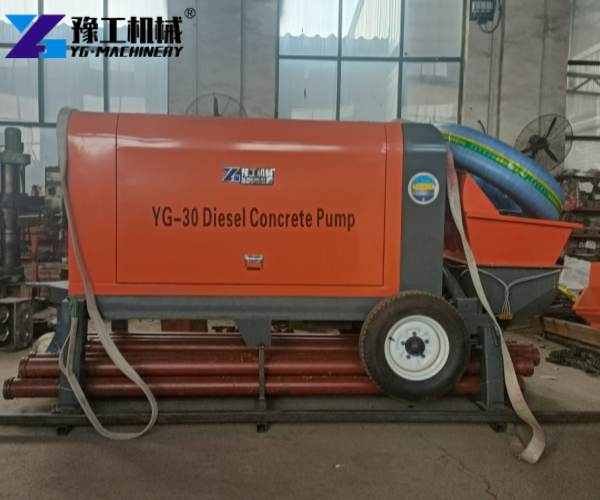
| Spec/Model | YG-10 | YG-20 | YG-30 |
| Work efficiency | 6m³/h | 12m³/h | 13-15m³/h |
| Motor power | 15kw | 22KW | 37kw |
| Working pressure | 15MPa/10MPa | 18MPa/12MPa | 20MPa |
| Aggregate size | 0.5-1.5cm | 0.5-2cm | 0-3cm |
| Vertical/Horizontal conveying distance | 20m/50m | 40m/80m | Vertical 20-60m, Horizontal 50-150m |
| Diameter of conveying pipe | 80mm | 80mm | 80-125mm |
| Weight | 600KG | 1600kg | 1500-2000kg |
| Dimensions | 1800x700x1100mm | 3400×1200×1600mm | 3800x1600x1800mm |
| Standard Configuration | 10m steel pipe, 10m hose | 40m steel pipe, 10m hose | — |
Working Principle of a Small Concrete Pump
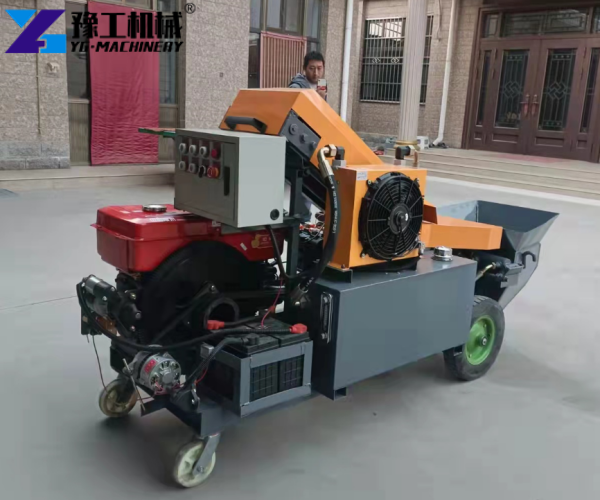
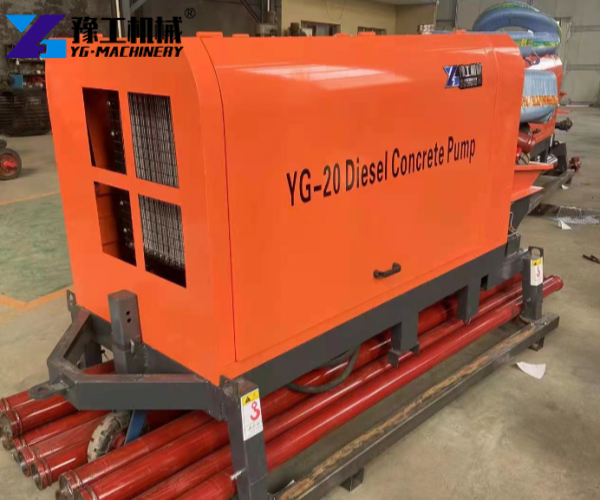
- Feeding: A concrete pumping machine receives concrete through its hopper and pushes it into a connected delivery line.
- Delivery: Steel pipe carries most of the distance. Flexible hose handles the discharge section and gives workers more control over the outlet position.
- Pipe arrangement: Line length and direction affect resistance. Long sections and repeated sharp turns make concrete harder to move. Poor connections may also cause leakage.
- Concrete condition: Aggregate must stay within the specified size range. Concrete needs suitable consistency for continuous feeding. Material that sits too long may become harder to pump.
- Cleaning: Workers should clean pipes and hoses after each pour. Hardened concrete can reduce the internal passage and create problems during later work.
Key Features of the Concrete Pump
Small working footprint
A small concrete pump for construction takes less space than a large boom system. It fits renovation work, house extensions and small foundations where large machinery cannot easily enter.
Pipe and hose delivery
A concrete delivery pump uses rigid pipe for fixed sections and flexible hose near the discharge point. This combination gives workers more control during placement.
Connection quality also matters. Loose clamps, damaged seals or unsuitable hose sections may interrupt delivery.
Operating limits
Mini pumps do not suit every placement job. Large continuous pours may require larger pumping machinery. Concrete mix also affects pumping performance, so aggregate size and consistency need checking before work starts.
Customer Case in Spain
In July 2026, Martín Levante Construcciones, a residential contractor in Valencia, purchased three pumps for renovation and extension projects. Carlos Martín, the company’s site manager, placed an order for several YG concrete pumps of YG-10, YG-20 and YG-30 variants.
He wanted different machines for different jobs.
The YG-10 went to a townhouse repair with several cubic metres of concrete. The YG-20 went to a two-storey house extension. The YG-30 stayed at another project that required a longer vertical lift and higher daily output.
The first YG-20 pour caused a problem. Workers had added several pipe turns to avoid an existing doorway. Concrete started coming out slowly at the discharge end.
They stopped feeding material, checked the line and removed two unnecessary sections. The next attempt ran normally.
Carlos later sent a short message to the sales engineer:
“We changed those two sections. Much better. First setup was our mistake.”
After that, his crew marked pipe positions before each pour and checked connection points before concrete arrived.
The three-pump purchase also reduced machine transfers between projects. Carlos explained it simply:
“Three jobs, three pumps. We don’t need the big one everywhere.”
Why Choose YG for Mini Concrete Pump Machines?
- Factory production: YG manufactures concrete pumps in its own factory and checks assembly and machine operation before shipment.
- Model selection: Buyers can compare output, aggregate range, conveying distance and machine size instead of taking one fixed specification.
- Engineering review: Engineers check concrete type, expected workload, lifting height, conveying distance and available power before recommending a model.
- Technical preparation: Buyers can discuss pipe and hose requirements with machine specifications. Site photos or a simple drawing can also help.
- Export service: Overseas orders can include technical documents, component lists and shipping requirements.
- Other machinery: Contractors with several construction needs can also discuss other machinery with the same manufacturer.
FAQ
What should I do if concrete starts coming out slowly?
Stop feeding more material and check the hopper, delivery line and concrete condition. Inspect connections and pipe arrangement before restarting.
Can I add more pipe or hose later?
Yes, but additional sections change delivery conditions. Confirm diameter, connection type and total length before extending the line.
Why can one concrete mix pump better than another?
Aggregate size, moisture and consistency affect feeding and movement. Two mixes with similar appearance may behave differently during pumping.
What information should I send before ordering?
Provide local voltage and frequency, concrete type, aggregate size, expected output, conveying distance, lifting height and site conditions. Photos or a simple drawing can also help engineers assess the project.
Which spare parts should I keep on site?
Connection clamps, sealing components and commonly used pipe or hose accessories are useful items to keep available. The exact list depends on model and working conditions.