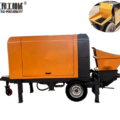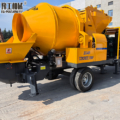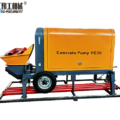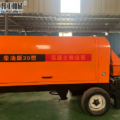
In March 2026, Carlos Mendoza, project manager for a construction company in Lima, Peru, ordered five trailer concrete pump units from YG Machinery for a large residential development.
Four apartment blocks formed the main part of the project. Construction also included underground parking, foundations, access roads, and shared facilities. Work moved between different blocks as crews completed each structural stage.
Concrete supply presented a practical challenge. Mixing points changed during construction, while some pouring areas sat more than 100 m away. Carlos wanted several pumps so crews could work on separate sections without moving one machine back and forth.
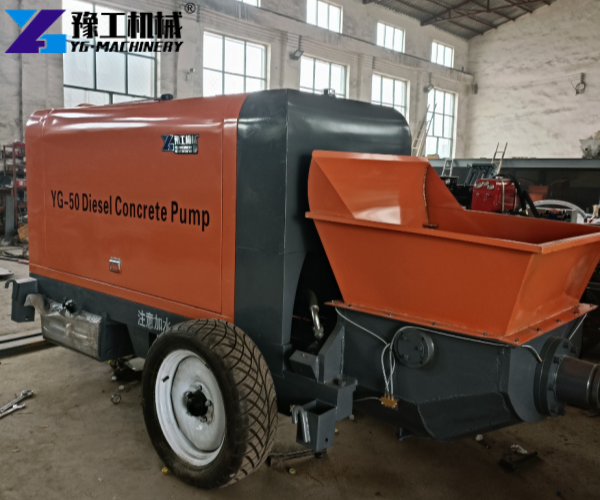
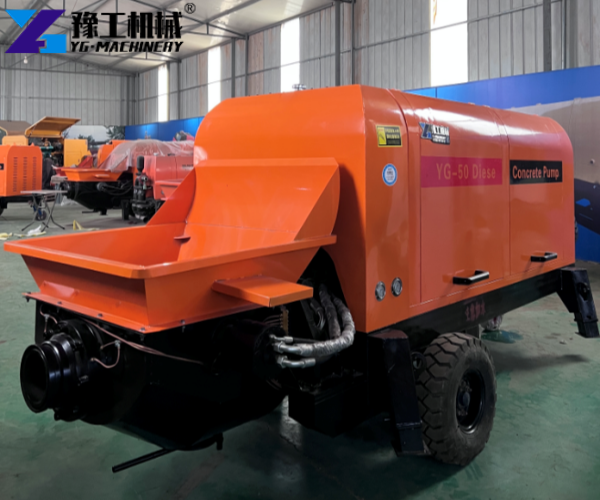
YG-50 Concrete Pump Technical Parameters
| Item | Parameter |
| Model | YG-50 |
| Motor Power | 55kw |
| Work Efficiency | 30-35m³/h |
| Work Pressure | 23mpa |
| Aggregate Size | 0-4cm |
| Vertical Conveying Distance | 30-150m |
| Horizontal Conveying Distance | 50-500m |
| Delivery Pipe Diameter | 80-125mm |
| Total Weight | 2200kg |
Concrete Pumping Across Four Residential Blocks
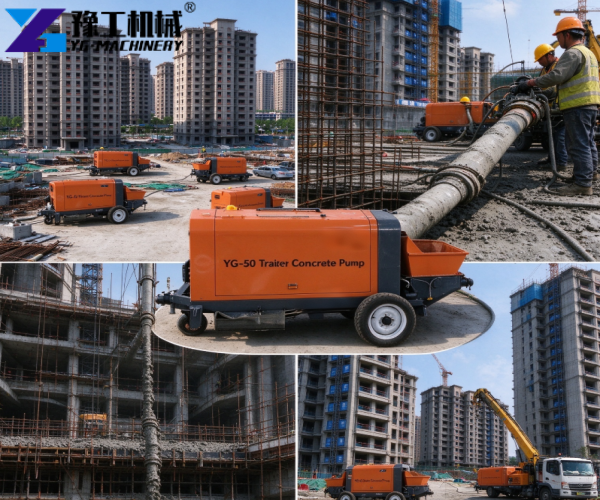
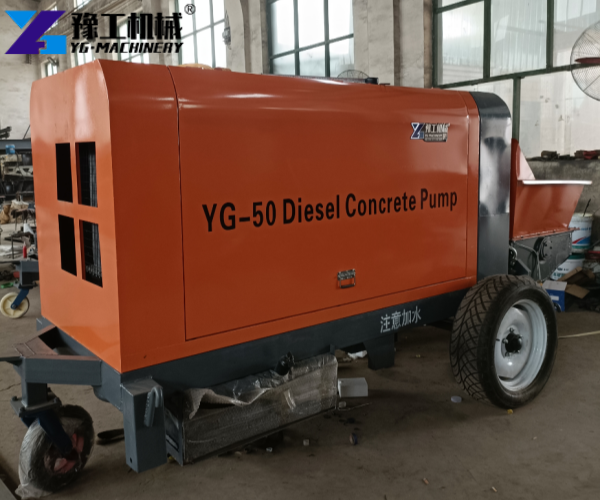
Lima has many dense construction areas where site access needs careful planning. This development had four blocks progressing at different speeds, so pump allocation changed throughout construction.
Two YG-50 units mainly served Blocks A and B. Another two worked around Blocks C and D. One unit remained available for foundation sections, underground parking, and areas with heavier concrete demand.
A concrete pumping machine moved fresh concrete from supply points to active pouring areas through delivery lines. Keeping several pumps on site reduced unnecessary equipment transfers between blocks.
One adjustment became necessary during slab construction. A delivery line crossed a vehicle route used by concrete trucks. Workers moved part of the line along the edge of the work area and extended its horizontal section. Truck access continued while slab pouring remained in progress.
Carlos described the arrangement briefly:
“We needed several pumps because multiple blocks were pouring at the same time.”
That became more important during periods when two or three blocks reached slab work simultaneously.
Nine Months of Structural Concrete Work
The five pumps worked across the project for about nine months. Concrete placement reached approximately 86,000 m³ during the main construction period.
Workload varied considerably. Foundation pours created high demand during the early months. Later stages involved repeated column, beam, and slab work across several floors.
Pump allocation changed with each construction stage. Crews moved units between blocks when one section entered a quieter phase and another required more pumping capacity.
One major delivery route reached about 120 m horizontally. A later section required roughly 50 m of vertical delivery. Pipe routes changed as structures rose and access conditions around each block changed.
During heavy slab pours, two pumps sometimes worked on one block. Smaller pours usually required only one unit. This arrangement gave site managers more control over daily pumping schedules without keeping every pump at full output.
Carlos later mentioned one practical benefit:
“When one block finished pouring, we could move that pump to another area.”
The contractor continued using this approach through the main structural stage.
YG Machinery Concrete Pump Solutions
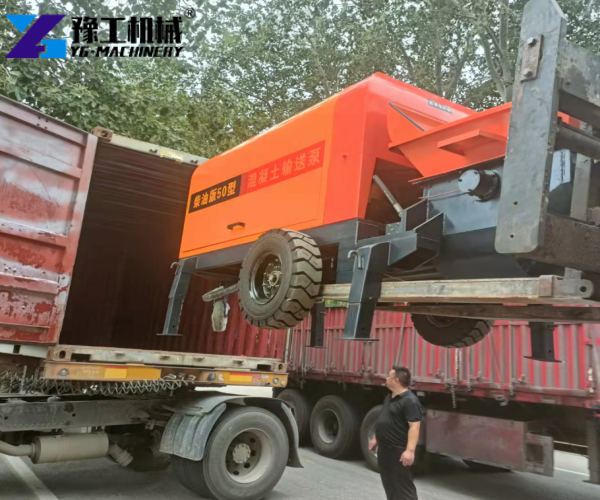
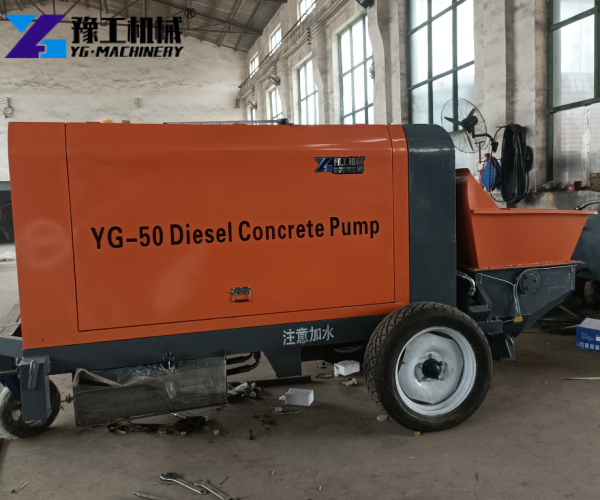
YG Machinery supplies concrete pumping solutions for different construction scales and site conditions. Compact projects may use a small concrete pump, while projects with suitable electrical infrastructure can choose an electric concrete pump. Portable concrete pump models also suit sites where pumping positions change frequently.
If you are planning a similar project, send us your requirement. YG engineers can recommend a suitable model and prepare a quotation within 24 hours.