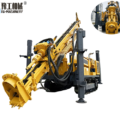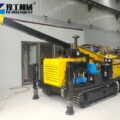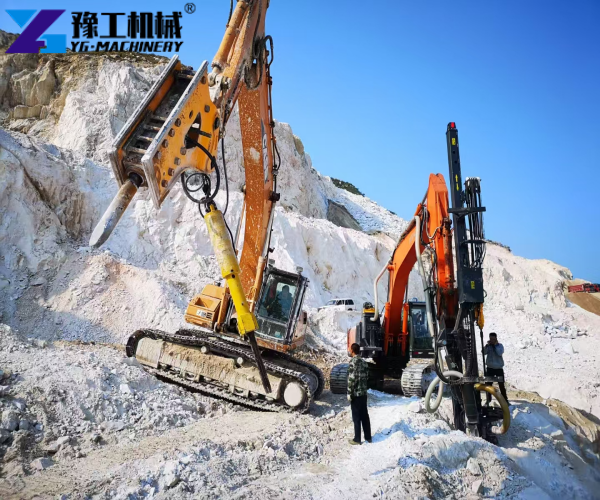
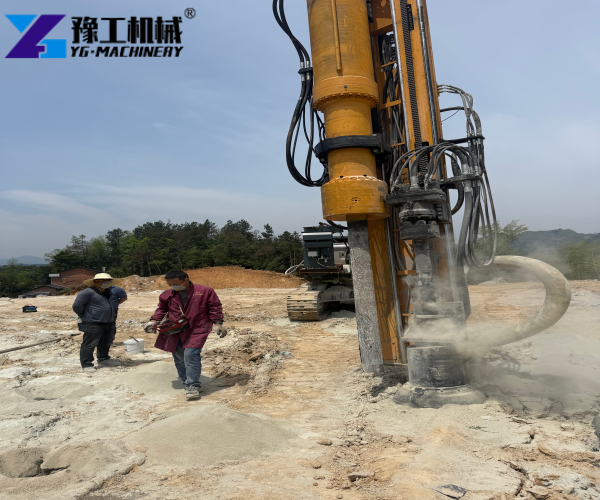
The Integrated Rock Drill and Splitter combines hydraulic drilling and static hydraulic splitting in one excavator attachment. The hydraulic drill first creates holes in the rock. The splitting unit then enters the holes. A hydraulic cylinder provides a maximum splitting thrust of 160 kN. It applies static force inside the rock and opens cracks for separation. The drilling points define the splitting positions. The drilling depth and hole layout also determine the separation range.
Integrated Rock Drill and Splitter Parameters
| Parameter | YG-130 | YG-152 | YG-210 |
| Suitable Excavator | 20T–36T | 36T–48T | 48T–65T |
| Maximum Horizontal Splitting Height | 9475 mm | 9985 mm | 10680 mm |
| Maximum Vertical Splitting Height | 6715 mm | 6905 mm | 6770 mm |
| Maximum Splitting Depth | 6705 mm | 7025 mm | 8050 mm |
| Maximum Splitting Distance | 10225 mm | 10875 mm | 11640 mm |
| Splitting Beam Length | 3875 mm | 4850 mm | 5525 mm |
| Drilling Advance Stroke | 2000 mm | 2600 mm | 3500 mm |
| Maximum Drilling Thrust Force | 50 kN | 50 kN | 50 kN |
| Maximum Drilling Pull Force | 32 kN | 32 kN | 32 kN |
| Splitting Advance Stroke | 1500 mm | 1800 mm | 2300 mm |
| Maximum Splitting Thrust Force | 160 kN | 160 kN | 160 kN |
| Maximum Splitting Pull Force | 100 kN | 100 kN | 100 kN |
| Hydraulic Pressure | Max. 35 MPa | Max. 35 MPa | Max. 35 MPa |
| Hydraulic Flow | Min. 240 L/min | Min. 240 L/min | Min. 240 L/min |
| Weight | 4200 kg | 6200 kg | 8300 kg |
| Dimensions (L×W×H) | 4210×1400×1785 mm | 5270×1485×1840 mm | 5810×1485×1840 mm |
| Operation Mode | Remote Control | Remote Control | Remote Control |
Excavator Rock Drill and Splitter Working Process
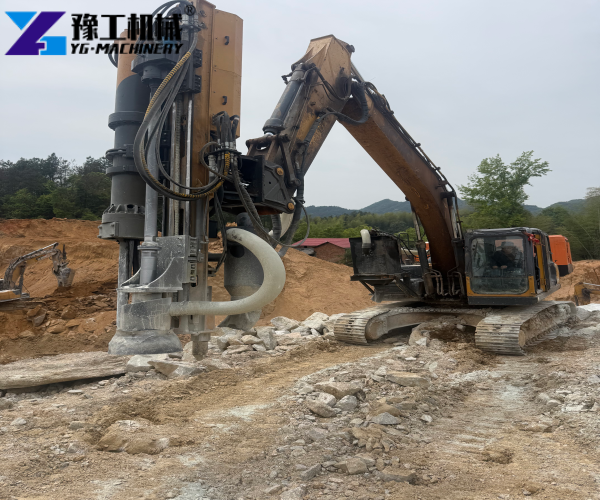
After reaching the target rock, the hydraulic drill creates the holes. The operator places the holes along the planned separation line. The hole direction then defines the splitting position.
After drilling, the drill rod retracts. The hydraulic splitting unit enters the hole and the splitting cylinder applies outward static hydraulic force to the hole wall. Cracks then form inside the rock and extend along the planned hole layout.
After one splitting operation, the machine moves to the next hole. It repeats the drilling and splitting process at the new position. One excavator attachment handles both operations.
Hydraulic Power System for Integrated Drilling and Splitting
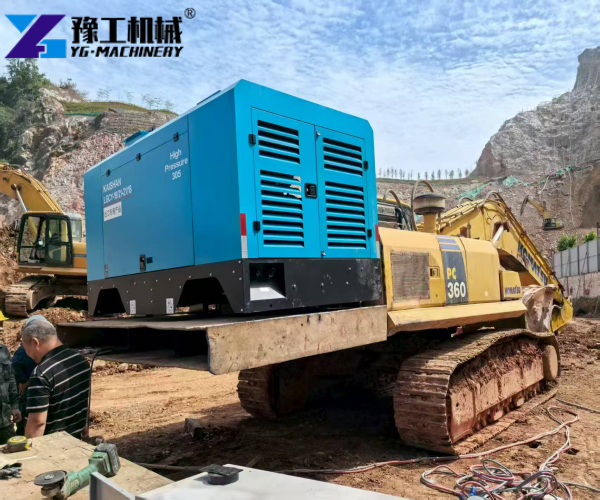
The excavator hydraulic system powers the equipment. All three models require at least 240 L/min hydraulic flow and up to 35 MPa hydraulic pressure. Check these two values against the excavator specifications before purchase.
The drilling unit provides a maximum thrust force of 50 kN and a maximum pull force of 32 kN. The splitting unit provides a maximum thrust force of 160 kN and a maximum pull force of 100 kN. The drilling unit creates the holes, while the splitting unit applies static pressure inside them.
Excavator Rock Drill and Splitter Model Selection
The excavator tonnage sets the basic model range. Rock depth and working distance then affect the final choice.
- YG-130 suits 20–36T excavators and has a maximum splitting depth of 6705 mm.
- YG-152 suits 36–48T excavators and has a maximum splitting depth of 7025 mm.
- YG-210 suits 48–65T excavators and has a maximum splitting depth of 8050 mm.
The maximum splitting distances are 10225 mm, 10875 mm, and 11640 mm. For deeper or more distant rock, also check the splitting beam length and the horizontal and vertical splitting heights.
Excavator-Mounted Rock Drill and Splitter Applications
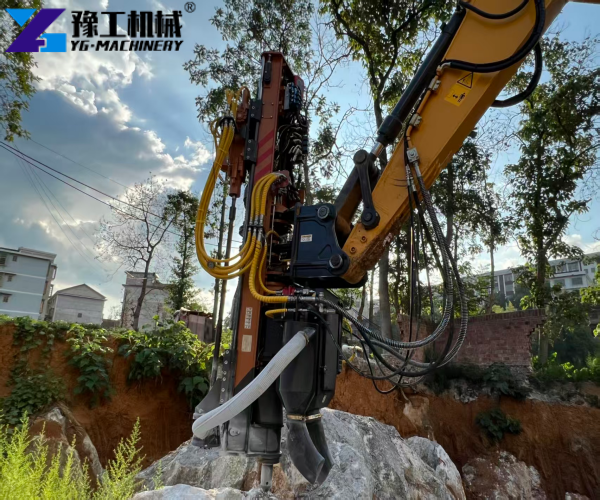
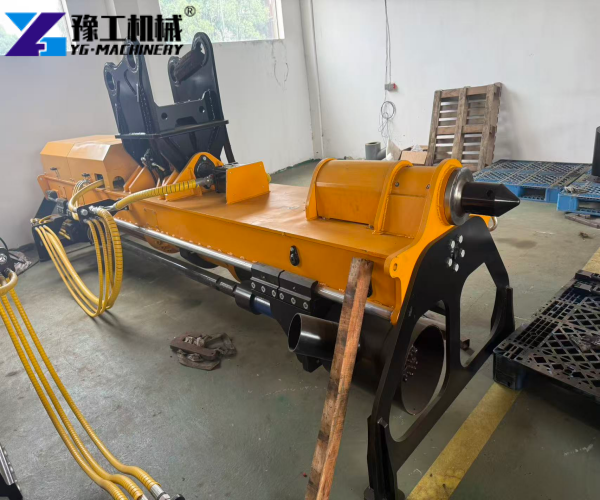
The equipment suits hard rock work in quarries, road construction, building foundation excavation, and tunnel construction. It fits sites that require drilling first and controlled rock splitting afterward.
For a mountain road excavation project in Guatemala, the construction team needed to remove a hard rock layer along the road section. The working area had limited space, and the contractor wanted a solution that could drill holes and split the rock without bringing separate equipment for each operation.
The site already had a 40T excavator, so the team selected the YG-152 Excavator Rock Drill and Splitter. This model matches 36–48T excavators and provides a maximum splitting depth of 7025 mm. During operation, the hydraulic drill created holes in the rock first, and the splitting unit then entered the holes to complete the static splitting process.
The integrated design allowed the excavator to complete both drilling and splitting with one attachment. This reduced equipment switching during construction and kept the rock removal process continuous.
If you are looking for a rock drill and splitter for sale, provide the excavator tonnage, hydraulic flow, hydraulic pressure, rock depth, and working distance. YG Machinery can use these details to confirm the model and configuration and provide a quotation.
FAQ
What projects are the rock drill and splitter suitable for?
The machine suits mining, tunnel excavation, road construction, foundation work, quarrying, and other controlled rock removal projects. It fits sites that require drilling and static splitting in the same working area.
Can the rock drill and splitter replace blasting?
In suitable rock excavation projects, it can replace blasting. The machine uses drilling and static hydraulic splitting instead of explosives. It also suits sites where blasting has restrictions.
What types of rock can it handle?
The machine can handle granite, marble, limestone, basalt, iron ore, and other hard rock materials. The actual result depends on rock properties, hole layout, and site conditions.
Can one attachment handle both drilling and splitting?
Yes. The same excavator-mounted unit completes the drilling and splitting operations in sequence. The operator does not need to move separate drilling and splitting equipment between these two operations.
Can it work when the rock is deep or difficult to reach?
The answer depends on the rock position and selected model. Check the maximum splitting depth, drilling advance stroke, splitting advance stroke, and working distance against the actual site conditions.
Can my existing excavator be used with the equipment?
Check the excavator tonnage, hydraulic flow, and hydraulic pressure first. YG-130, YG-152, and YG-210 suit 20–36T, 36–48T, and 48–65T excavators. The hydraulic system requires at least 240 L/min flow and up to 35 MPa pressure.