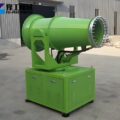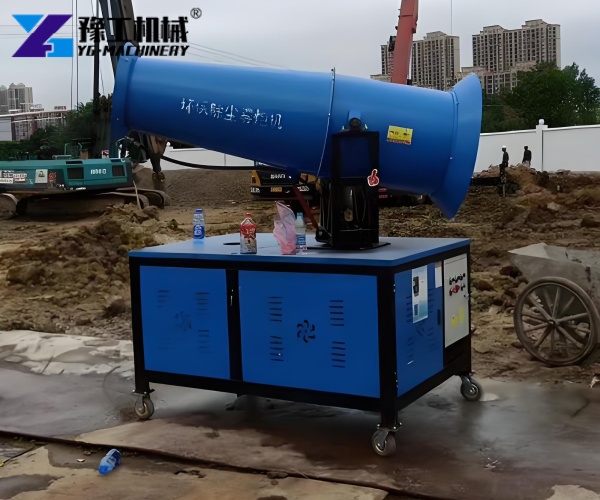
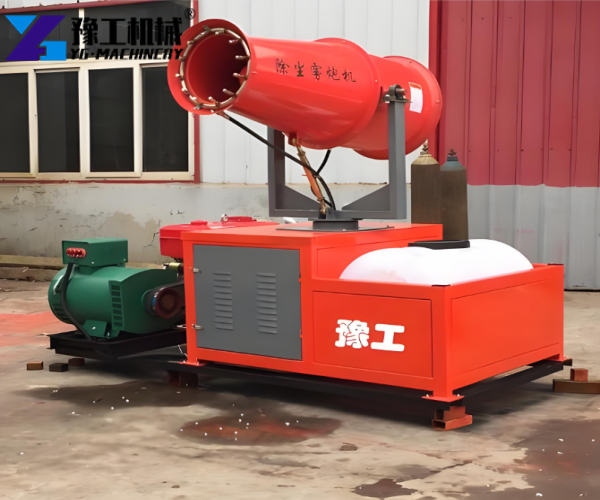
In June 2026, a 60m Fog Cannon was supplied to a construction material yard in Antwerp, Belgium, for dust suppression. Thomas Vermeulen contacted YG Machinery because loading, unloading, material transfer, and stockpiling were generating dust across several areas of the yard.
The planned installation point was along one side of the yard, while the main dust sources were 45–55 m away. Trucks also needed clear access through the working area, so the 60m Fog Cannon had to provide enough spraying distance without being placed in the main traffic route.
The site had a 380V/50Hz three-phase power supply. This allowed the electric fog cannon to connect directly to the existing power system, while the machine’s 60 m listed spraying distance covered the planned 45–55 m range.
60m Fog Cannon Technical Parameters for the Project
| Parameter | YG-60 Specification |
| Power supply | 380V/50Hz, 3 phase |
| Fan motor | 11 kW |
| Pump motor | 7.5 kW |
| Horizontal angle | 360° |
| Vertical angle | -10° to 55° |
| Nozzles | 22 |
| Water tank | 800 L |
| Water consumption | 7500 L/h |
| Machine size | 1700×1200×2200 mm |
| Weight | 350 kg |
Water Supply Requirements for Industrial Fog Cannon Installation
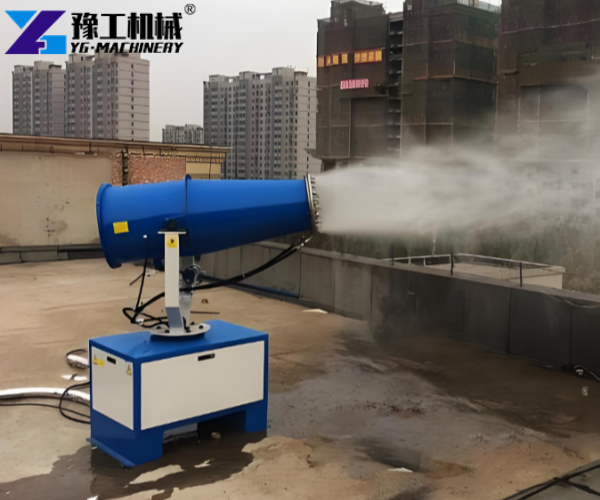
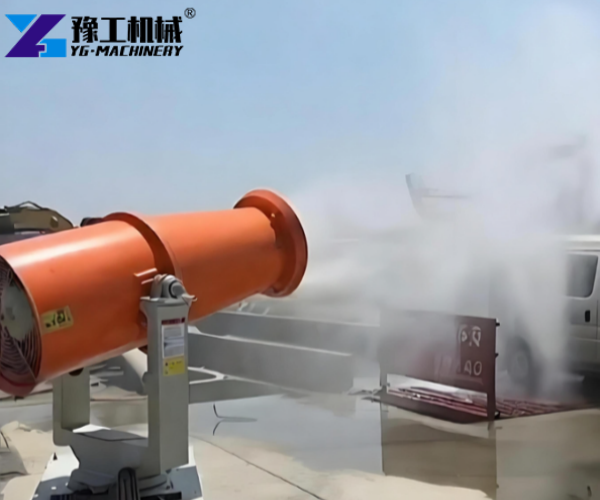
The 800 L tank could not support long continuous spraying at the stated 7500 L/h water consumption. A full tank would last about 6.4 minutes:
800 L ÷ 7500 L/h ≈ 6.4 minutes
Therefore, the yard needed a connected water source for regular operation. During installation, the crew connected the fog cannon to the available site water supply rather than treating the onboard tank as the only source.
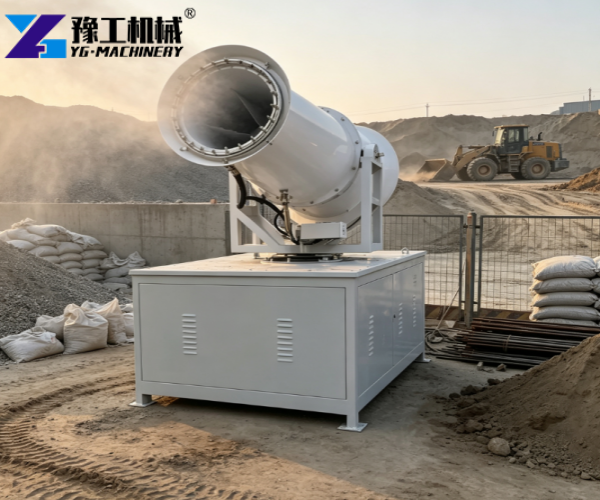
This water requirement also affected the final machine position. The crew kept the unit near the available utilities while leaving the spray path open toward the stockpiles and loading area. As a result, the machine remained outside the main truck route while still covering the planned dust sources.
Electric Fog Cannon Installation in Belgium Material Yard
The equipment arrived at the site in June 2026. Two workers spent several hours positioning the machine, connecting the 380V/50Hz three-phase power, connecting the water line, and checking the spray direction.
The team placed the 60m fog cannon along the side of the yard rather than in the main truck route. During the initial test, they directed the barrel toward the loading area and then toward the stockpile side.
Because the machine could rotate horizontally through 360°, the operator could change the spray direction without moving the 350 kg unit. This arrangement reduced the need to reposition the equipment when the active working area changed.
Daily Operation of Fog Cannon for Construction Dust Control
The yard did not require the cannon to spray in one direction for the entire shift. Instead, loading trucks created the strongest dust around the loading point, while stockpiling moved the active dust source farther along the yard.
As work moved between these areas, the operator changed the barrel direction from the same installation point. The machine therefore stayed in position while the spray direction followed the changing work area.
During peak material handling, the machine could run for several hours with the site water connection in service. At 7500 L/h, four hours of continuous spraying would require about 30,000 L of water.
For this reason, the connected water supply was more important for continuous operation than the 800 L tank itself. The onboard tank provided a buffer, while the site water supply handled the larger demand during extended operation.
The electrical connection was also kept close to the installation point. Since the yard already had a 380V/50Hz three-phase supply, the machine could use the existing power system without adding a separate generator.
After commissioning, the YG-60 stayed in its selected position. The operator handled normal directional changes from that point instead of moving the machine around the yard.
Operating Results After Installation
After commissioning, the YG-60 stayed in its selected position. The operator handled normal directional changes from that point instead of moving the machine around the yard.
Thomas described the setup this way:
“We keep the unit on one side and rotate it when the loading area changes. We don’t need to move it anymore.”
The 60 m listed spraying distance covers the project’s required 45–55 m range. At the same time, the electric configuration matches the site’s existing 380V/50Hz three-phase supply, while the connected water source supports continued operation.
YG Machinery Fog Cannon Configuration Support
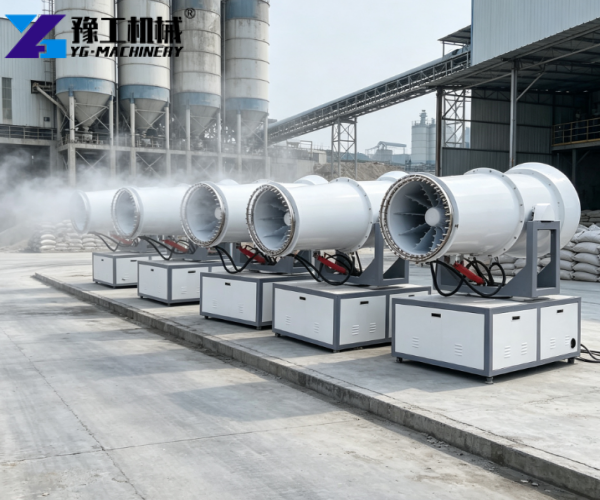
For similar projects, YG can provide machine specifications, electrical requirements, water consumption data, installation information, spare parts, and after-sales support. Customers can also confirm the available configuration before shipment so the machine matches the site’s power and water conditions.
For a similar material yard, send the distance from the proposed installation point to the main dust source and a few site photos. YG can check whether a fog cannon configuration fits the working area and utility arrangement.