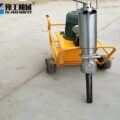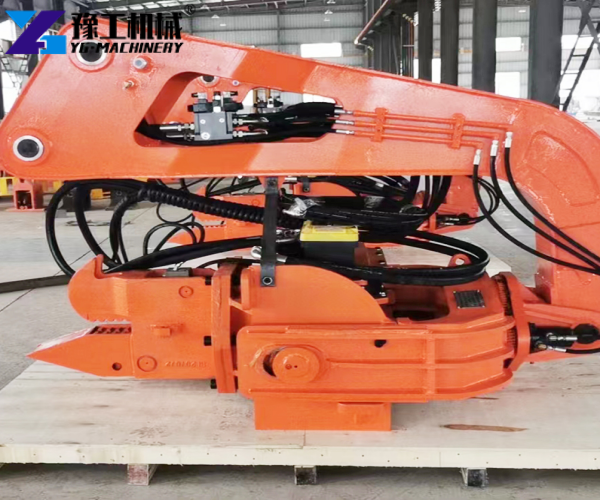
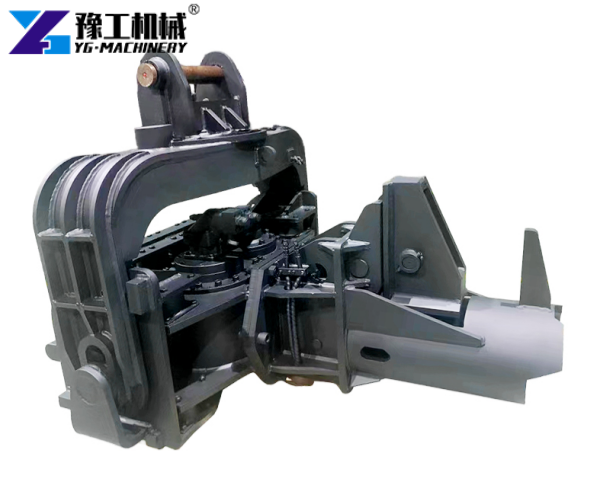
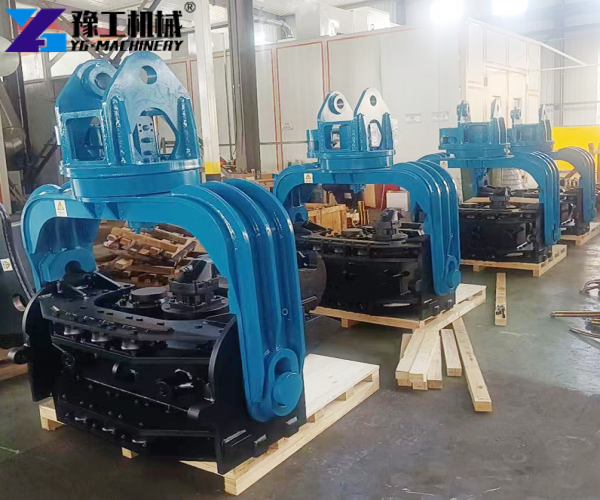
An excavator pile driver uses hydraulic power to generate vibration and drive foundation piles into the ground. Contractors use this equipment for steel sheet piles, compatible pipe piles, solar mounting foundations, road construction, and temporary retaining structures.
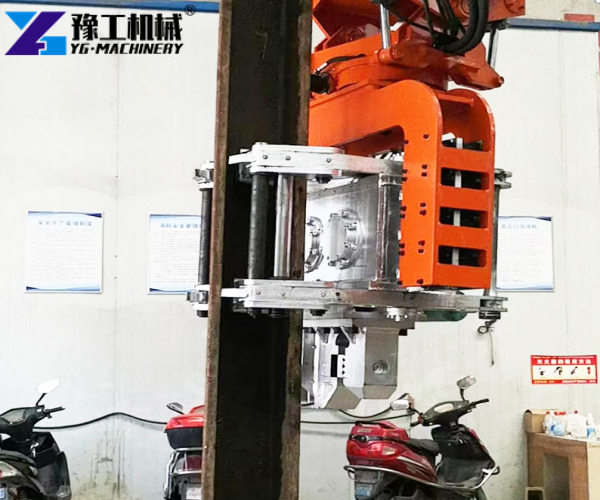
The excavator boom positions the pile, while a clamping mechanism transfers vibration to the pile body. This arrangement lets contractors use existing machinery instead of bringing a separate large piling rig to the site. It also simplifies movement between nearby installation points.
Compared with standalone piling rigs, an excavator-mounted vibratory pile driver reduces equipment transport costs and suits confined work areas. Correct model selection remains important because the excavator must support the unit’s weight and meet its hydraulic flow and pressure requirements.
Excavator Pile Driver Specifications
| Model | YG150D | YG250D | YG350D | YG400D | YG450D |
| Eccentric moment (kg*m) | 3.2 | 5.1/5.7 | 7.1 | 9.2 | 11 |
| Speed (rpm) | 2600 | 2600 | 2600 | 2600 | 2600 |
| Excitation force (t) | 24 | 38/42 | 52 | 68 | 81 |
| Operating pressure of oil system (bar) | 200 | 300 | 320 | 330 | 330 |
| Flow demand for hydraulic oil system (lpm) | 100 | 163 | 220 | 260 | 300 |
| Weight (t) | 1.2 | 1.6 | 2.4 | 2.5 | 2.6 |
| Matching Excavator (t) | 8-12 | 20-25 | 25-35 | 35-45 | 40-55 |
Key Features of the Vibratory Pile Driver
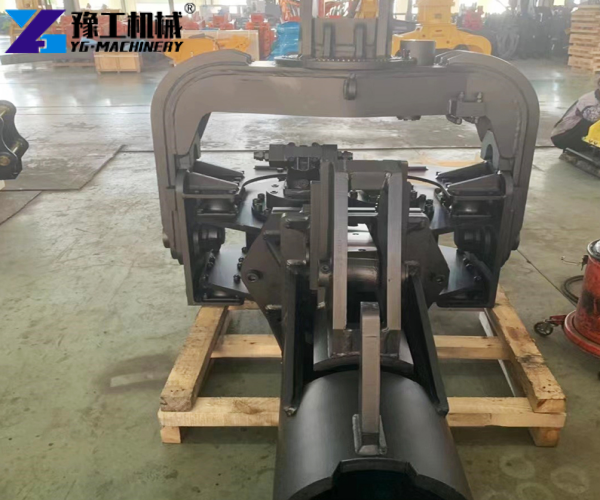
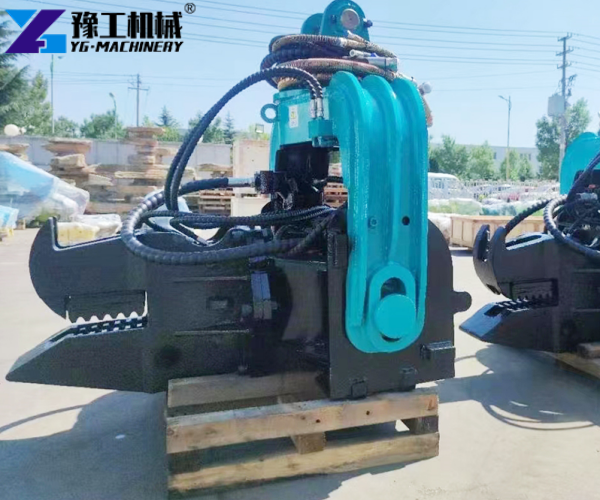
Hydraulic Vibration Mechanism
An eccentric mechanism converts hydraulic power into vibration. The clamp grips the pile, and the resulting vibration reduces soil resistance around its surface, allowing it to penetrate the ground.
This method suits steel sheet piles and compatible pipe sections. Correct clamp sizing ensures a firm grip and effective vibration transfer. Poor contact can cause slippage and reduce driving efficiency.
Excavator-Mounted Operation
The boom and arm control positioning, while the carrier supplies power through its auxiliary circuit. This setup suits solar farms, roadside construction, and projects with limited room for dedicated piling machinery.
The unit’s weight, pile length, and working radius affect stability. The carrier must have sufficient lifting capacity throughout the planned operating range..
Factory Testing and Technical Support
At its Zhengzhou factory, YG manufactures construction equipment and excavator-mounted tools. Every vibratory pile driver undergoes full hydraulic and vibration testing before delivery. The process checks operating functions for solar foundation and sheet piling applications. Before ordering, provide the factory with the carrier’s auxiliary flow and pressure data, return-line details, and the pile’s dimensions. This information supports accurate model and clamp selection.
YG also supplies technical documentation, shipping support, spare parts, and remote assistance to overseas buyers. Its product range includes mobile stone crusher plants and tracked crushers for on-site processing of rock and construction materials.
Applications of Excavator Pile Drivers
Solar Foundation Installation
Solar farms require foundation piles to support panel mounting structures. A solar pile driver allows crews to move between installation points using an excavator already working on the project.
Pile section, length, and soil resistance affect driving results. Loose soil generally offers less resistance than dense gravel or hard ground. Buried obstructions can also interrupt installation and require a different method.
Sheet Piling for Roads and Foundations
Steel sheet piles support excavations, road construction, utility trenches, and temporary retaining walls. A vibratory driver installs compatible sections and, where the system supports it, extracts them for reuse.
Alignment remains important throughout the process. The operator must maintain the planned angle and position so adjacent sections connect correctly.
Temporary Barriers and Site Structures
Compatible steel piles also serve temporary barriers and selected construction structures. The excavator-mounted setup allows crews to relocate between work areas without transporting a separate piling carrier.
The clamping system must match the section shape and dimensions. Ground conditions and project requirements also determine whether vibratory installation suits the job.
Operating Requirements and Maintenance
Hydraulic System Compatibility
Match the selected model’s flow and pressure requirements to the carrier’s auxiliary circuit. Return-line capacity and connection sizes also matter. An unsuitable oil supply can affect vibration performance and increase system strain.
Clamp and Pile Matching
Pile width, section shape, and material determine clamp compatibility. A secure grip transfers vibration effectively and keeps the section under control during installation.
Share pile drawings or dimensions with the supplier when requesting a suitable clamp.
Ground Conditions
Soil resistance affects penetration speed and installation feasibility.
- Loose soil generally allows easier penetration.
- Dense gravel creates greater resistance.
- Hard rock or buried obstructions can prevent normal vibratory driving.
For difficult ground, contractors need to select a suitable installation method rather than rely on vibration alone.
Stable Operation and Routine Maintenance
Keep the carrier stable during positioning and driving. The combined weight of the unit and pile, together with the working radius, affects machine balance.
Routine maintenance includes inspecting hoses, fittings, clamp surfaces, and fasteners. Stop work if abnormal vibration, oil leakage, or reduced clamping force occurs.
FAQ
What determines the required excitation force?
Pile weight, section dimensions, soil resistance, and installation depth all affect the required driving force. Project ground conditions and pile specifications help determine the appropriate model.
Can the pile driver be used for pile extraction?
Vibratory equipment can support pile extraction when the clamp and operating system suit the task. Pile condition, embedment depth, and soil resistance also affect extraction performance.
What should I prepare before installing the equipment?
Prepare the excavator’s hydraulic specifications, mounting interface details, and the dimensions of the piles. These details help the supplier check compatibility before shipment.
How does soil type affect piling work?
Soil density, gravel content, groundwater, and buried obstacles influence penetration resistance. A site assessment helps determine whether vibratory driving suits the ground conditions.
Can the pile driver be tailored to different project requirements?
Yes. YG offers customized clamp dimensions, mounting interfaces, and technical specifications to suit different pile sizes and excavator models.