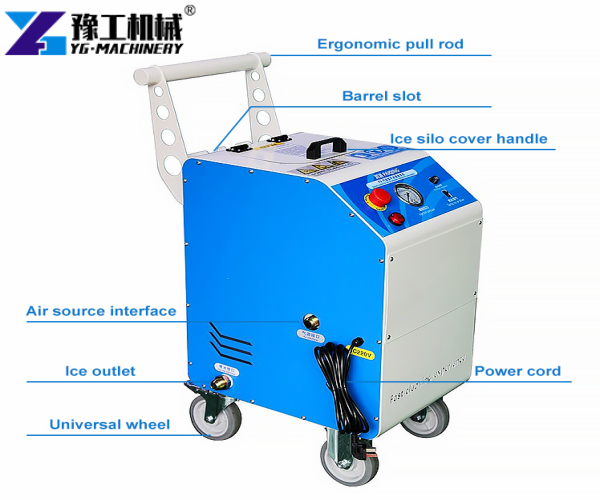
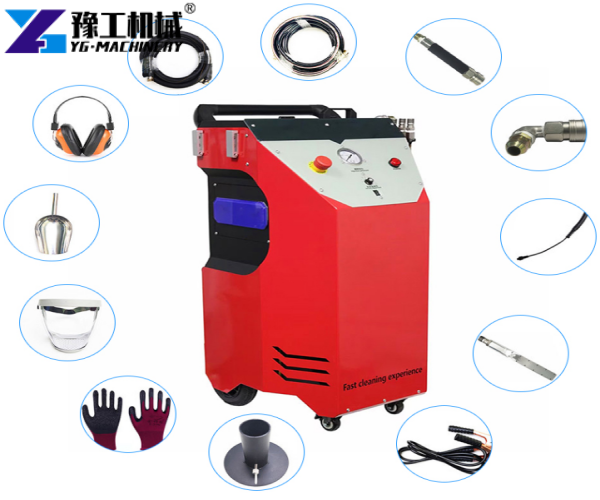
A dry ice cleaning machine uses compressed air to remove grease, resin, ink, and carbon deposits from industrial surfaces. Dry ice particles loosen contaminants and turn directly into gas without leaving liquid cleaning residue. This process suits mold maintenance, automotive production, printing plants, and industrial equipment cleaning.
Dry Ice Cleaning Machine Parameters
| Model | YGP6 | YGP7X | YGA625 | YG-P60 | YGT6 |
| Power / Motor Power | <500W | 370W | 750W | — | 0.36KW |
| Voltage | AC220V, 50-60HZ | AC220V, 50-60HZ | AC220V, 50-60HZ | — | AC220V/50-60HZ |
| Air consumption | 0.8-3.0m³/min(adjustable) | 28-106 CFM (0.8-3.0m³/min) adjustable | 3-8m³/min(adjustable) | Gas consumption: 0.5-1.0m³/min | 28-141CFM (0.8-4.0m³/min) |
| Air supply pressure | 0.1-0.9Mpa | 0.1-0.9Mpa | 0.2-1.6Mpa | Injection pressure: 4.0-6.0bar | 0.1-0.8Mpa (1-8bar Adjustable) |
| Ice delivery speed | 0-0.75kg/min(adjustable) | 0-0.75kg/min(adjustable) | 0-3.6kg/min(adjustable) | Ice consumption: 0.1-0.5KG/min | 0-1.2 lbs/min (0-0.55Kg/min) Adjustable |
| Hopper capacity | 10.5kg | 11kg (23.5 lbs) | 25kg | 4KG | Max. 22lbs (Max. 10Kg) |
| Hopper size | 0.3m³ | 0.3m³ | — | — | — |
| Degree of protection | IP54 | IP54 | IP54 | — | IP52 |
| Machine weight | 50kg | 55kg | 65kg | Equipment weight:15KG | 121lbs(55Kg) |
| Dry ice state | 2.5-3mm | 2.5-3mm | 2.5-3mm, granular | Spraying dry ice pellets: 0.5-2.0mm | 120120250mm(about 5KG)150150300mm(about 10KG) |
| Drive mode | Direct connection | Direct connection | Permanent magnet synchronous | — | Direct link(Dual motors drive the cutter and rollers independently) |
| Machine size / Dimension | 600×400×860mm | — | 440×680×780mm | 490285315mm | (L)640×(W)400×(H)580mm |
| Air inlet connector | — | — | — | 1/4 quick coupling | — |
| Air ducts | — | — | — | 12mm*8mlong/2pcs | — |
Dry Ice Cleaning Machine Working Principle
A dry ice blasting machine removes contaminants through three physical effects:
Thermal shock: Dry ice reaches approximately −78.5°C at atmospheric pressure. Rapid cooling makes some deposits brittle.
Mechanical impact: Compressed air propels particles against the contamination, loosening deposits.
Sublimation: Solid carbon dioxide changes directly into gas, leaving no spent blasting media.
Operators must adjust cleaning settings to the surface and contaminant. Removed dirt still requires collection, and enclosed work areas need adequate ventilation.
Benefits of Dry Ice Cleaning
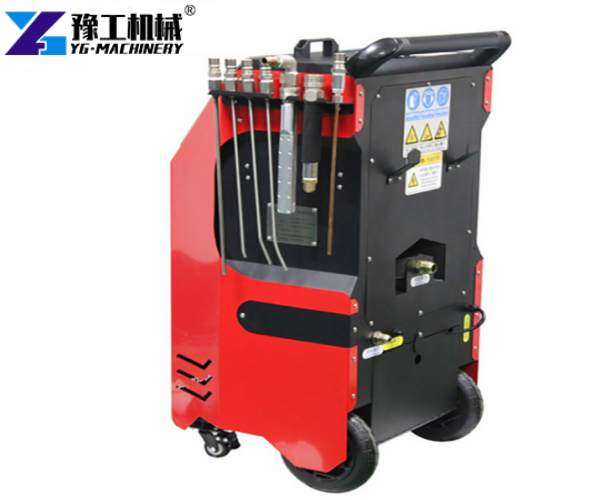
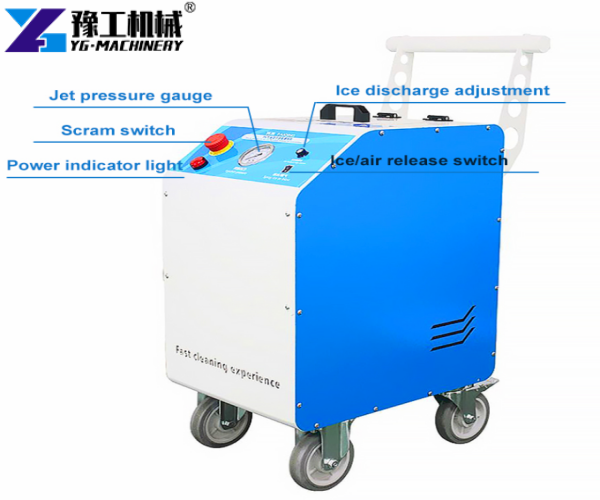
The main benefits of dry ice blasting include:
No wash water: Suitable machinery can undergo cleaning without introducing water into moisture-sensitive areas.
No spent abrasive media: Dry ice turns into gas, reducing media collection and disposal work.
Access to complex surfaces: The blasting stream reaches suitable mold cavities, grooves, and narrow channels.
Reduced chemical use: Some applications can replace solvent-based cleaning with dry ice blasting.
Actual results depend on the material, contamination, and operating conditions. Operators should test sensitive surfaces before full-scale cleaning.
Industrial Applications of Dry Ice Cleaning Equipment
Industrial dry ice cleaning equipment serves several industries with different cleaning requirements.
Mold manufacturing: Removes resin, grease, and carbon deposits from injection, rubber, and tire molds. Suitable settings allow operators to clean ventilation channels and detailed surfaces.
Automotive production: Cleans selected engine components, chassis areas, and production fixtures without washing entire assemblies.
Printing and packaging: Removes ink, varnish, and grease from compatible rollers, gears, and guides.
Chemical processing: Cleans suitable fans, heat exchangers, and processing equipment after proper isolation.
Electronics and food processing: Handles selected cleaning tasks when material compatibility and hygiene requirements permit the process.
Each application requires suitable pressure, particle size, and cleaning procedures.
How to Choose an Industrial Dry Ice Cleaning Machine
An industrial dry ice cleaning machine should match the contamination, workpiece, and available air supply.
Match Cleaning Capacity to the Task
Light grease and thin deposits may need a lower ice feed rate. Thick resin and heavy carbon buildup may require greater cleaning capacity. Test sensitive surfaces before increasing cleaning intensity.
Check Air Supply and Dry Ice Size
Confirm compressor airflow and working pressure under operating conditions. An undersized compressor can reduce blasting performance. Check dry ice size compatibility before ordering.
Review Operating Costs and Safety
Compare dry ice consumption, maintenance needs, and spare parts costs. Consider machine mobility and available workspace. Operators also need eye and hearing protection, cryogenic handling gloves, and adequate ventilation because dry ice releases carbon dioxide gas.
Why Choose YG Dry Ice Cleaning Equipment
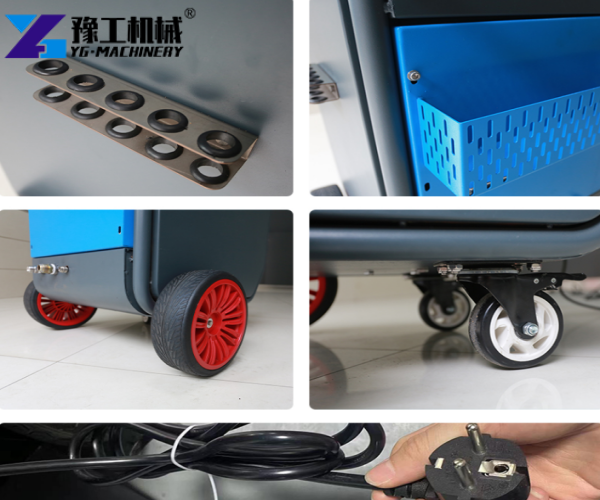
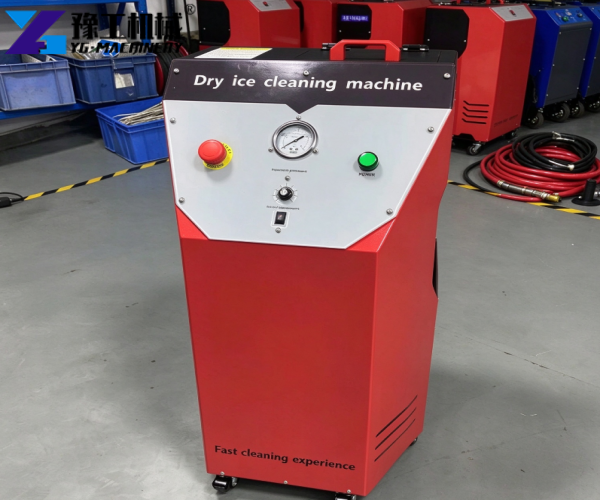
YG Machinery supplies high-quality dry ice cleaning machines with advanced features tailored for industrial cleaning applications. Additionally, we provide complete customer support, including training and maintenance services. Apart from dry ice cleaning machines, YG Machinery specializes in other industrial and construction equipment, including hydraulic wire saws, small concrete pump, mini excavators,hydraulic scissor lift platform and articulating scissor lift, etc. Contact YG Machinery today.
FAQ
What are the main benefits of dry ice blasting?
The main benefits of dry ice blasting include no wash water, no spent abrasive media, access to complex surfaces, and reduced chemical use in suitable applications.
Does dry ice cleaning leave residue?
Dry ice leaves no liquid cleaning residue, but removed grease, dust, and other contaminants still require collection.
Does a dry ice cleaning machine need an air compressor?
Yes. Compressed air propels the particles. The compressor must meet the selected machine’s airflow and pressure requirements.
Can dry ice blasting damage surfaces?
Yes. Unsuitable pressure or cleaning settings may damage sensitive materials. Test a small area before full-scale cleaning.