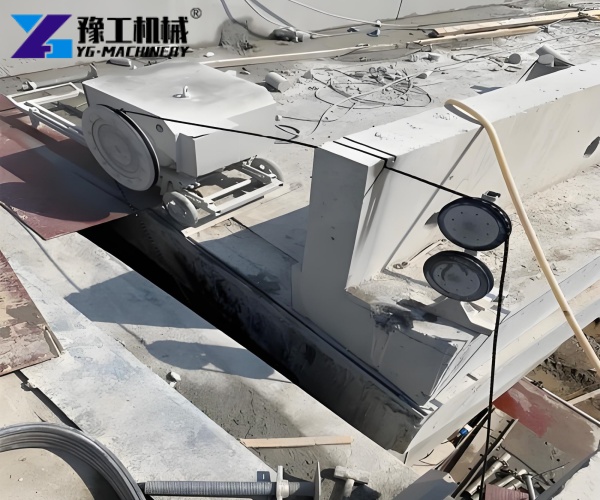
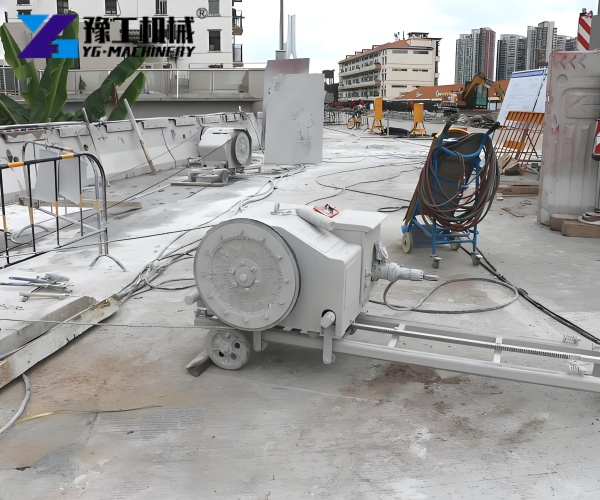
Concrete Wire Saw is used for cutting reinforced concrete structures in construction, demolition, and renovation projects. It uses a diamond wire to cut through both concrete and internal steel reinforcement.
YG hydraulic diamond wire saw is designed for large concrete cutting work, including walls, beams, columns, bridge piers, pile caps, and foundations. The hydraulic drive and full hydraulic feeding system help maintain stable operation for deep cutting and complex site conditions.
Hydraulic Diamond Wire Saw Specifications
The hydraulic diamond wire saw uses an HM-80 double-cylinder motor, hydraulic drive, and fully hydraulic feeding system. The main specifications are as follows.
| Parameter | Specification |
| Wire drive method | Hydraulic |
| Motor type | HM-80 double-cylinder |
| Minimum input power | 25HP / 33HP |
| Motor power | 22 / 25 kW |
| Output shaft speed | 350 / 940 / 1300 r/min |
| Maximum wire length | 20 m |
| Feeding method | Fully hydraulic |
| Main drive flow | 40–100 L/min |
| Working pressure | 15–20 MPa |
| Voltage | 220V / 380V, 50Hz |
| Hydraulic pump type | Gear pump |
| Wire saw wheel weight | 64 kg |
| Motor weight | 14 kg |
| Hydraulic pump weight | 160 kg |
| Wire saw wheel size | 1700×700×800 mm |
| Hydraulic pump size | 700×700×1200 mm |
The actual wire length, pressure, and feeding speed depend on the concrete section, reinforcement density, and working environment.
For large sections or dense reinforcement, operators need to adjust the wire path and guide wheel position according to site conditions.
Concrete Cutting Applications
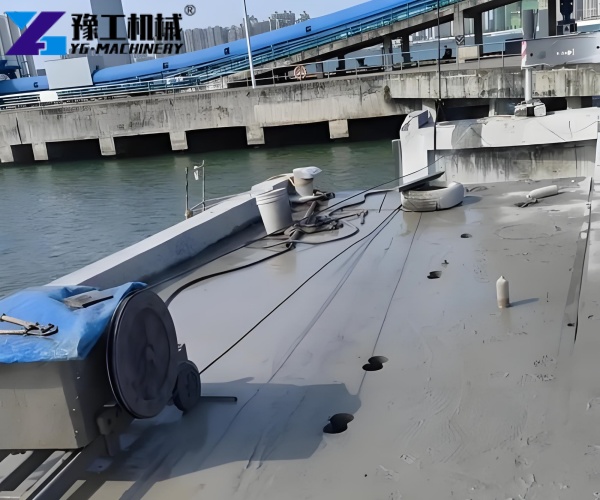
Concrete Wire Saw works for different reinforced concrete structures:
- Walls: Operators use it for full wall cutting, openings, and partial demolition.
- Beams and columns: It allows section cutting for lifting and removal.
- Bridge piers and abutments: It supports bridge renovation and dismantling work.
- Foundations and pile caps: It cuts large concrete blocks.
- Silos, tanks, and retaining walls: It works in areas where standard equipment has limited access.
In addition, reinforcement density affects cutting speed and diamond wire selection. For load-bearing structures, engineers should confirm the cutting sequence before operation.
Bridge Pier Cutting with Diamond Wire Saw
Bridge pier cutting requires accurate control because these structures usually have large sections and dense reinforcement.
For example, a bridge pier with a section of around 2.4 m × 1.6 m and dense reinforcement may use an 18 m wire length with a working pressure of around 18 MPa.
However, the final configuration changes according to pier size, reinforcement layout, cutting direction, and available space. Proper guide wheel arrangement keeps the wire path stable and reduces uneven wear.
How to Select the Right Wire Saw
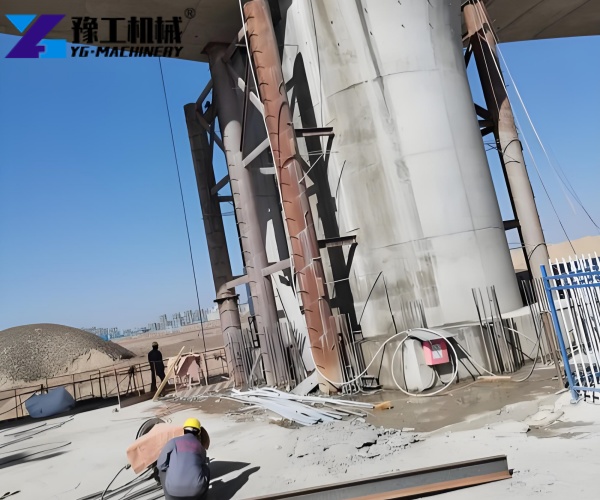
Concrete thickness is only one factor when selecting a wire saw. Buyers should also consider:
- Concrete section size: Larger sections need longer wire paths.
- Reinforcement density: Dense steel bars require suitable diamond wire and feeding speed.
- Structure type: Walls, beams, columns, and bridge piers need different cutting arrangements.
- Working space: Wire routing and guide wheel installation affect the cutting plan.
- Power supply: Confirm 220V/380V, 50Hz, and available input power.
- Water supply: Operators need water cooling and dust control during cutting.
Therefore, wire length, working pressure, and guide wheel layout should match the actual project conditions.
Installation and Operation Safety
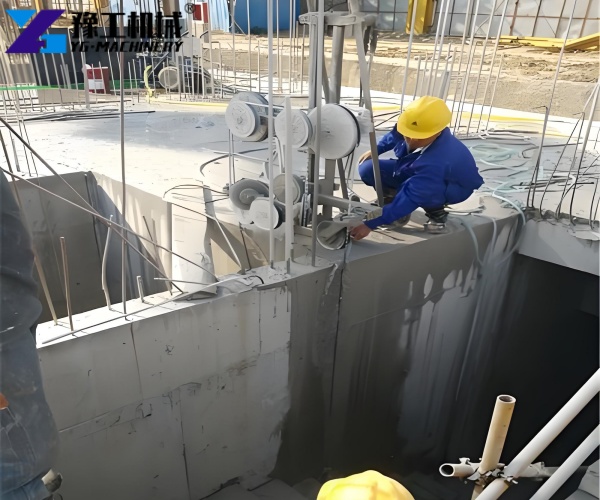
Before cutting, check the cutting line, wire path, wire tension, hydraulic connections, and power supply.
- Install the wire saw wheel and hydraulic pump on stable ground.
- Check guide wheel alignment and wire tension.
- Check hydraulic oil level, pressure, and flow.
- Keep personnel away from the cutting area.
- Use water for cooling and dust control.
- Monitor pressure, vibration, wire condition, and cutting speed during operation.
If cutting speed decreases, first check wire tension, guide wheels, water supply, and hydraulic pressure. Do not increase feeding force immediately.
Common Problems During Wire Saw Cutting
Common issues include slow cutting speed, wire breakage, high oil temperature, wire slipping, and cutting deviation.
- Slow cutting: Check wire tension, hydraulic pressure, feeding speed, and reinforcement density.
- Wire breakage: Check guide wheel alignment, wire path, and wheel wear.
- High oil temperature: Check oil level, flow rate, and working pressure.
- Wire slipping: Check wire tension, guide wheel position, and wheel condition.
- Cutting deviation: Check guide wheel alignment and feeding control.
If wire breakage happens repeatedly, check the wire path and guide wheel arrangement before changing operating parameters.
Concrete Wire Saw Selection Information
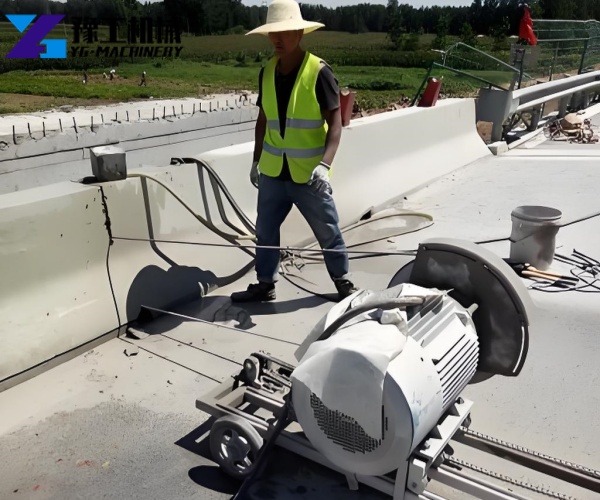
To select a suitable configuration, provide:
- Concrete thickness and cutting depth.
- Structure type: wall, beam, column, foundation, bridge pier, or other structures.
- Reinforcement details, including bar diameter and spacing.
- Cutting direction and working space.
- Power supply: 220V/380V, 50Hz.
- Water supply and drainage conditions.
YG can confirm the suitable motor, hydraulic pump, wire length, and guide wheel layout according to the project requirements.
Frequently Asked Questions
Can a diamond wire saw cut reinforced concrete?
Yes. It cuts both concrete and steel reinforcement. Cutting speed depends on reinforcement density, wire type, and operating conditions.
What is the maximum wire length?
The maximum wire length reaches 20 m. The actual length depends on the structure size and wire routing method.
What power supply does the wire saw require?
The equipment requires 220V/380V, 50Hz power supply. The motor power is 22/25 kW.
Does concrete wire saw cutting require water?
Yes. Operators normally use water for cooling and dust control during cutting.
Why use a wire saw for bridge pier cutting?
Bridge piers usually have large sections and dense reinforcement. A wire saw allows flexible wire routing and produces a smooth cutting surface. routing and provides a relatively smooth cutting surface.