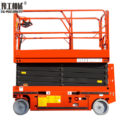
Outdoor construction projects in Texas, USA, often involve different ground conditions and working environments. For an industrial facility maintenance project, the team selected a Tracked Scissor Lift for exterior inspection, repair, and installation tasks in areas with uneven surfaces and limited access space.
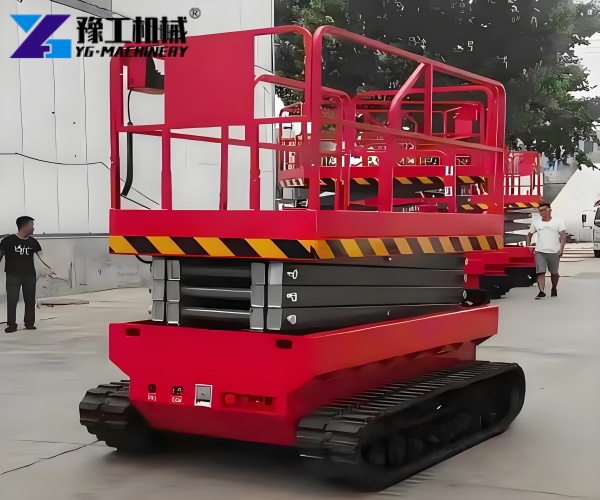
The team selected the YG1214 Tracked Scissor Lift from YG Machinery for this application. The machine provides an 11.8 m working height, 320 kg platform capacity, and a 2.27 × 1.12 m platform size, allowing operators to work at height while carrying necessary tools and equipment. In addition, the tracked walking system makes the lift suitable for outdoor areas with gravel and uneven ground.
| Item | Specification |
| Model | YG1214 Tracked Scissor Lift |
| Working Height | 11.8 m |
| Load Capacity | 320 kg |
| Platform Size | 2.27 × 1.12 m |
| Machine Dimensions | 2.48 × 1.19 × 2.03 m |
| Lifting Motor | 24V / 4.5 kW |
| Machine Weight | 2980 kg |
Project Overview of Tracked Scissor Lift Application
The main requirement was a lifting platform with sufficient working height, load capacity, and mobility for outdoor maintenance areas.
The project involved regular access to elevated sections of an industrial facility. Workers needed a machine that could move between different work positions while providing a stable platform for inspection, repair, and installation tasks.
Because the working area included uneven surfaces and restricted access points, the equipment needed to provide both lifting performance and outdoor mobility.
Challenges of Outdoor Construction Work in Texas
The facility maintenance project required workers to access elevated areas while moving between different sections of the site.
The main challenges included:
- Uneven outdoor surfaces around the working area;
- Limited access between facility structures;
- The need to carry workers and tools together;
- Frequent movement between different work positions.
Traditional lifting solutions were not always suitable for these conditions. A wheeled lift may face limitations on loose gravel surfaces, while workers need extra preparation time to set up and move scaffolding for different repair points.
For this reason, the project required a lifting solution that could move more easily across outdoor terrain while keeping the working platform stable.
Why YG1214 Was Selected

The YG1214 matched the project requirements in several key areas.
Working Height and Platform Capacity
With an 11.8 m working height and 320 kg load capacity, the lift provides enough space for workers and tools during maintenance operations. The platform supports elevated inspection, repair, and installation tasks.
The load capacity allows operators to bring necessary equipment to the working position, reducing the need for repeated movement between the platform and the ground.
Tracked Mobility for Uneven Ground
In addition, the tracked design allows the machine to move across gravel, soil, and uneven outdoor surfaces. This makes it suitable for areas where standard wheeled lifts may have limitations.
On this project, the operator could move the lift directly to different work points instead of relying on fixed access areas and manually transporting tools over longer distances.
Compact Structure for Limited Spaces
With machine dimensions of 2.48 × 1.19 × 2.03 m, the YG1214 can operate in restricted areas while maintaining a practical platform size.
The compact structure helps the machine pass between facility structures and equipment, which is useful for maintenance projects with limited working space.
Tracked Scissor Lift Model Selection Guide

Different working heights and applications may require different models of this type of equipment. Choosing the correct height and load capacity helps improve working efficiency and avoids using oversized equipment for smaller tasks.
| Model | Working Height | Suitable Application |
| YG1012 | Around 10 m | General outdoor maintenance |
| YG1214 | 11.8 m | Industrial maintenance and construction work |
| YG1416 | 13.7 m | Higher working areas |
For this project, 11.8 m was the right fit. The YG1012 could not reach the highest inspection points, while the YG1416 provided more working height than the job required.
Therefore, the YG1214 offered a suitable balance between working height, platform capacity, and machine size for the facility maintenance tasks.
Application of YG1214 Tracked Scissor Lift
During the project, the team used the YG1214 Tracked Scissor Lift for:
- Building exterior inspection;
- Equipment maintenance;
- Elevated repair work;
- Outdoor installation tasks.
Before using the tracked lift, some high-level work required additional preparation because of uneven surfaces and limited access conditions. After introducing the equipment, operators could move the machine between different working areas and complete tasks directly from the platform.
The tracked system allowed the lift to work in areas where surface conditions changed between gravel, soil, and other outdoor ground types. Meanwhile, the elevated platform provided a stable working position for maintenance operations.
Project Results After Using Tracked Scissor Lift

During one working day, the team completed maintenance work at multiple elevated points across the facility without repeatedly preparing temporary access equipment.
According to the operator, moving the lift between two work areas took about 5–10 minutes, compared with around 30 minutes of scaffold preparation for the same distance.
As a result, the tracked scissor lift helped the team:
- Reduce preparation work before elevated operations;
- Move between different work areas more easily;
- Adapt to outdoor ground conditions;
- Carry workers and tools together during maintenance tasks.
The project showed that a tracked lifting platform can be a practical choice for outdoor work areas where both height access and ground mobility are required.
USA Compliance and Safety Considerations for Tracked Scissor Lift
For aerial work platforms used in the USA, operators should follow applicable workplace safety requirements, including OSHA regulations and relevant ANSI A92 standards.
Important safety considerations include:
- Completing operator training before use;
- Inspecting safety systems regularly;
- Following manufacturer operating instructions;
- Selecting equipment according to actual site conditions.
On this project, the operator completed training before operation, and the team checked the machine at the beginning of each shift. The work process also followed site safety procedures for aerial work platform operations.
Choose the Right Tracked Scissor Lift for Your Project
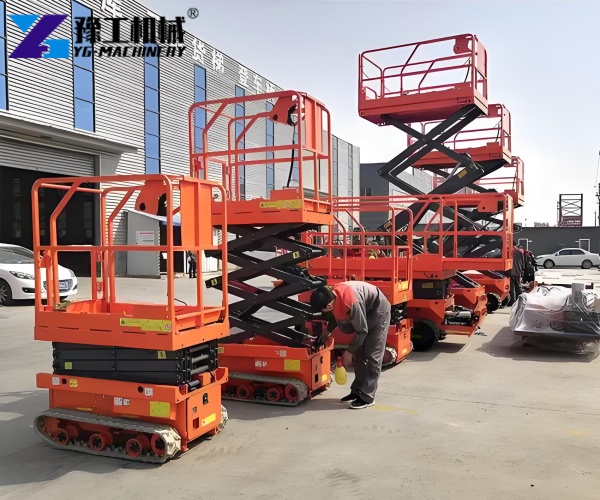
Selecting a tracked scissor lift depends on several factors, including working height, platform load, ground conditions, and available working space.
YG Machinery provides different tracked scissor lift models for outdoor construction, industrial maintenance, and other elevated work applications. Share your project requirements, and the suitable model can be recommended according to your working conditions.
FAQ About Tracked Scissor Lift
Can a tracked scissor lift work on gravel and uneven ground?
Yes. A tracked scissor lift is designed for outdoor applications where surfaces may include gravel, soil, or uneven areas. The tracked system provides better mobility in these conditions compared with standard wheeled models.
What is the difference between a tracked and wheeled scissor lift?
A tracked scissor lift is suitable for uneven outdoor surfaces, while wheeled scissor lifts are commonly used on flat concrete floors, warehouses, and indoor facilities.
What safety requirements apply to tracked scissor lifts in the USA?
Operators should follow applicable OSHA requirements and ANSI A92 standards, including proper training, equipment inspection, and safe operating procedures.
How much does a YG1214 tracked scissor lift cost?
The price depends on working height, platform capacity, configuration, quantity, and shipping requirements. Request a quotation based on your working height, load capacity, and site conditions.
What maintenance does a tracked scissor lift need?
Regular maintenance includes checking hydraulic components, electrical systems, batteries, tracks, and safety devices to ensure reliable operation.