Spray polyurethane foam thickness is one of the most important factors in insulation projects. Too thin, and you lose thermal performance. Too thick in one pass, and the foam sags or cracks.
Getting the thickness right means better insulation, longer service life, and fewer callbacks.
This guide covers everything you need to know about polyurethane spray foam thickness control: per-pass limits, multi-layer spraying, wait times, thickness measurement, and common problems.
Whether you are using a pu spray machine or a pu foam spray machine, thickness control follows the same principles.
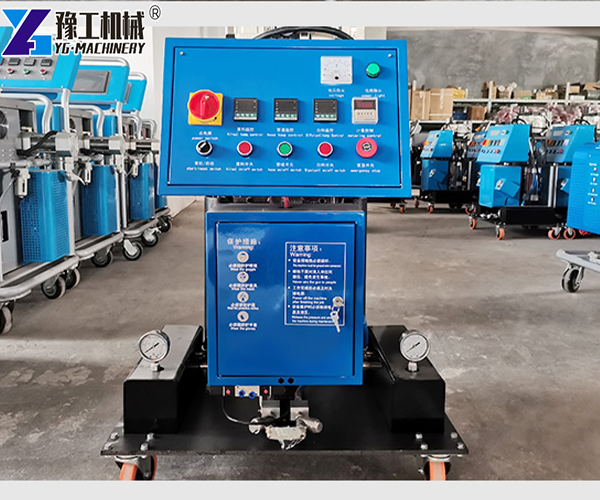

Spray Foam Thickness Per Pass – 3-5mm Rule
The golden rule: never spray more than 3-5mm in a single pass.
Spray foam expands as it cures. If you spray too thick in one pass, the foam generates excessive heat. This causes sagging, shrinkage cracks, or even charring.
| Application | Recommended thickness per pass |
| Wall insulation | 3-5mm |
| Roof insulation | 3-5mm |
| Cold storage | 3-5mm |
| Pipeline coating | 3-5mm |
Why 3-5mm?
- Ensures proper curing without overheating
- Prevents sagging and running
- Allows even foam expansion
- Reduces the risk of shrinkage cracking
What happens if you exceed 5mm per pass?
- Foam shrinks and cracks as it cools
- Surface becomes uneven
- Adhesion to the substrate weakens
- Insulation performance decreases

Multi Pass Foam Spraying – Build Thickness in Layers
Total thickness is achieved through multiple passes, never one thick pass.
Example: 50mm total thickness
- Pass 1: 3-5mm
- Pass 2: 3-5mm (after curing)
- Pass 3: 3-5mm (after curing)
- Repeat until total thickness is reached
Typical total thickness by application:
| Application | Total thickness |
| Exterior wall insulation | 30-50mm |
| Roof insulation | 50-80mm |
| Cold storage | 80-120mm |
| Pipeline insulation | 20-40mm |
| Refrigerated truck | 50-80mm |
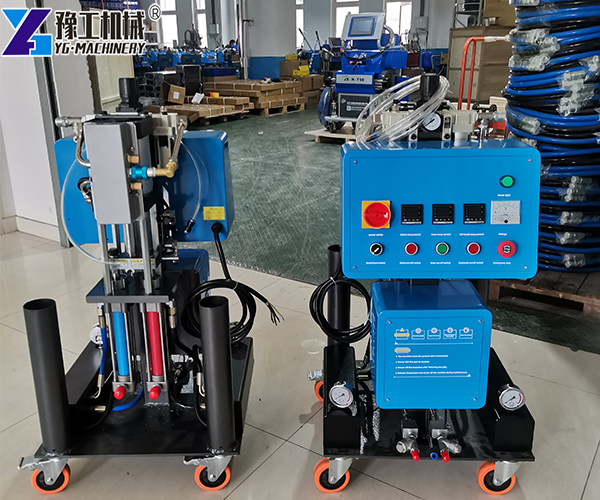
Wait Between Foam Passes – Let Each Layer Cure
Do not spray the next pass too soon.
Each layer needs time to cure. The foam surface should be firm to the touch before applying the next layer.
Factors that affect curing time:
- Temperature – warmer means faster cure
- Humidity – affects chemical reaction
- Foam formulation – varies by manufacturer
- Thickness of previous layer – thicker takes longer
General guideline:
- Wait until the foam surface is tack-free and firm
- Typically 30 seconds to a few minutes between passes
- In cold weather, wait longer
- In hot weather, cure is faster
Signs the layer is ready for the next pass:
- Surface is dry to the touch
- No tackiness
- Foam does not compress under light pressure
Too soon:
- The next pass damages the previous layer
- Foam slumps or slides off the wall
- Uneven final surface
Too late:
- Reduced interlayer adhesion
- Possible delamination between layers
Foam Thickness Measurement – How to Check
Measure thickness during and after spraying.
Methods:
- Use a depth gauge or thickness gauge
- Insert a pin or wire into the foam
- Use an ultrasonic thickness gauge
- Check the spray pattern
Spray pattern check:
- Hold the spray gun at the correct distance
- Move at a steady speed
- Watch for even coverage
Test panels:
- Spray a test panel alongside the job
- Cut through the test foam
- Measure thickness with a ruler
- Use this to check your technique
Measurement points:
- Take measurements at multiple spots
- Check edges and corners
- Record measurements for quality records
Common Polyurethane Spray Foam Thickness Problems and Solutions
1: Spray foam sagging
- Cause: Pass too thick, material too hot
- Solution: Reduce per-pass thickness. Check temperature.
2: Foam shrinkage cracking
- Cause: Pass too thick, excessive heat buildup
- Solution: Stick to 3-5mm per pass. Let each layer cure.
3: Uneven foam thickness
- Cause: Uneven spray speed, varying distance
- Solution: Maintain steady speed. Keep gun at consistent distance.
4: Foam adhesion failure
- Cause: Thickness too high, poor surface prep
- Solution: Reduce per-pass thickness. Prepare substrate properly.
5: Bubbles or voids in foam
- Cause: Contamination, moisture, improper mixing
- Solution: Check material condition. Ensure proper mixing ratio.
6: Surface roughness
- Cause: Spraying too fast, gun too far
- Solution: Adjust speed. Keep gun at 30-50cm distance.
Application Tips for Polyurethane Sprayer and Spray Foam Insulation Machine
Gun distance: 30-50cm from the surface
Gun speed: Move at a steady, consistent pace
Temperature: Keep material at recommended temperature (usually 50-70°C)
Surface preparation:
- Clean surface before spraying
- Remove dust, oil, and loose material
- Ensure surface is dry
- Apply primer if recommended
Environmental conditions:
- Avoid spraying in rain or high humidity
- Ideal temperature: 15-30°C
- Protect fresh foam from direct sunlight

Summary – Polyurethane Spray Foam Thickness Control Checklist
- Limit each pass to 3-5mm
- Wait for each layer to cure before next pass
- Measure thickness regularly
- Keep gun at 30-50cm distance
- Maintain steady spray speed
- Check surface temperature
- Follow material manufacturer guidelines
Need a Polyurethane Spray Foam Machine?
YG Machinery offers pneumatic and hydraulic polyurethane spray foam insulation machines for wall, roof, cold storage, and pipeline insulation. Tell us your project type and required thickness. We will recommend the right machine and provide application guidance.