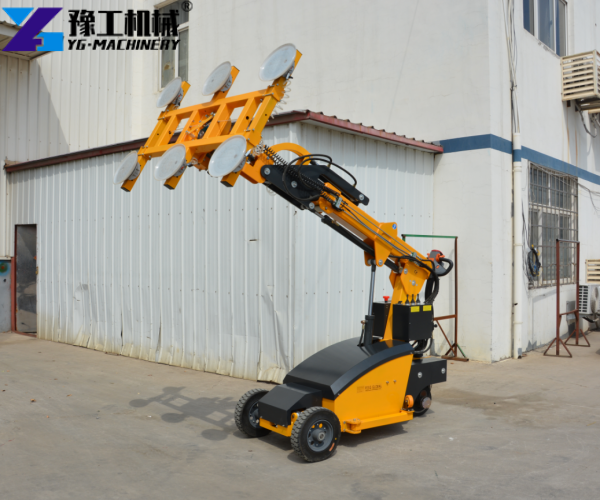
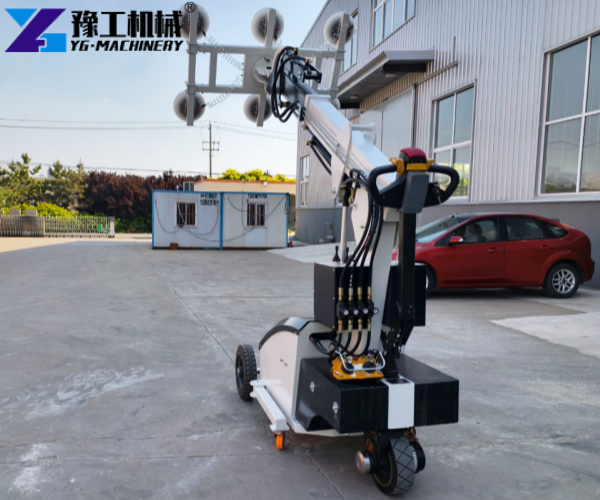
Installing large curtain wall glass manually takes time, particularly when panels weigh hundreds of kilograms or workers must position them near building edges. Narrow corridors, restricted access, and limited space around facade frames complicate handling. A damaged panel can mean replacement costs, delayed installation, and additional labor. A Glass Handling Robot combines vacuum gripping, electric lifting, and panel positioning for glass handling operations. It assists with moving glass between processing stations, transferring panels through workshop access areas, and positioning glass during curtain wall installation. YG Machinery offers five models with different load capacities and lifting heights to suit varied project requirements.
Glass Handling Robot Specifications
| Model Type | YG-LD-300 | YG-LD-400 | YG-LD-500 | YG-LD-600 | YG-LD-800 |
| Load Capacity | 300kg(retract)150kg(extend) | 400kg(retract)200kg(extend) | 500kg(retract)250kg(extend) | 600kg(retract)300kg(extend) | 800kg(retract)400kg(extend) |
| Lifting Height | 3500mm | 3500mm | 3700mm | 3700mm | 4500mm |
| QTY of Suction Cap | 4pcs | 4pcs | 6pcs | 6pcs | 8pcs |
| Rubber Suction Cap | Ø300mm | Ø300mm | Ø300mm | Ø300mm | Ø300mm |
| Maintenance-free Battery | 2×12V/80AH | 2×12V/100AH | 2×12V/120AH | 2×12V/120AH | 2×12V/120AH |
| Battery Charger | Smart Charger | Smart Charger | Smart Charger | Smart Charger | Smart Charger |
| Drive motor | 24V/1200W | 24V/1200W | 24V/1200W | 24V/1200W | 24V/1200W |
| Lifting Motor | 24V/2000W/6L | 24V/2000W/6L | 24V/2000W/6L | 24V/2000W/6L | 24V/2000W/12L |
| Chassis L*W | 2660*810mm | 2660*810mm | 2800*810mm | 2800*810mm | 2800*810mm |
| Driving Wheel | Ø250×80mm | Ø250×80mm | Ø300×100mm | Ø300×100mm | Ø300×125mm |
| Packing Size(mm) | 256010301700 | 256010301700 | 258010501700 | 258010501700 | 300012502300 |
| N.W/G.W | 1100/1150kg | 1280/1330kg | 1300/1350kg | 1400/1450kg | 1600/1650kg |
| Loading Qty | 1×20GP/40GP: 6SETS/12SETS | ||||
| Movement | Automatic(4 kinds) | 1. The suction cup frame flips 180° electrically.2. The support plate automatically retracts.3. Hydraulic arm lifts electrically.4. The base of the whole machine moves 100-150mm horizontally. | |||
| Manual (2kinds) | 1. The suction cup holder can be manually rotated 90 degrees (electrically powered, optional).2. The suction cup holder can be manually rotated 360 degrees (electrically powered optional). | ||||
| Usages | Mainly used for the handling, movement, and installation of materials such as glass, marble, wood, iron plate, etc. |
Vacuum Glass Lifter for Heavy Panels
A vacuum glass lifter grips panels through suction cups. YG-LD models use four, six, or eight cups, each with a 300 mm diameter.
Cup arrangement plays an important role when handling large glass sheets. A narrow panel and a wide facade unit can have similar weights but different gripping requirements. Glass dimensions, thickness, surface condition, and weight distribution all affect the handling setup.
YG-LD equipment also supports selected marble, wood, and iron plate applications. Surface finish and material characteristics determine whether vacuum gripping suits the job. For coated glass, finished stone, or metal sheets, contact conditions deserve attention before equipment selection.
Electric Glass Handler for Panel Positioning
The electric glass handler combines powered lifting with panel rotation. Its suction frame rotates 180° electrically. The hydraulic arm lifts electrically, while the support plate retracts automatically.
The machine base provides 100–150 mm of horizontal movement. This adjustment assists positioning near window frames and installation openings.
Manual rotation options include 90° and 360°. Electric rotation for these configurations is optional.
During facade installation, crews often need to change panel orientation before bringing glass toward its final position. Rotation, lifting height, and available working space should match the installation sequence.
Curtain Wall Glass Installation Robot Applications
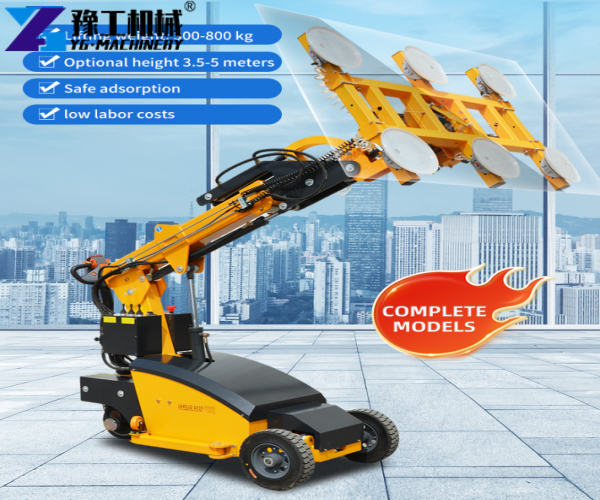
High-Rise Facade Installation
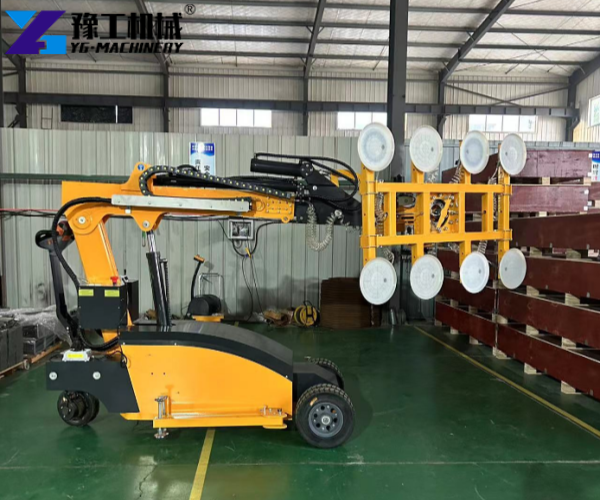
A curtain wall glass installation robot assists with lifting and positioning panels around facade frames and building openings.
YG-LD models provide lifting heights from 3500 mm to 4500 mm. The YG-LD-800 reaches 4500 mm and carries up to 800 kg in its retracted position.
High-rise installation brings additional challenges. Facade platforms, panel dimensions, access routes, and working space all affect equipment use. A machine with sufficient lifting capacity still needs a suitable approach route and room to position glass.
For vacuum glass lifting equipment for high-rise facade projects, installation height and site access belong in the equipment specification from the beginning.
Glass Processing and Window Manufacturing
Glass manufacturers move panels between cutting, processing, storage, and assembly stations. Powered handling reduces repeated manual transfers and supports movement across production areas.
YG-LD-300 and YG-LD-400 have an 810 mm chassis width and 2660 mm chassis length. Models 500, 600, and 800 use a 2800 mm chassis length.
In workshops, doorway clearance and turning space often determine whether a machine reaches the next workstation. A narrow production aisle also affects how crews position glass during loading and unloading.
Marble and Metal Plate Handling
YG-LD equipment also handles selected marble, wood, and iron plate applications. Material weight, dimensions, surface finish, and contact conditions affect gripping suitability.
For finished stone or metal surfaces, the handling arrangement needs to match the material. Glass handling equipment does not automatically suit every plate or surface type.
How to Select a Glass Handling Robot
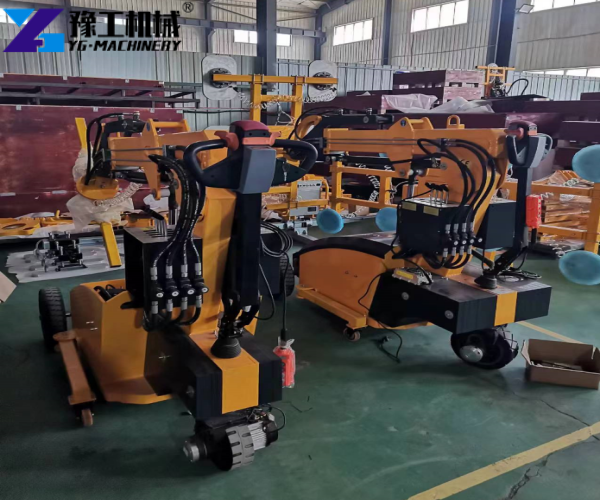
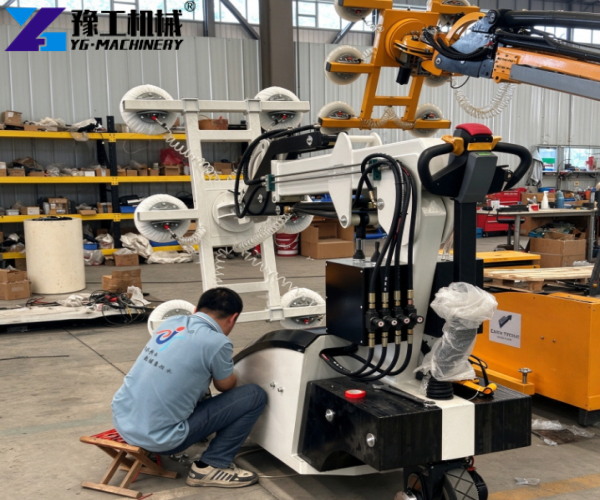
Capacity at the Working Position
The YG-LD-500 carries 500 kg retracted and 250 kg extended. The YG-LD-800 carries 800 kg retracted and 400 kg extended.
For panels positioned away from the chassis, extended capacity becomes a key factor. A 500 kg glass panel, for example, exceeds the YG-LD-500’s 250 kg extended rating. Rated capacity must match the actual handling position.
Lifting Height and Access
The 300 and 400 models reach 3500 mm. Models 500 and 600 reach 3700 mm, while model 800 reaches 4500 mm.
Chassis width, doorway clearance, turning space, and floor conditions also affect site access. A machine that fits through an entrance may still need additional room to turn and approach the installation point.
Vacuum Safety and Loss-of-Pressure Protection
Vacuum loss presents a serious concern when handling large glass panels. Contractors purchasing a vacuum glass lifter robot should pay attention to pressure monitoring, low-vacuum alarms, backup vacuum supply, and emergency procedures.
For a project inquiry, include glass drawings, panel weight, thickness, surface details, installation angle, and site measurements. High-rise projects also require information about platform layout and access restrictions. Our sales team can review the application and discuss suitable equipment configurations.
YG Machinery Construction Equipment
YG Machinery also supplies concrete placement equipment for construction contractors.
A Crawler Concrete Pump supports concrete delivery across construction sites. A Mobile Concrete Placing Boom assists with distributing concrete at different placement positions.
These machines serve separate construction tasks from glass handling. Contractors can also inquire about concrete pumping and placing equipment for building projects.
FAQ
Does the glass handling robot include a vacuum-loss alarm?
Vacuum monitoring and alarm arrangements depend on the supplied configuration. YG Machinery can discuss available pressure indicators, low-vacuum alarms, and backup systems for the selected model.
Can the machine handle tilted glass?
The suction frame supports 180° electric rotation. Manual 90° and 360° rotation options are also available, with electric rotation offered as an option. Required movement depends on panel orientation and installation conditions.
Which model suits high-rise curtain wall installation?
The YG-LD-300 to YG-LD-800 range covers different capacities and lifting heights. Panel weight, extended working position, installation height, and access conditions determine suitable model selection.