The pressure of a polyurethane spray machine determines the quality of your foam. Choose high pressure, and you get professional-grade results. Choose low pressure, and you get basic foam for small jobs.
Pick the wrong pressure, and the foam does not cure properly. It sags. It has voids.
This guide explains the difference between high pressure pu foam spray machine and low pressure foam spray. You will learn which one matches your work.
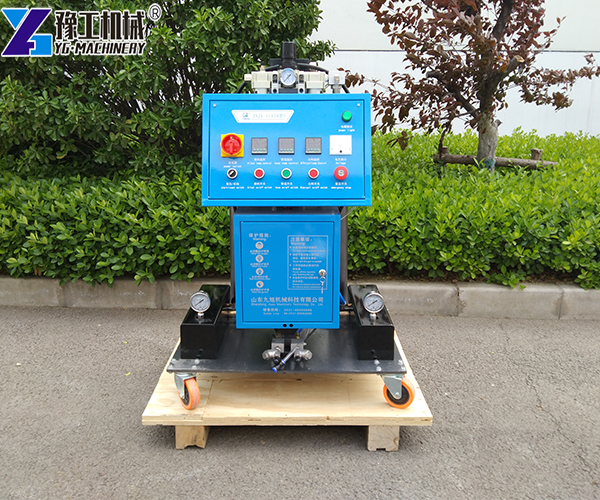
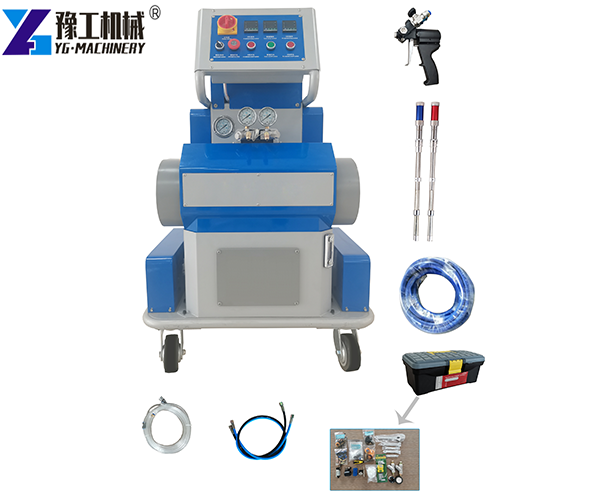
High Pressure vs Low Pressure Pu Foam Spray Machine – Key Differences
The table below shows the main differences between high pressure and low pressure polyurethane sprayers.
| Feature | High Pressure Spray Machine | Low Pressure Spray Machine |
| Spray pressure | 5-15 MPa | About 0.8 MPa |
| Mixing method | High-speed impact mixing | Low-speed mixing |
| Mixing quality | Uniform, thorough | Less uniform |
| Foam atomization | Fine, smooth | Coarse, less consistent |
| Output flow | 2-12 kg/min | 2-10 kg/min |
| Best for | Large professional projects | Small repairs, filling |
| Foam quality | Dense, even | Lower density, varied |
| Machine weight | Heavier | Lighter |
| Price | Higher | Lower |
High pressure spray foam equipment uses high-speed impact mixing. The A and B materials collide at high pressure in the mixing chamber. This creates a very thorough mix. The foam is fine, smooth, and consistent.
Low pressure foam sprayer uses slower mixing. The materials do not mix as completely. The foam is less consistent and can have voids.

High Pressure Foam Spray Machine – Professional Large Projects
A high pressure polyurethane spray machine is built for professional insulation work. Most YG polyurethane spray foam insulation machines are high pressure models.
Key advantages:
- Uniform mixing – High-pressure impact creates a thorough mix. No weak spots. No voids.
- Fine atomization – The foam sprays as fine droplets. The surface is smooth and even.
- Consistent output – Stable pressure means steady flow. The foam quality does not change during spraying.
- Higher output – Up to 12 kg/min. Covers large areas quickly.
- Better foam properties – Dense, strong, and consistent foam. Meets professional standards.
- Suitable for thick layers – Builds layers without quality loss.
Professional foam insulation demands high pressure. It is the standard for commercial and large residential projects.
Best for:
- Large building exterior wall insulation (over 1,000 m²)
- Cold storage and refrigeration warehouses
- Commercial roofing projects
- Pipeline insulation
- Continuous spraying operation
- Projects that require professional-grade foam quality
High pressure foam machine output is higher and more consistent than low pressure. The foam passes inspection every time.

Low Pressure Pu Foam Spray Machine – Small Areas and Repairs
A low pressure pu foam spray machine is designed for smaller jobs. It is lighter, simpler, and easier to set up.
Key advantages:
- Lighter weight – Easier to move and transport
- Lower cost – Lower initial investment
- Simpler operation – Easier for beginners
- Good for small areas – Perfect for spot repairs and filling
- Easy cleanup – Simpler system means faster cleaning
Small area foam repair is where low pressure shines. A single hole in a wall. A gap in a roof. A crack in a cold storage room.
Best for:
- Small insulation repairs
- Foam filling and crack sealing
- Residential insulation under 100 m²
- DIY projects
- Small cold storage repairs
- Contractors on a tight budget
Low pressure foam machine output is sufficient for these jobs. The foam quality is acceptable for non-critical applications.
Residential insulation spraying can be done with low pressure on small areas. For entire houses, high pressure is better.
Foam Atomization and Mixing Quality – The Real Difference
The real difference between high pressure and low pressure is mixing quality.
High pressure:
- Materials hit each other at high speed in a small chamber
- Mixing takes milliseconds
- Every bit of material is fully mixed
- The foam is uniform from start to finish
Low pressure:
- Materials mix at lower speed
- Mixing is less complete
- Small variations in the mix occur
- Foam quality can vary between passes
What this means for your project:
| Factor | High Pressure | Low Pressure |
| Foam density | Consistent | May vary |
| Cell structure | Fine, uniform | Coarser |
| Insulation value | Full R-value | May be lower |
| Strength | Strong | Less strong |
| Appearance | Smooth | May have texture |
| Pass inspection | Yes | Risk of failure |
Spray foam machine pressure difference directly affects your work. If you are a professional contractor doing large projects, the high pressure polyurethane sprayer is the right choice. The better foam quality means fewer callbacks and more satisfied customers.
Foam atomization quality is noticeably better with high pressure. The spray pattern is more even. The foam expands uniformly. The finished surface looks professional.

How to Choose – Project Type to Pressure Type
| Your project type | Recommended pressure | Why |
| Large building insulation (over 1,000m²) | High pressure | Fast coverage, consistent quality |
| Cold storage warehouse | High pressure | Dense foam, no voids |
| Commercial roof insulation | High pressure | Professional-grade foam |
| Small house insulation (under 200m²) | Low pressure | Lower cost, simpler setup |
| Foam repair and filling | Low pressure | Portable, easy cleanup |
| Pipeline insulation (short run) | Low pressure | Simple operation |
| Residential basement insulation | Low pressure | Small area, accessible |
| Professional contractor | High pressure | Quality and speed matter |
Real Case – High Pressure Sprayer in Russia
A construction company in Russia was contracted to insulate large warehouse roofs. The project covered over 5,000 m². The temperature was near freezing.
They used a YG high pressure polyurethane spray machine.
Why high pressure:
- Consistent foam quality even in cold conditions
- High output for large coverage
- Reliable performance for continuous work
Results:
- Completed the project on schedule
- Foam passed all quality checks
- Customer ordered a second machine
The project manager said: “High pressure pu foam spray machine gave us the quality and speed we needed. Low pressure would not have worked for this size of project.”

Summary – Which Pressure Should You Choose?
Choose high pressure if:
- You work on large projects (over 500 m²)
- You need consistent professional-grade foam
- Your work must pass inspection
- You have a budget for better equipment
- You spray foam every day
Choose low pressure if:
- You work on small projects and repairs
- You have a limited budget
- You are new to spray foam work
- You need a portable machine for different sites
- Your foam quality requirements are basic