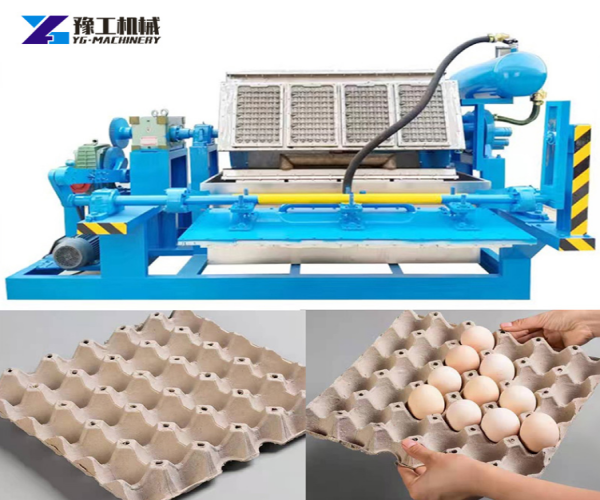
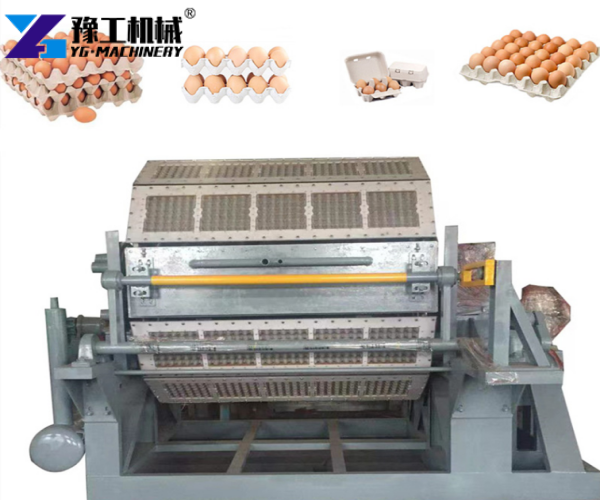
An egg tray machine turns waste paper into moulded pulp trays for egg packaging. The production line uses pulping, screening, forming, drying, and collection processes. Different configurations cover small farms, local packaging businesses, and larger commercial production. Proper line selection also depends on output demand, available workshop space, power supply, labour, and raw material access.
Egg Tray Machine Parameters
| Model | YG-1*3 | YG-1*4 | YG-3*4 | YG-4*4 | YG-4*8 | YG-5*8 | YG-6*8 |
| Capacity (pcs/h) | 1000 | 1500 | 2500 | 3500 | 4500 | 5500 | 7000 |
| Forming Mould Quantity | 3 | 4 | 12 | 16 | 32 | 40 | 48 |
| Total Power (kW) | 40 | 40 | 50 | 60 | 130 | 140 | 186 |
| Electricity Consumption (kW/h) | 28 | 29 | 35 | 42 | 91 | 98 | 130 |
| Worker | 3-5 | 4-6 | 4-6 | 4-6 | 4-6 | 5-7 | 6-8 |
How Does an Egg Tray Machine Work?
1. Pulping
Waste paper enters a pulper and mixes with water. Mechanical agitation breaks the paper into fibres and creates a pulp mixture. Operators adjust the pulp concentration according to production requirements.
Common raw materials include:
- Waste newspaper
- Old cartons
- Office paper
- Recycled paper
- Other suitable waste paper
2. Screening and Refining
Screens remove unwanted materials from the pulp. Refining improves fibre distribution and creates a more consistent mixture. Clean and well-prepared pulp gives the forming process a stable feed.
3. Tray Forming
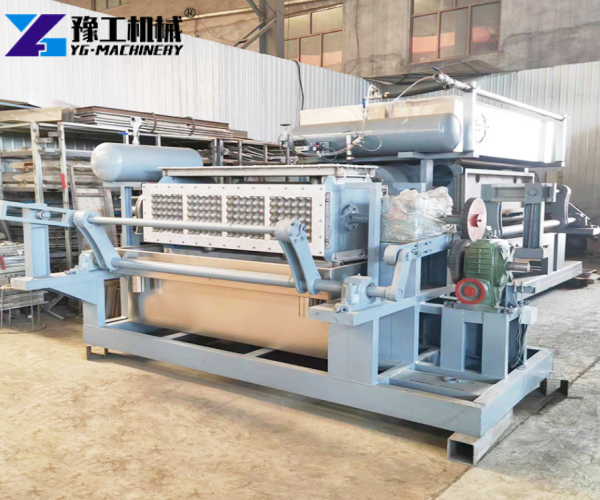
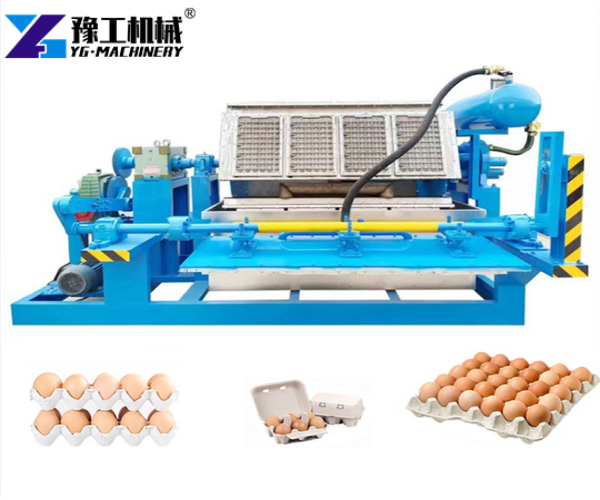
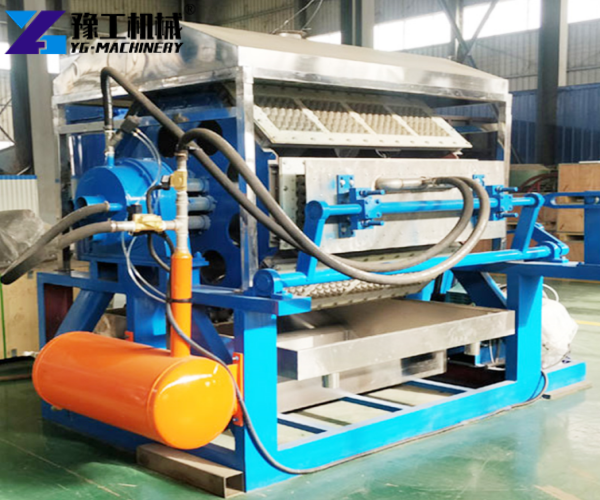
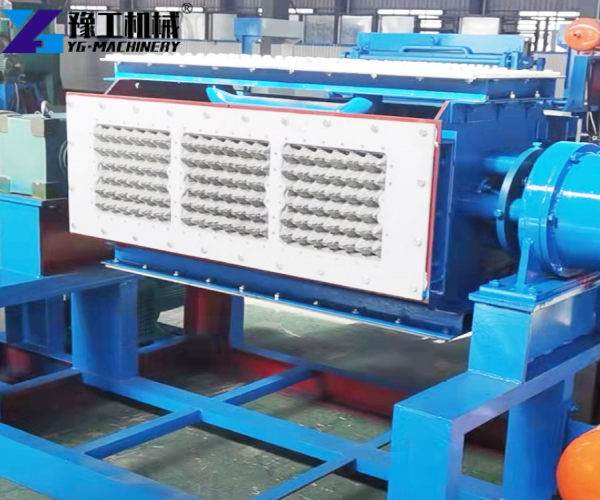
Vacuum forming draws pulp onto moulds and removes excess water. The fibre layer follows the mould shape and gradually forms the egg tray structure. Mould design determines tray size, cell arrangement, and surface shape.
4. Drying and Collection
Fresh trays contain a high amount of moisture after forming. Drying equipment removes this moisture before finished trays enter stacking and packing. Depending on the project, drying may use natural air, hot air, or a dedicated drying system.
What Are the Main Features of an Egg Tray Making Machine?
Flexible Raw Material Use
Recycled paper gives manufacturers a practical source of fibre for moulded pulp production. Local paper waste also reduces dependence on newly purchased pulp materials.
Vacuum Forming Process
Vacuum suction removes water during forming and keeps pulp against the mould surface. Stable suction improves tray shape and production consistency.
Different Production Scales
The available egg tray making machine configurations cover several production levels. Small farms may require a compact setup, while packaging suppliers often need continuous production for regular customer orders.
Mould Flexibility
Different moulds support different pulp products. Egg trays remain the main application, while suitable mould changes allow production lines to handle other moulded pulp packaging products.
Choosing a Suitable Configuration
- Expected daily output
- Planned working hours
- Local power supply
- Available waste paper
- Workshop size
- Drying space
- Labour availability
Where Are Pulp Egg Trays Used?
Poultry Farms
Large poultry farms need trays for collecting, storing, and transporting eggs. On-site production also reduces the need to purchase empty trays from outside suppliers.
Egg Packing Centres
Egg packing centres handle large quantities of eggs. Pulp egg tray packaging separates individual eggs during handling and transport, reducing direct contact between products.
Packaging Suppliers
Packaging suppliers produce trays for farms, supermarkets, wholesalers, and food distributors. A suitable egg tray production line gives suppliers a steady source of packaging for regular orders.
Wholesale Egg Businesses
Egg wholesalers need practical packaging for storage and distribution. Pulp trays offer a recyclable option for routine egg handling.
Paper Recycling Businesses
Companies that already collect waste paper may add egg tray production to their recycling operations. Existing paper-sorting resources can provide part of the required raw material supply.
YG is a factory-based machinery manufacturer with an engineering team and overseas service support. Send us your target output, working schedule, power supply, raw material, and workshop conditions to discuss a suitable production configuration.
FAQ
How much does an Egg Tray Machine cost?
The price depends on the selected model, production capacity, drying system, moulds, and supporting equipment. A complete quotation should also account for the required production line configuration and destination.
How many workers are needed to operate the machine?
Labour requirements depend on the production configuration and level of automation. The models in the specification table require different numbers of workers, while the actual staffing plan also depends on material handling, drying, and packing arrangements.
How long does it take to install an Egg Tray Machine?
Installation time depends on line size, drying system, workshop conditions, and site preparation. A level floor, suitable power supply, water supply, drainage, and enough installation space should be prepared before the equipment arrives.
Can the machine be customised for my production requirements?
Production configurations can be adjusted according to required output, raw material conditions, workshop space, power supply, and drying requirements. Buyers should provide these details when requesting a quotation so engineers can recommend suitable equipment.
What after-sales support is available?
YG provides technical support for equipment installation, operation, and production-line setup. Engineers can communicate with overseas customers online and provide guidance based on the actual equipment configuration and site conditions.