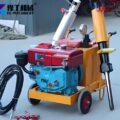
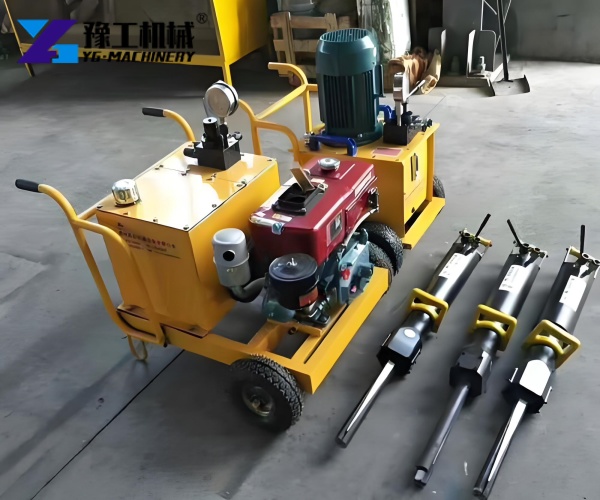
A hydraulic splitter machine is a non-explosive demolition tool that splits rock and concrete using hydraulic pressure. This hydraulic rock splitter uses the wedge principle: a wedge is inserted into a pre-drilled hole, and hydraulic force pushes it outward, cracking the material from the inside. For mining, demolition, and tunnel construction, this concrete splitter machine offers a safe, quiet, and vibration-free alternative to blasting.
This hydraulic splitting machine is suitable for:
- Granite, marble, and limestone quarrying
- Reinforced concrete demolition
- Tunnel and subway excavation
- Foundation and building demolition
- Chemical plant and smelting furnace overhaul
- Emergency rescue and disaster relief
Key advantages:
- Non-explosive, no blasting permits required
- No vibration, no damage to surrounding structures
- Silent operation, suitable for urban areas
- Precise splitting direction control
- Splitting force up to 1000 tons
- Splitting time: 10-15 seconds per cycle
YG Machinery offers hydraulic splitter machines in YG-250, YG-350, and YG-450 models. Splitting forces range from 500 to 1000 tons. Choose from electric or diesel power packs.
Technical Parameters of Hydraulic Splitter Machine

| Specification | YG-250 | YG-350 | YG-450 |
| Power pack | Diesel 6HP/8HP | Diesel 6HP/8HP | Diesel 6HP/8HP |
| Hydraulic pressure | 10-60 MPa | 10-60 MPa | 10-60 MPa |
| Splitter length | 1000mm | 1100mm | 1200mm |
| Wedge length | 250mm | 350mm | 450mm |
| Wedge weight | 30kg | 36kg | 43kg |
| Piston stroke | 90/220mm | 90/220mm | 90/220mm |
| Drilling depth | >500mm | >700mm | >900mm |
| Drilling diameter | 42mm | 50mm | 55mm |
| Crack width | 10-20mm | 10-20mm | 10-20mm |
| Splitting time | 10-15 seconds | 10-15 seconds | 10-15 seconds |
| Splitting force | 800 tons | 900 tons | 1000 tons |
The hydraulic power pack is available in electric or diesel versions. The diesel power pack uses a Changchai 6HP or 8HP engine. Pressure is adjustable from 10-60 MPa.
How a Hydraulic Splitter Machine Works (Wedge Principle)

The working principle of a hydraulic splitter machine is based on the wedge principle. Rock and concrete have high compressive strength but low tensile strength. The splitter uses this weakness to crack materials from the inside.
Step 1: Drill the hole – A hole is drilled into the rock or concrete. The drilling diameter must match the splitter size (42mm, 50mm, or 55mm). The hole depth should be 200-250mm deeper than the wedge insertion length.
Step 2: Insert the splitting gun – The splitting gun (wedge set) is inserted into the pre-drilled hole. The wedge set consists of one middle wedge and two side wedges. The direction of the wedge determines the splitting direction.
Step 3: Hydraulic pressure applied – The pump station delivers high-pressure oil to the splitting gun. The hydraulic pressure pushes the middle wedge forward between the two side wedges.
Step 4: Wedge expansion – As the middle wedge moves forward, the side wedges are forced outward. This creates strong lateral pressure against the walls of the hole.
Step 5: Rock cracking – The lateral pressure exceeds the tensile strength of the rock. The rock cracks along the direction of the hole. Cracking occurs in 10-15 seconds.
Step 6: Split complete – The splitting force is released. The wedges retract. The operator removes the splitter from the hole and repeats the process to break the material into smaller pieces.he material into smaller pieces.
Hydraulic Splitter Machine vs Blasting – Safer Alternative
| Comparison | Hydraulic Splitter Machine | Blasting |
| Explosives required | No | Yes |
| Vibration | None | High |
| Noise | Low | Very high |
| Flying debris | None | Yes |
| Safety risk | Low | High |
| Control precision | High (direction controlled) | Low |
| Permits required | No | Yes |
| Surrounding structure damage | None | Potential |
| Urban use | Allowed | Restricted |
| Operating cost | Low | High |
A hydraulic splitter machine is the clear choice for urban demolition, tunnel excavation, and any project where safety and precision are critical.
Applications of Rock Splitter Machine

This rock splitter machine works well in many industries and projects:
Quarrying and mining – Extract large blocks of granite, marble, and limestone. Split oversized boulders after blasting.
Tunnel excavation – Break rock in subway tunnels, highway tunnels, and pipeline trenches.
Construction demolition – Demolish reinforced concrete foundations, building columns, bridge piers, and old structures.
Chemical and smelting plants – Overhaul smelting furnaces, demolish refractory bricks, and break carbon blocks.
Emergency rescue – Clear rockslides, earthquake debris, and traffic accident wreckage.
Underwater demolition – Split underwater concrete and rock without pollution.
Urban construction – Work in densely populated areas and next to sensitive equipment.
How to Choose the Right Hydraulic Splitter Machine
| Your project type | Recommended model | Why |
| Small rock, soft limestone | YG-250 | 250mm wedge, 42mm hole, 800T force |
| Medium rock, granite, demolition | YG-350 | 350mm wedge, 50mm hole, 900T force |
| Large rock, hard granite, deep holes | YG-450 | 450mm wedge, 55mm hole, 1000T force |
| Indoor / factory use | Electric power pack | No emissions, quiet |
| Outdoor / remote site | Diesel power pack | No power source needed |
| Tight spaces, underwater | Handheld splitter | Compact, portable |
Still not sure? Tell us your rock type, required splitting force, and working environment. We will recommend the right hydraulic splitter machine for your project.
Operating and Maintenance Tips for Concrete Splitter Machine
Operating steps:
- Drill holes perpendicular to the splitting surface
- Insert the splitter fully into the hole
- Start the hydraulic pump station
- Rotate the reversing valve to extend the wedge
- Wait 10-15 seconds for the rock to crack
- Reverse the valve to retract the wedge
- Remove the splitter and reposition for the next split
Maintenance tips:
- Apply special grease to the wedge surfaces every 5-10 splits
- Check hydraulic oil levels before each use
- Inspect hoses and connections for leaks
- Keep the splitter clean after use
- Store in a dry place when not in use
Customer Case
Case – Southeast Asia: Tunnel Excavation
A tunnel construction project in a Southeast Asian city was in a densely populated area. Blasting was not allowed. Jackhammers were too slow and created dust and noise complaints.
The contractor used YG hydraulic splitter machines with diesel power packs. Workers drilled holes in the tunnel face. The splitters cracked the rock into manageable pieces for removal.
Results:
- Tunnel excavation progressed 30% faster
- No noise complaints from nearby residents
- No vibration damage to surrounding buildings
- Continuous operation, 24 hours a day
The project manager said: “The hydraulic splitter made tunnel excavation possible where blasting was forbidden. The machine worked reliably in the hot and humid conditions.”
FAQ
Q: What is the difference between YG-250, YG-350, and YG-450?
A: The numbers indicate wedge length. YG-250 has a 250mm wedge and 800T force. YG-350 has a 350mm wedge and 900T force. YG-450 has a 450mm wedge and 1000T force. Larger wedge = deeper drilling = more splitting force.
Q: Does the hydraulic splitter machine require blasting permits?
A: No. The machine works with hydraulic pressure, not explosives. No blasting permits are required.
Q: Can it be used indoors?
A: Yes. The machine produces no vibration, noise, or dust. It is ideal for indoor demolition in factories, basements, and buildings.
Q: Can it work underwater?
A: Yes. The hydraulic splitter machine can split underwater rock and concrete.
Q: What hole diameter is required?
A: YG-250 requires 42mm holes. YG-350 and YG-450 require 50-55mm holes. The hole diameter must match the splitter size.
Q: How deep should the hole be?
A: The hole depth should be 200-250mm deeper than the wedge insertion length. For YG-250, the hole depth should be >500mm. For YG-450, >900mm.
Q: How long does each split take?
A: Each split takes 10-15 seconds. The machine can work continuously without interruption.
Q: What is the warranty?
A: The main structure has a 24-month warranty. Hydraulic components have a 12-month warranty. Wedges are wear parts and are not covered.
Q: What is the price of a hydraulic splitter machine?
A: Price depends on model, power pack (electric or diesel), and configuration. YG-250 is the most affordable. YG-450 costs more.