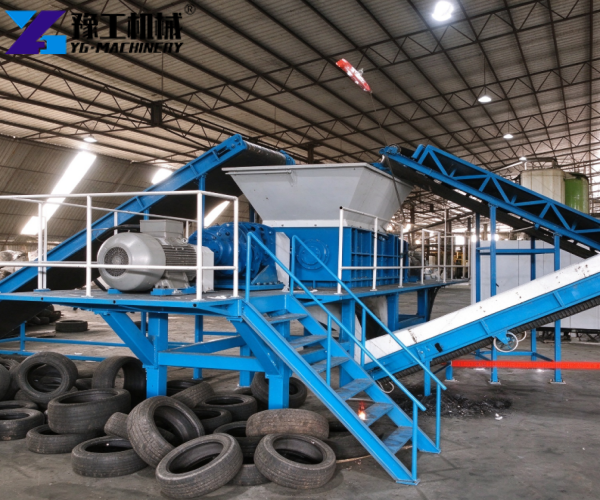
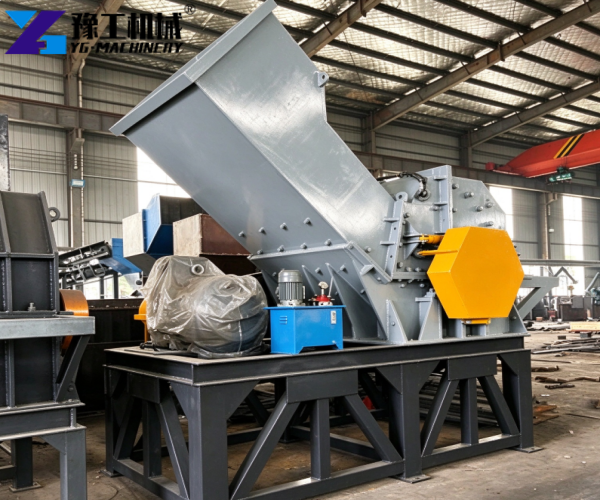
A tire recycling production line converts scrap tires into fuel oil, recovered carbonaceous material, steel wire, and combustible gas through pyrolysis. These outputs create potential revenue streams for tire recycling businesses while reducing the volume of waste sent to disposal sites. A waste tire recycling plant can use batch, semi-continuous, or fully continuous equipment to match its production needs.
Tire Recycling Production Line Specifications
| Model | YG-3 | YG-6 | YG-10 | YG-16 | YGL-16 | YG-30 |
| Capacity | 1-3t/d | 4-6t/d | 8-10t/d | 12-16t/d | 8t/d (only for rubber powder) | 30-35t/d |
| Working Process | Batch | Batch | Batch | Batch | Semi-continuous | Fully continuous |
| Reactor Size | φ1400*4900mm | φ2200*6000mm | φ2600*6600mm | φ2800*7100mm | φ2800*7100mm | φ4800*11500mm |
| Land (LWH) | 18m4.2m6m | 30m12m8m | 30m13m8m | 33m13m8m | 33m13m8m | 70m20m10m |
| Power | 16.65kw | 37.85kw | 44.3kw | 55.6kw | 55.6kw | 256kw |
| Burner | 2*200,000 kcal | 2*300,000 kcal | 2*300,000 kcal | 2*400,000 kcal | 2*400,000 kcal | 2.5 million kcal per set |
| Total Weight of Shipped Materials | About 18t | About 24.5t | About 28t | About 34.5t | About 34.5t | About 150t |
| Noise (dB) | ≤60 | ≤60 | ≤60 | ≤60 | ≤60 | ≤60 |
Waste Tire Recycling Equipment Features
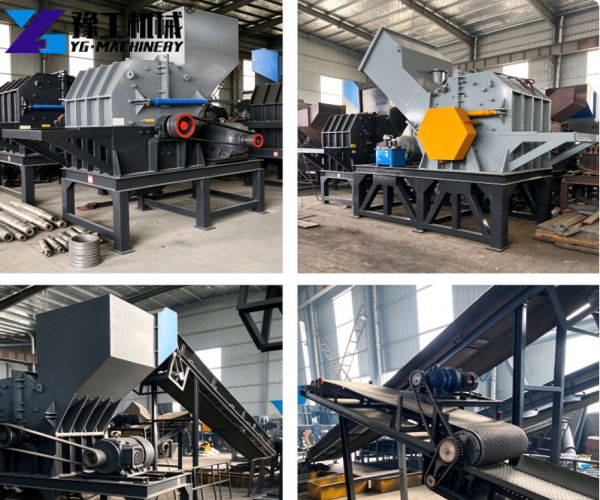
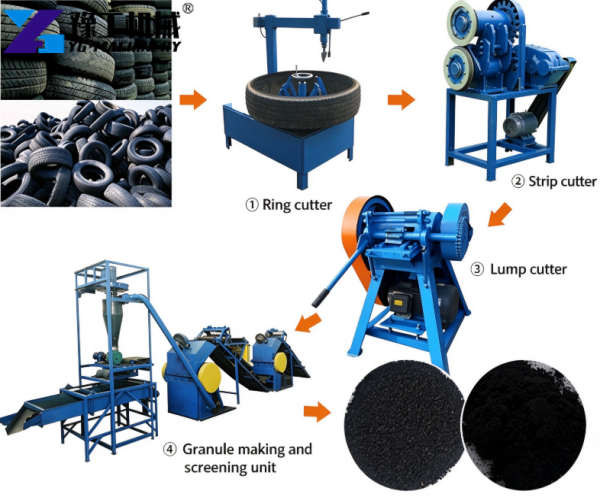
Flexible processing methods
The waste tire processing line includes batch, semi-continuous, and fully continuous configurations. Batch systems process tires in separate cycles, while continuous equipment maintains material flow during normal operation. The choice affects production scheduling, labor arrangements, and equipment investment.
Recovery of useful materials
A tire pyrolysis plant heats rubber in an oxygen-limited environment. The process produces oil vapors, combustible gas, and solid residue. Condensation recovers liquid oil, while downstream separation extracts steel wire. Further processing can prepare the carbonaceous residue for specific industrial applications.
Advantages of a Waste Tire Recycling Plant
- Multiple output streams: Fuel oil, steel wire, and processed carbonaceous material serve different markets.
- Flexible production scale: Buyers can select a system that matches their available tire supply and sales capacity.
- Fuel reuse: A suitable gas recovery system can reuse combustible gas for process heating and reduce external fuel consumption.
- Waste reduction: Pyrolysis recovers materials from discarded tires instead of sending the entire tire to disposal.
The commercial value depends on recovered material quality, local selling prices, operating costs, and access to consistent feedstock.
South African Tire Recycling Project
EcoTyre Recycling (Pty) Ltd, near eastern Johannesburg, previously focused on tire crushing and rubber powder production. Thin margins and growing inventory led manager Sipho Ndlovu to explore pyrolysis.
In March 2025, the company selected five YG-16 batch units, with a combined rated capacity of 60–80 tons per day. After production began, EcoTyre supplied fuel oil to a brick factory in Kempton Park, sold recovered carbon black to a modified asphalt plant in Durban, and delivered steel wire to local metal recyclers.
The combustible gas reuse system reduced monthly fuel expenses by nearly 40%, according to the project report. The operation also created 17 permanent jobs and received recognition from local environmental authorities.
Ndlovu stated: “The equipment paid for itself in the 11th month. We plan to add five YG-30 units in 2026 to double our capacity.”
Tire Recycling Plant Factory Price
The tire recycling plant price mainly depends on processing capacity, operating method, auxiliary equipment, and environmental controls.
- Main equipment: Reactor size and automation affect the initial investment.
- Auxiliary systems: Feeding, condensation, cooling, and material separation add to the total cost.
- Environmental controls: Gas treatment and exhaust systems must meet local requirements.
- Shipping and installation: Freight, commissioning, and site work affect the project budget.
For a meaningful tire recycling machine price, buyers should specify their target capacity, tire types, project location, and required equipment scope.
YG Machinery Tire Recycling Production Line for Your Project
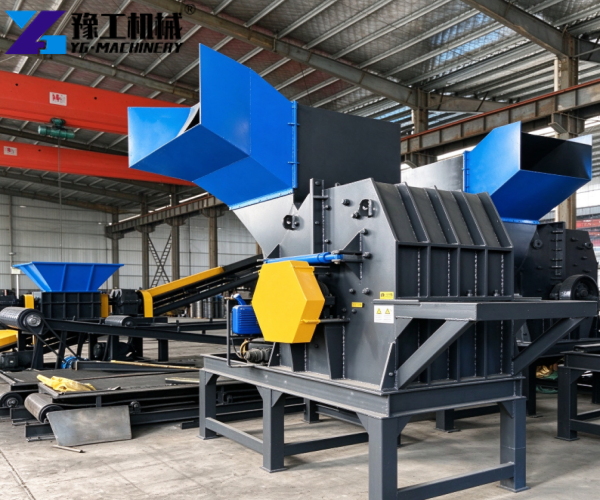
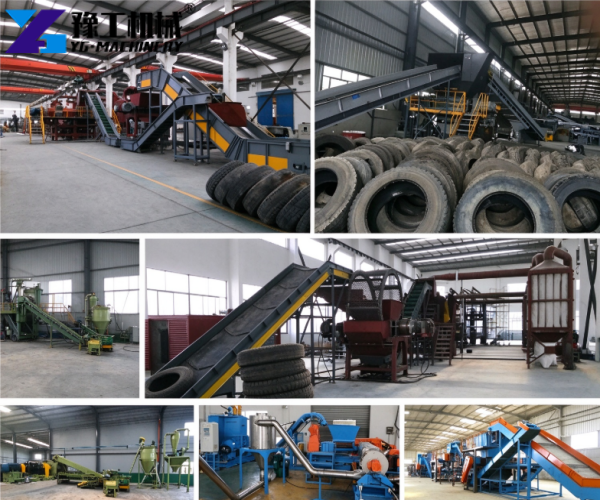
YG Machinery supplies tire recycling equipment for small operations and larger industrial plants. The product range includes different processing methods and capacity levels, allowing businesses to plan around their feedstock supply and output targets.
The available configurations serve projects with different production requirements. For overseas orders, buyers can discuss equipment scope, export arrangements, and the auxiliary systems required for the installation.
Businesses searching for a tire recycling plant for sale can contact YG Machinery with their project capacity and location to discuss a suitable configuration and quotation.
FAQ
What is the typical oil yield from waste tires?
A preliminary estimate is 35%–45% of feed weight, but actual yield varies with tire composition and operating conditions. This range is for planning, not a verified guarantee for every model.
How long does a batch pyrolysis cycle take?
A complete cycle may take around 12–24 hours, including heating and cooling. The exact cycle time should be established for the selected equipment and operating conditions.
How often does the equipment need maintenance?
Inspect seals, valves, burners, and gas lines before each shift, and clean cooling equipment as required. Carry out weekly component checks and follow the manufacturer’s service schedule for major inspections.
What steel wire recovery rate can the plant achieve?
A 95% recovery rate can serve as a preliminary engineering target, not a confirmed result for every configuration. Actual performance depends on wire condition and the separation system.
Which emission standards apply?
The plant must meet the air-emission limits and permit conditions in its installation location. Gas treatment and exhaust controls should be selected to meet those local requirements.