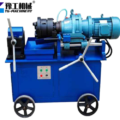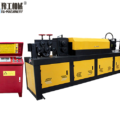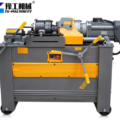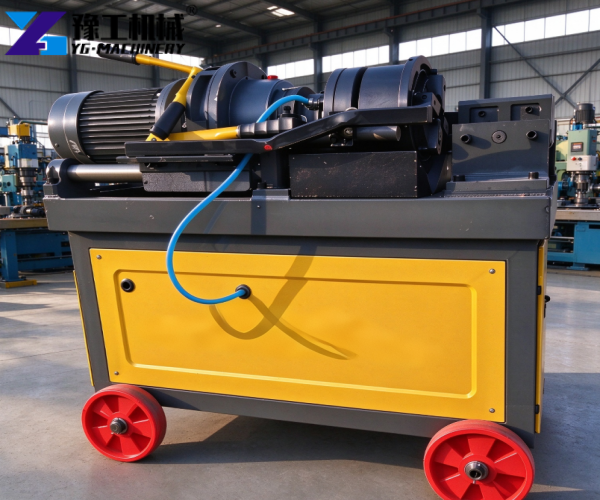
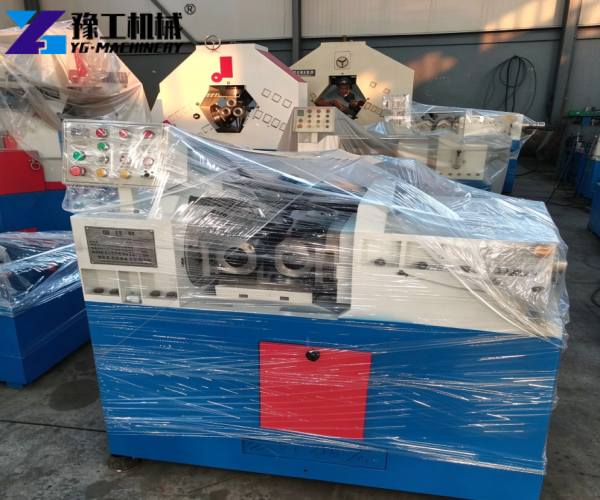
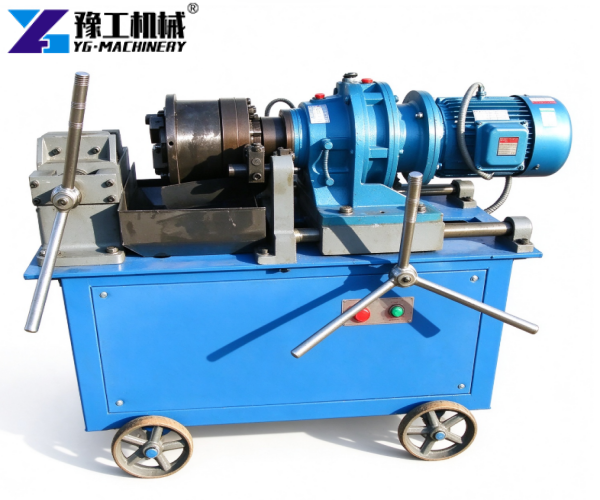
A steel threading machine forms external threads on rebar, bolts, and metal bars through cold rolling. Unlike cutting, rolling presses a thread profile into metal without removing material as chips. The process preserves continuous grain flow and can improve thread strength and fatigue resistance. Construction suppliers use rolled threads for rebar couplers, while fastener manufacturers produce anchor bolts, studs, and other threaded components.
Hydraulic Thread Rolling Machine Specifications
| Model | YG28-40 | YG28-80 | YG28-150 | YG28-185 | YG28-200 |
| Max rolling pressure | 120KN | 150KN | 150KN | 180KN | 200KN |
| Hydraulic diameter | 5-36MM | 6-42MM | 6-48MM | 10-60MM | 14-80MM |
| Rolling wheel diameter | 120-170MM | 120-170MM | 120-170MM | 175-220MM | 175-220MM |
| Max width of rolling wheel | 110MM | 110MM | 110MM | 150MM | 150MM |
| Spindle center distance | 120MM | 120MM | 120MM | 150-300MM | 150-300MM |
| Rolling wheel aperture | 54hole | 54hole | 54hole | 75hole | 75hole |
| Hydraulic power | 4kw | 2.2kw | 2.2kw | 3kw | 5.5kw |
| Main motivation | 4kw | 5.5kw | 7.5kw | 11kw | 11kw |
| Spindle speed | 36-78/min | 36-78/min | 36-78/min | 20-64/min | 20-64/min |
| Spindle tilt angle | ±5° | ±5° | ±5° | ±10° | ±10° |
| Thread length | No limited | No limited | No limited | No limited | No limited |
| Dimensions | 1.41.21.4m | 1.481.331.44m | 1.471.331.44m | 1.781.731.43m | 1.781.731.43m |
| Weight | 1100kg | 1700kg | 1800kg | 2000kg | 2600kg |
How a Hydraulic Steel Threading Machine Works
A hydraulic steel threading machine uses a motor-driven roller system and hydraulic pressure to form threads. The operator positions a metal bar between two rollers. As the dies rotate and press against its surface, the metal deforms into the required profile.
Cold rolling produces no cutting chips during normal operation. It also preserves continuous grain flow around the formed thread, which can improve fatigue resistance under suitable processing conditions.
Thread quality depends on several practical details:
- Roller profile: Die pitch and shape must match the required thread.
- Alignment: Incorrect positioning can produce uneven or incomplete threads.
- Pressure: Settings must suit the material and workpiece dimensions.
- Inspection: A sample thread should pass gauge and dimensional checks before batch production begins.
Typical Applications of a Thread Rolling Machine
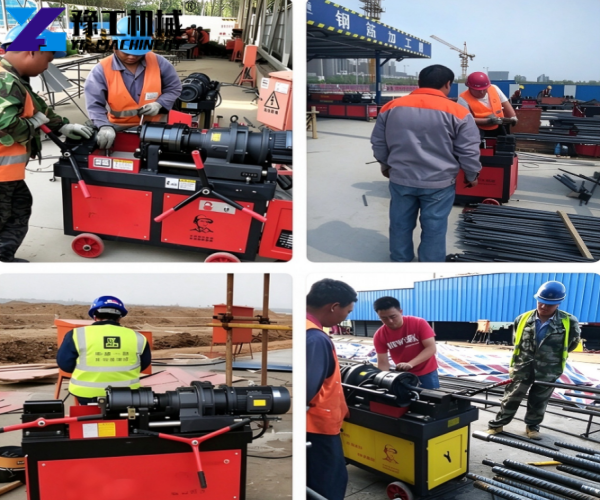
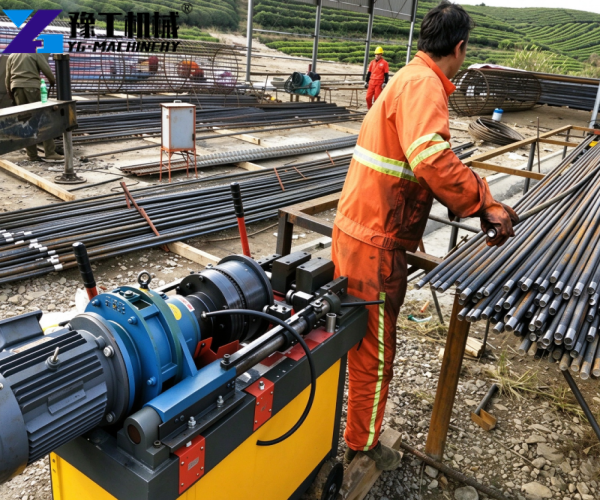
- Rebar processing: Forms external threads for mechanical couplers used in reinforced concrete structures.
- Fastener production: Manufactures anchor bolts, double-end studs, U-bolts, and other threaded components.
- Mining and tunneling: Processes threaded ends on rock bolts and ground-support bars.
- General machining: Produces tie rods, threaded shafts, and custom metal parts.
Common materials include carbon steel and alloy steel. Stainless steel and selected nonferrous metals may also be processed when their properties suit cold rolling. Material hardness and ductility influence forming pressure, die wear, and finished thread quality.
How to Choose a Steel Threading Machine
Start with the finished part rather than motor power alone. A workpiece drawing provides the diameter, pitch, thread profile, length, and tolerance requirements needed for model selection.
Production volume also matters. Manual loading may suit short runs and frequent product changes. For repetitive, high-volume work, automatic feeding can reduce handling time and maintain a more consistent production cycle.
Before ordering, discuss these points with the manufacturer:
- Confirm that the machine handles your workpiece dimensions and thread specifications.
- Ask about roller availability for your required thread profile.
- Request sample rolling and dimensional inspection before placing an order.
- Discuss lead times for replacement rollers and other wear parts.
For non-standard threads, testing an actual workpiece provides more useful information than relying on a drawing alone.
Automatic Steel Threading Machine Operation and Maintenance
An automatic steel threading machine reduces manual handling, but operators still need to monitor tooling and finished thread quality.
Before production:
- Inspect hydraulic oil levels, hoses, and electrical connections.
- Confirm workpiece alignment and roller condition.
- Roll a sample after changing dies or adjusting settings.
During routine maintenance:
- Replace filters and hydraulic oil according to the machine manual.
- Monitor oil temperature and inspect the cooling system.
- Record thread measurements and roller usage to identify wear.
- Investigate alignment, tooling, and material issues before increasing pressure to correct defective threads.
Regular inspection helps prevent tooling damage and reduces the risk of producing an entire batch outside specification.
Rebar Threading Machine Case Study in Egypt
In 2025, a construction accessories factory in Cairo purchased a YG28-80 rebar threading machine for 32 mm rebar coupler production connected with Egypt’s New Administrative Capital project.
Previously, the factory used turning to machine rebar ends. Cutting operations limited production speed, increased tool consumption, and made it difficult to meet thread strength requirements consistently.
After delivery, YG Machinery engineers guided installation and commissioning through video calls. Trial production finished within three days.
According to the supplied project information, the factory achieved:
1.Output of approximately 1,800 rebar ends per shift.
2.A reported first-pass acceptance rate of 99%.
3.Successful sampling inspection by the project owner.
Six months later, the customer ordered two additional sets of spare rollers. The repeat order highlighted the importance of tooling availability during ongoing production.
Steel Threading Machine Manufacturer: Quality Assurance from YG Machinery
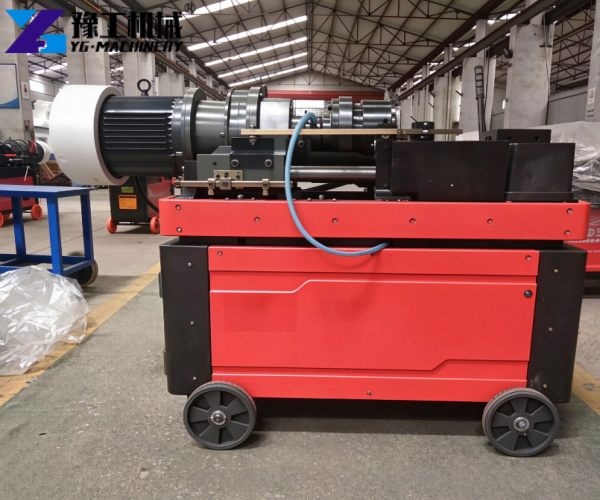
With decades of machinery manufacturing experience, YG Machinery handles production stages from casting and heat treatment to component processing and final assembly. Hydraulic stations, spindle boxes, and other key components undergo inspection before assembly.
Before shipment, each machine undergoes no-load testing, load rolling tests, and accuracy inspections. Staff record the results, and customers can request factory inspection data.
Additional services include:
1.Custom rollers made to specified workpiece drawings.
2.Factory trials or sample workpiece testing before an order.
3.Export packaging and shipping coordination.
4.Installation guidance and spare parts supply.
FAQ
Can you customize the machine voltage?
Yes. Electrical configurations can match requirements such as 380V/50Hz or 440V/60Hz. Confirm local voltage and frequency when ordering.
How many workers are needed to operate one machine?
One operator generally handles loading, rolling, and unloading under the standard configuration. Automatic feeding can reduce manual handling, depending on the production layout.
How is the machine protected during export?
Export preparation can include moisture-proof wrapping, anti-rust treatment, a fumigation-free wooden case, and desiccant.
Can the machine produce non-standard threads?
Yes. Provide the workpiece drawing, material grade, thread dimensions, and tolerance requirements for a tooling assessment.