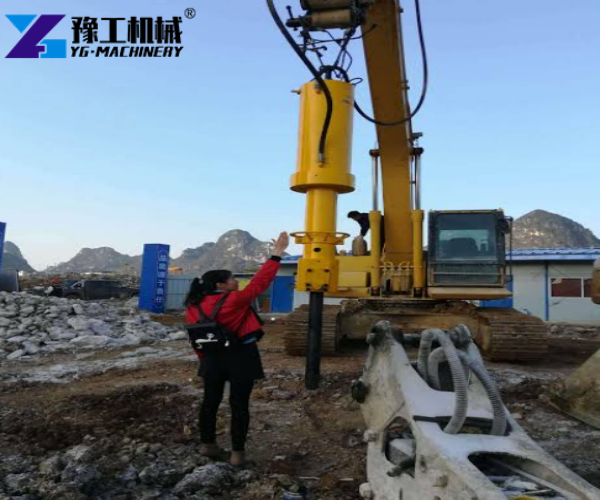
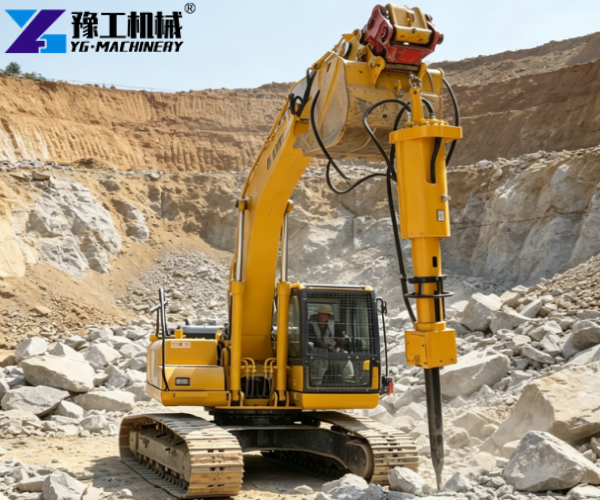
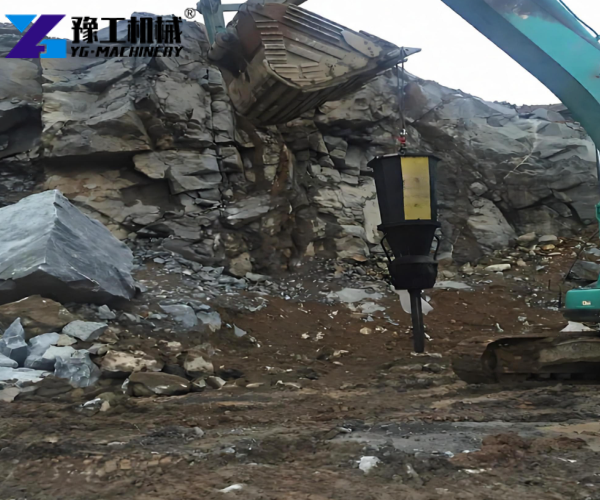
An Excavator Rock Splitter works by opening a drilled hole from inside the rock. The operator first creates holes along the section that needs to be removed. Next, the splitting gun enters the hole and uses hydraulic pressure to force the rock apart.
For a mountain road project in Vietnam, this method suited the way the excavation team planned to remove hard rock. The customer already had an excavator for the roadwork and wanted to add a hydraulic splitting attachment rather than bring another large machine to the site.
Excavator Rock Splitter Technical Parameters
| Parameter | YGM-S200 |
| Model | YGM-S200 |
| Splitting Force (ton) | 3800 |
| Piston Diameter (mm) | 200 |
| Required Drilling Diameter (mm) | 90–110 |
| Required Drilling Depth (mm) | 1600 |
| Crack Width (mm) | 32 |
| Drilling Gap Distance (mm) | 1000–1500 |
| Splitting Speed (s) | 40–50 |
| Required Pressure (MPa) | 60–80 |
| Splitting Gun Length (mm) | 2700 |
| Weight (kg) | 900 |
Vietnam Mountain Road Rock Project
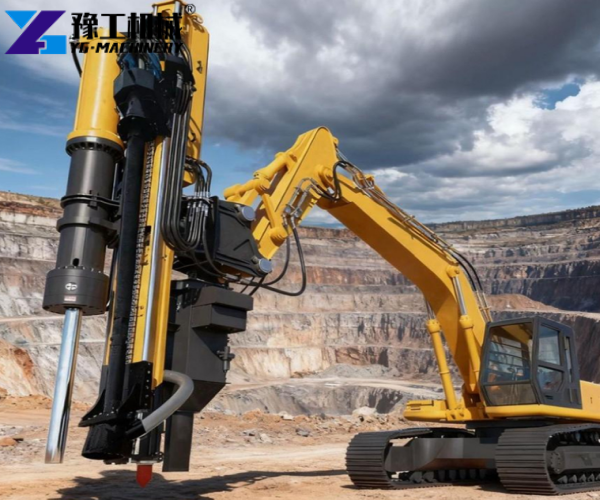
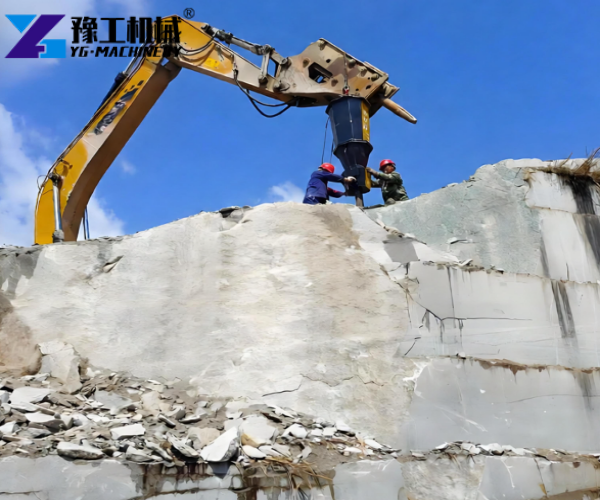
In May 2026, Nguyen Minh Duc, a road construction contractor in northern Vietnam, contacted YG Machinery for a mountain road project. The project covered about 1.8 km of road construction and lasted around six weeks. The excavation line crossed mainly hard limestone, with the rock condition changing between different sections.
The contractor already had a 20-ton excavator working on site. It handled loose material, cleared the roadbed, and moved forward as the road alignment advanced. The customer therefore wanted the splitting equipment to work with the existing excavator .
The drilling team prepared holes along the planned breaking line before each splitting operation. On relatively uniform limestone, the hole spacing was around 1500 mm. When the rock became harder, the crew reduced the spacing to about 1000 mm to create a denser breaking pattern.
Excavator Hydraulic Splitter for Rock Selection
The hydraulic connection required particular attention. The excavator hydraulic splitter for rock needs hydraulic pressure within the specified range, so the excavator’s hydraulic system had to be checked before installation.
The attachment weight and gun length were also considered because the operator needed to position the splitting gun over the prepared holes without exceeding the excavator’s working capacity or available clearance.
The drilling equipment was reviewed at the same time. It needed to produce holes within the required diameter and depth. Once the excavator, hydraulic system, drilling equipment, and site conditions were confirmed, the YGM-S200 could be prepared for shipment.
Excavator Rock Splitter Attachment Working Process
The work starts with drilling rather than splitting. After the holes were prepared, the operator moved the excavator into position and inserted the splitting gun into the hole. Hydraulic pressure then drove the piston inside the gun.
The force acted against the sides of the drilled hole and created a crack through the limestone. The excavator then cleared the separated material before moving to the next prepared position.
The listed splitting speed is 40–50 seconds. On easier limestone sections, the crew normally worked close to the 40-second cycle. When the rock became harder, the cycle moved toward 50 seconds, while the hole spacing was reduced from about 1500 mm to 1000 mm.
This adjustment allowed the crew to continue using the same attachment as the geological conditions changed. The excavator could also clear the separated rock immediately, so the next section could be prepared without waiting for another breaking machine.
Why larger hydraulic attachment Isn’t Always Better
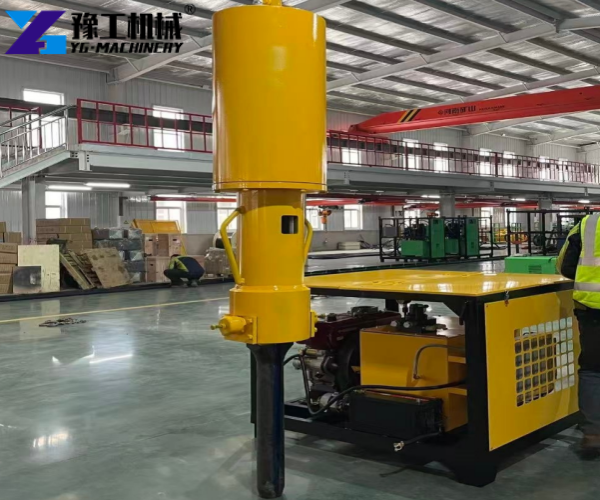
The selection depends on the carrier, hydraulic system, drilling method, rock condition, and available working space. For this project, the customer’s excavator had to accommodate the attachment’s operating load and working dimensions, while its hydraulic system needed to meet the required pressure. Meanwhile, the drilling equipment had to produce holes within the specified range.
The rock condition also affected the selection and operation. Rather than using one fixed drilling pattern throughout the 1.8 km road section, the crew kept wider spacing on easier limestone and reduced the gap when the rock became harder.
For the Vietnam order, the YGM-S200 provided a listed splitting force of 3800 tons with a 200 mm piston. More importantly, its overall specifications matched the excavator and drilling arrangement that the customer had confirmed.
Customers searching for an Excavator Rock Splitter for sale can provide the excavator model, hydraulic pressure and flow, rock type, drilling requirements, hole spacing, and site layout when requesting a model recommendation. With these details, the supplier can check compatibility before shipment.
Excavator Rock Splitter Export to Vietnam
According to the customer’s feedback, the main efficiency improvement came from keeping splitting and material clearing within the same excavator workflow. Compared with the previous arrangement, which required separate equipment for breaking and clearing, the team reported about two hours less waiting time per working day.
Mr. Duc commented: “Using one excavator to handle both splitting and clearing kept our crew moving without waiting for extra machines.”
For similar hard rock excavation, mountain road construction, or non-blasting rock breaking work, a rock splitter can work with an existing excavator when the carrier and attachment specifications match. If you want to add a rock splitter to your excavator, contact YG Machinery for selection advice and a quotation.