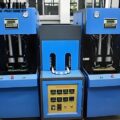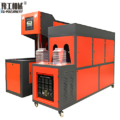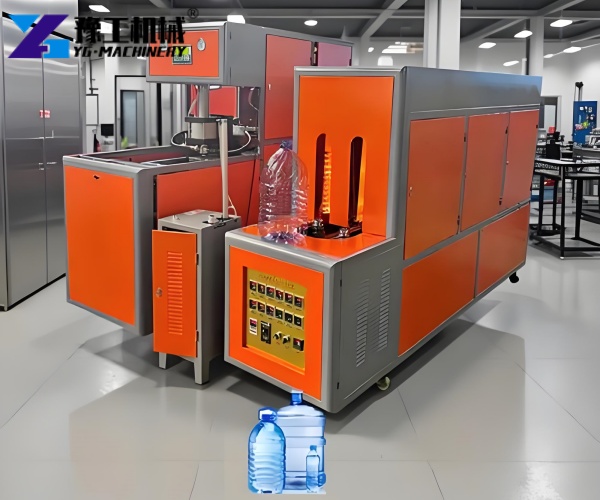
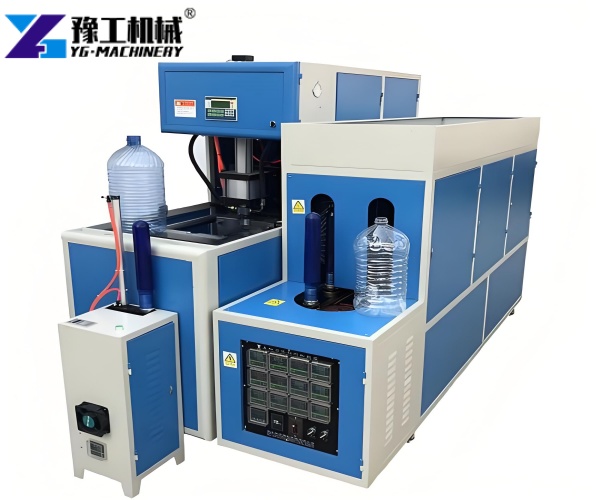
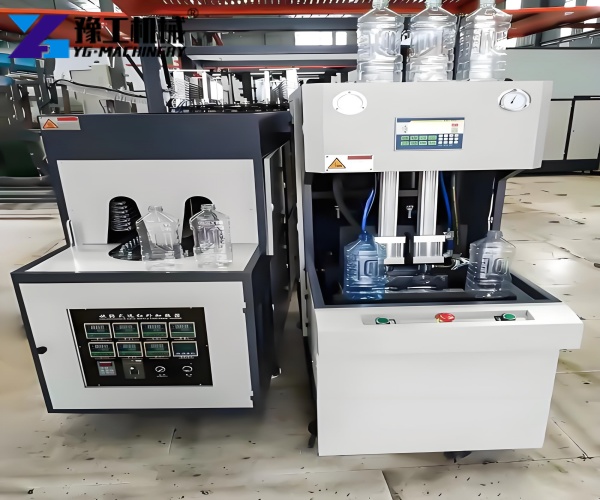
A plastic bottle molding machine is a device that blows preforms into finished bottles. This plastic bottle making machine heats PET preforms and uses high-pressure air to shape them into bottles. For beverage factories, water bottling plants, and cosmetic manufacturers, this bottle blowing machine is the core equipment for producing plastic bottles.
The plastic bottle molding machine price depends on several factors: cavity count, automation level, output capacity, and mold configuration. Prices range from entry-level semi-automatic machines to high-speed fully automatic systems.
Technical Parameters and Configuration Options
| Specification | 2-Cavity | 4-Cavity | 6-Cavity | 8-Cavity |
| Cavity count | 2 | 4 | 6 | 8 |
| Theoretical output | 1,200-2,700 PCS/H | 4,000-5,000 PCS/H | 6,000-7,200 PCS/H | 8,500-9,000 PCS/H |
| Max bottle volume | 2L | 2L | 2L | 2L |
| Max bottle height | 330mm | 330mm | 330mm | 330mm |
| Max bottle diameter | 100mm | 100mm | 100mm | 100mm |
| Max heating power | 24kW | 40kW | 80kW | 80kW |
| Actual power consumption | 19kW | 30kW | 40kW | 40kW |
| Working pressure | 7-9 kg/cm² | 7-9 kg/cm² | 7-9 kg/cm² | 7-9 kg/cm² |
| Machine weight | 2.0 tons | 4.0 tons | 5.5 tons | 6.0 tons |
| Machine size (LxWxH) | 2.5×1.6×1.7m | 4.5×2.0x2.3m | 6.5×2.0x1.9m | 6.7×2.0x2.3m |
All models feature PLC control, Siemens servo system, automatic fault detection, and scrap rate ≤0.2%.
Plastic Bottle Molding Machine Price Factors
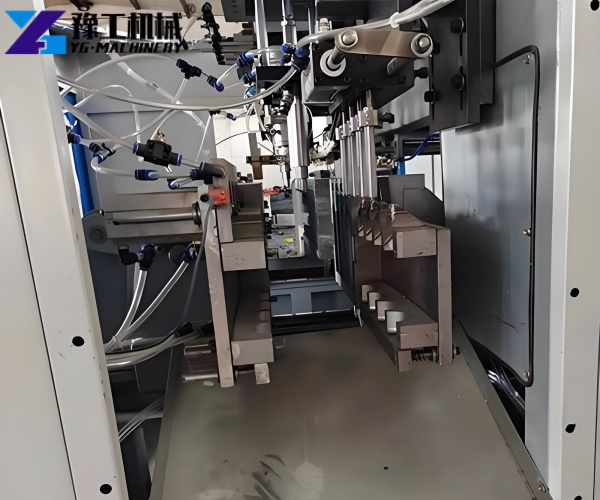
The plastic bottle molding machine price is determined by several key factors. Understanding these helps you choose the right configuration for your budget.
Main Factors Affecting Machine Price
- Cavity count – More cavities mean higher output and higher price. 2-cavity machines cost less than 8-cavity machines.
- Automation level – Fully automatic machines cost more than semi-automatic. Full automation reduces labor costs over time.
- Mold configuration – Custom molds for unique bottle shapes cost extra. Standard molds are included.
- Branded components – Siemens servo systems, Schneider electrical parts, and premium brands increase cost but improve reliability.
- Output capacity – Higher output (more bottles per hour) requires more powerful components and higher investment.
- Auxiliary equipment – Air compressors, chillers, and conveyors are required. These are not always included in the base price.
- After-sales service – Installation, training, and warranty coverage affect the total package price.
Semi-Automatic vs Fully Automatic Bottle Blowing Machine
| Comparison | Semi-Automatic | Fully Automatic |
| Operation | Manual preform loading | Automatic preform feeding and discharge |
| Labor requirement | 2-3 operators | 1 operator |
| Output | Lower (100-500 PCS/H) | Higher (1,200-9,000 PCS/H) |
| Initial cost | Lower | Higher |
| Unit production cost | Higher (more labor) | Lower (less labor, higher efficiency) |
| Best for | Small batches, diverse bottles | Mass production, standard bottles |
| Machine type | One-out-one / one-out-two | 2/4/6/8 cavity production |
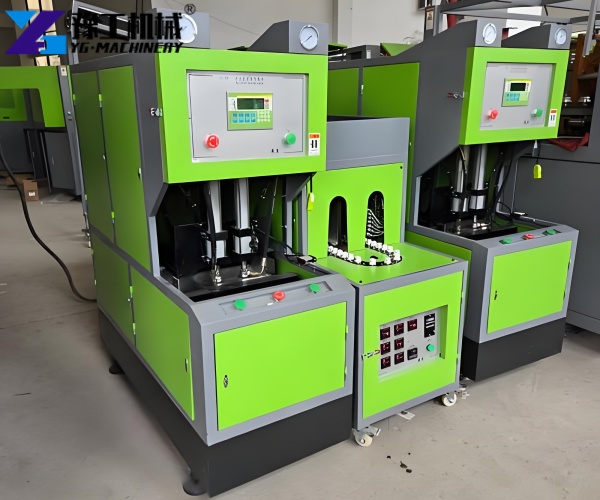
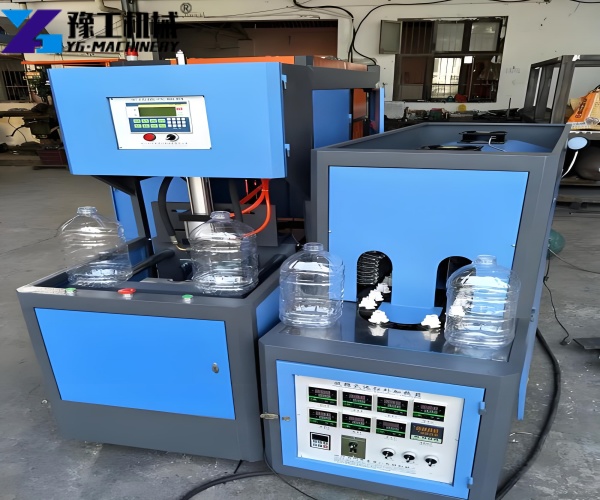
A semi-automatic bottle blow molding machine is suitable for small businesses, startups, and low-volume production. A fully automatic plastic bottle making machine is suitable for large-scale production and factories with consistent demand.
Investment Payback Analysis
Semi-Automatic Machine (Example: 2-cavity, 1,200 PCS/H)
- Initial investment: ~$5,000-$10,000
- Labor cost: 2-3 workers per shift
- Daily output: ~10,000 bottles (8-hour shift)
- Bottle production cost: Lower equipment cost, higher labor cost
- Suitable for: Small factories, startups, diverse bottle types
Fully Automatic Machine (Example: 6-cavity, 6,000-7,200 PCS/H)
- Initial investment: ~$20,000-$40,000
- Labor cost: 1 operator per shift
- Daily output: ~50,000 bottles (8-hour shift)
- Bottle production cost: Higher equipment cost, much lower labor cost
- Suitable for: Large factories, mass production, consistent demand
Plastic Bottle Making Machine Applications and Bottle Types
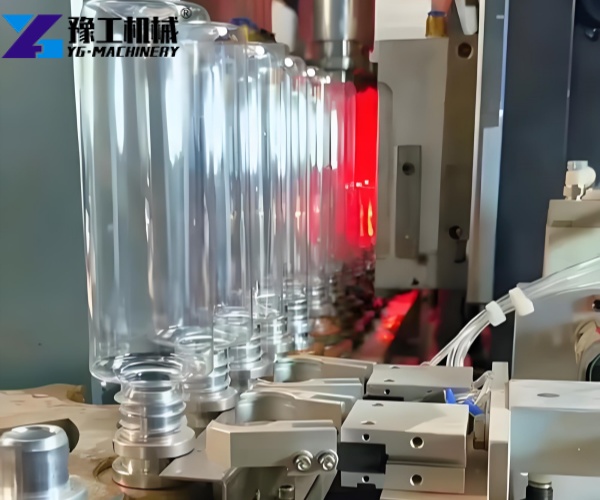
This plastic bottle molding machine produces bottles for many industries.
PET Water and Beverage Bottles
Mineral water, soda, juice and tea bottles. 0.2L to 2L volumes.
Edible Oil and Condiment Bottles
Cooking oil bottles, soy sauce bottles and vinegar bottles. 0.5L to 5L volumes.
Cosmetic and Personal Care Bottles
Shampoo bottles, lotion bottles and body wash containers. 50ml to 500ml volumes.
Pharmaceutical and Household Chemical Bottles
Medicine bottles, syrup bottles, detergent bottles and cleaning product containers. 50ml to 500ml volumes.
Large Water Bottle Production
3-gallon and 5-gallon water cooler bottles require specialized machine configuration.
How to Choose a PET Bottle Making Machine
| Your production need | Recommended configuration | Why |
| Small startup, 1,000-3,000 bottles/day | Semi-automatic 2-cavity | Lower initial investment, flexible operation |
| Medium production, 5,000-10,000 bottles/day | Fully automatic 4-cavity | Good balance of cost and output |
| Large factory, 15,000-30,000 bottles/day | Fully automatic 6-cavity | High output, lower per-bottle cost |
| Mass production, 30,000+ bottles/day | Fully automatic 8-cavity | Maximum efficiency, lowest unit cost |
| 5-gallon water bottles | Semi-automatic 1-cavity or 2-cavity | Large bottle size, specialized machine |
| Multiple bottle shapes | Semi-automatic | Easier to change molds and adjust settings |
Still not sure? Tell us your daily production target and bottle type. We will recommend the right plastic bottle molding machine for your budget.
Customer Case – Water Bottle Factory in Kenya
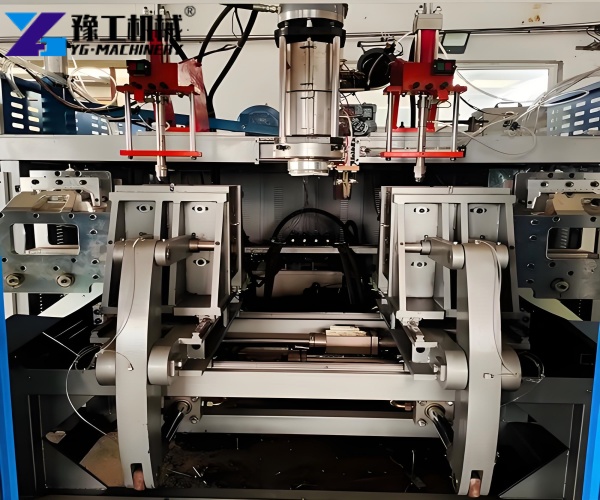
A bottled water manufacturer in Nairobi, Kenya, was buying bottles from a supplier. Bottle costs were high. Delivery delays were common. The factory wanted to produce its own bottles to control costs and supply.
The customer purchased a 4-cavity fully automatic plastic bottle molding machine for 500ml PET water bottles. Output capacity: 4,000-5,000 bottles per hour.
Results:
- Bottle production cost reduced by 40%
- Daily output: 35,000 bottles (8-hour shift)
- 1 operator instead of 3 workers for bottle handling
- Machine paid for itself in 8 months
The production manager said: “Making our own bottles reduced our packaging costs significantly. The machine is easy to operate. We no longer worry about bottle supply delays.”
FAQ
Q: What is the price of a plastic bottle molding machine?
A: Price depends on cavity count, automation level, and configuration. Semi-automatic machines start at $5,000-$10,000. Fully automatic 6-cavity machines are $20,000-$40,000. Contact us for a quote based on your production needs.
Q: What is the difference between 2-cavity, 4-cavity, 6-cavity, and 8-cavity?
A: Cavity count is the number of bottles produced per cycle. 2-cavity produces 2 bottles per cycle, 8-cavity produces 8 bottles per cycle. More cavities = higher output and higher price.
Q: Semi-automatic or fully automatic – which is better?
A: Semi-automatic is better for small production, diverse bottle shapes, and lower budgets. Fully automatic is better for mass production, consistent bottle types, and long-term cost savings.
Q: Does the machine include a mold?
A: Yes. Standard molds are included. Custom molds for specific bottle shapes are available at extra cost.
Q: What is the production capacity?
A: Output ranges from 1,200 PCS/H (2-cavity) to 9,000 PCS/H (8-cavity). Actual output depends on bottle size and operating conditions.
Q: What power supply is required?
A: The machine requires 380V/220V, 50Hz, three-phase power. Power consumption ranges from 19kW to 40kW depending on the model.
Q: What is the scrap rate?
A: The scrap rate is ≤0.2%. The machine includes automatic fault detection to minimize waste.