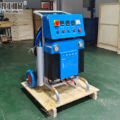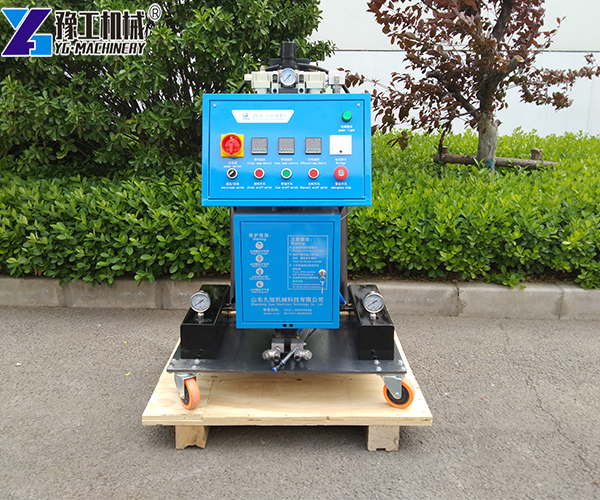
A polyurethane spray foam insulation machine is a device that mixes and sprays two-component polyurethane materials on site. It is commonly used to create seamless thermal insulation layers on building walls, roofs, cold storage rooms, and pipelines.
The sprayed material cures in seconds and forms a continuous foam layer with excellent thermal insulation, waterproofing, and sealing performance. Unlike traditional insulation boards, spray foam has no seams or joints, which eliminates thermal bridging and improves overall energy efficiency.
A PU foam spray machine is used for a variety of insulation projects:
- Building exterior and interior wall insulation
- Cold storage room and refrigeration warehouse insulation
- Roof waterproofing and thermal insulation
- Pipeline insulation and corrosion protection
- Refrigerated truck and container insulation
- Energy-saving renovation projects
Advantages:
- Seamless insulation layer, no thermal bridging
- Fast curing in seconds, reduces downtime
- High adhesion strength, bonds to most surfaces
- Good waterproofing and vapor barrier properties
- Can spray irregular shapes and complex surfaces
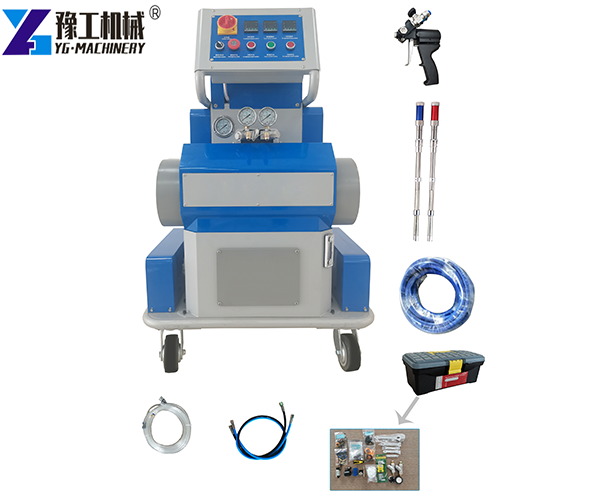
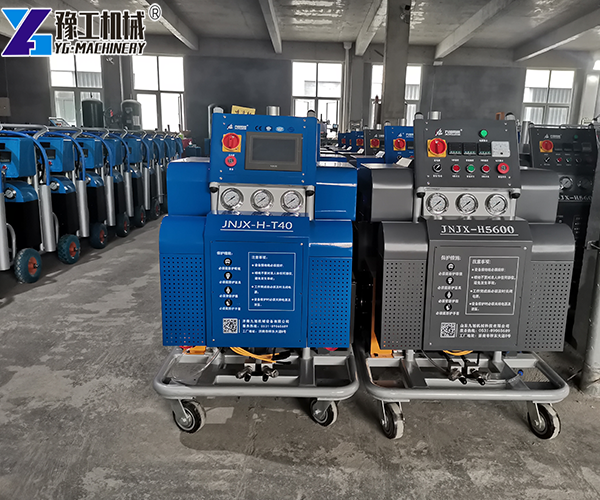
YG Machinery offers polyurethane spray foam insulation machines in pneumatic and hydraulic models, with material output ranging from 2 to 12 kg per minute and heating power up to 25 kW.
Technical Parameters of Polyurethane Spray Foam Machine
| Model | YG-III(H) | YG-Q2600 | YG-H5600 | YG-H-T40 |
| Host heating power | 7 kW | 9 kW | 18.5 kW | 18.5 kW |
| Pipe heating power | 2.5 kW | 2.5 kW | 1 kW | 1 kW |
| Total power | 9.5 kW | 11.5 kW | 19.5 kW | 19.5 kW |
| Motor power | – | – | 3.75 kW | 3.75 kW |
| Drive mode | Pneumatic | Pneumatic | Hydraulic | Hydraulic |
| Output flow | 2-10 kg/min | 2-10 kg/min | 2-12 kg/min | 2-12 kg/min |
| Support pipeline | 75 m | 90 m | 30 m | 30 m |
| Power supply | 380V | 380V | 380V | 380V |
| AB ratio | 1:1 | 1:1 | 1:1 | 1:1 |
Polyurethane Spray Foam Insulation Material Benefits
- Excellent thermal insulation – closed-cell structure reduces heat transfer, lowers heating and cooling costs
- Seamless application – no joints or gaps, eliminates thermal bridging and air leakage
- Waterproof and vapor barrier – closed cells prevent moisture penetration, protects roofs and basements
- Strong adhesion – bonds to concrete, steel, wood, masonry, and most construction materials
- Fast curing – expands and cures in seconds, speeds up construction schedules
- Adapts to any shape – sprays onto flat surfaces, curves, irregular shapes, and hard-to-reach areas
- Long-lasting durability – stable foam layer maintains performance over the building’s service life
Key Advantages & Features
Pneumatic or hydraulic drive options – Choose pneumatic for portability. Choose hydraulic for higher output and consistent performance.
Powerful heating system – Heats the materials to optimal temperature quickly. Maintains temperature during spraying, ensuring proper foam formation.
Four-stage material filtration – Filters remove impurities from the material, reducing nozzle blockages and extending service life.
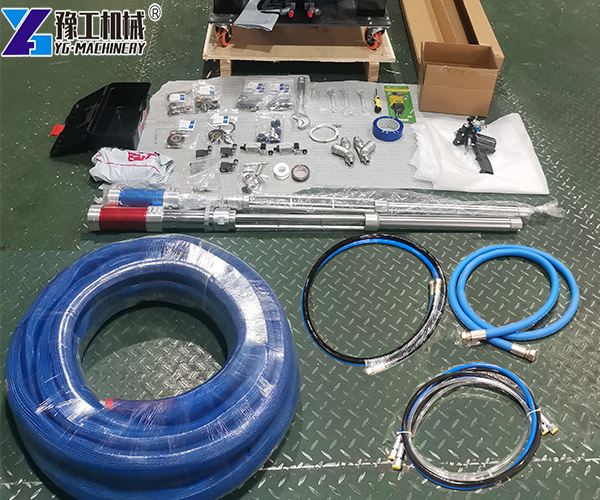
Self-cleaning spray gun – The gun design prevents material build-up. No need to disassemble and clean after each use.
Leakage protection – Multiple protection systems keep operators safe during spraying operations.
Pressure gauge and monitoring – Visual monitoring allows operators to check system status at all times.
Portable and compact design – Small footprint and wheels make the machine easy to move between job sites.

Applications of Polyurethane Spray Foam Machine
This polyurethane spray foam machine works well in many insulation projects:
- Building exterior wall insulation
- Cold storage and refrigeration room insulation
- Roof waterproofing and thermal insulation
- Pipeline insulation and anti-corrosion coating
- Refrigerated truck and container insulation
- Container house and mobile building insulation
- KTV and studio soundproofing
- Basement and foundation waterproofing
- Agricultural and livestock building insulation
- Tank and vessel insulation
The machine can also be used for pouring applications, such as:
- Hot water tank insulation
- Beer tank and storage tank insulation
- Water heater insulation
- Roadbed and void filling
How to Choose the Right Polyurethane Spray Foam Machine?
| Your project type | Recommended model | Why |
| Small building, single roof | YG-III(H) | Pneumatic, compact, lower cost |
| Medium building, exterior wall | YG-Q2600 | Pneumatic, longer hose support |
| Large cold storage project | YG-H5600 | Hydraulic, higher output |
| Heavy-duty industrial use | YG-H-T40 | Hydraulic, high output, durable |
| Frequent site relocation | YG-III(H) or YG-Q2600 | Lighter, easier to move |
| Large-scale continuous spraying | YG-H5600 or YG-H-T40 | Stable performance, long hours |
Still not sure? Tell us your project type, spraying area, and preferred power source. We will recommend the right polyurethane spray foam insulation machine for you.
Customer Case
A construction company in Russia was contracted to insulate large warehouse roofs. The project required a polyurethane foam spray machine that could operate reliably in cold weather conditions. Low temperatures can affect material viscosity, making spraying difficult.
The contractor chose a YG-H5600 hydraulic polyurethane spray foam insulation machine. The unit features a powerful heating system capable of maintaining material temperature in cold conditions.
Project details:
- Location: Russia, outdoor temperatures near freezing
- Project: Warehouse roof insulation, over 5,000 m²
- Machine: YG-H5600 hydraulic model
- Material output: 2-12 kg/min, adjustable
Results:
- Stable operation despite low temperatures
- Heating system kept materials at optimal viscosity
- Continuous spraying covered large roof areas efficiently
- Project completed within schedule
- The customer later purchased a second machine for another project
The project manager noted that the machine performed reliably in the cold climate and maintained consistent foam quality throughout the project.

FAQ
Q: What is the difference between pneumatic and hydraulic models?
A: Pneumatic models use air pressure and are lighter and more portable. Hydraulic models use hydraulic power for higher output and more consistent performance in heavy-duty applications.
Q: Can this polyurethane spray foam machine be used for polyurea?
A: Yes. Many YG polyurethane spray foam machines can also handle polyurea materials. Contact us to confirm compatibility with your specific material.
Q: What is the AB ratio?
A: The standard ratio is 1:1 (Component A : Component B). This ratio can be adjusted for different material formulations.
Q: Can the machine be used for pouring as well as spraying?
A: Yes. The machine can be used for pouring applications, including tank insulation, void filling, and water heater insulation.
Q: What air compressor is needed for pneumatic models?
A: We recommend a 7.5 kW air compressor with 0.9-1.0 m³/min output and 8 bar pressure for pneumatic models.
Q: Does the machine come with heated hoses?
A: Yes. All models include heated hoses to maintain material temperature during spraying.
Q: What is the warranty?
A: The main machine has a 24-month warranty. Heating hoses and spray guns have a 12-month warranty.
Q: What is the price of a polyurethane spray foam insulation machine?
A: Price depends on model and configuration. Pneumatic models are more affordable. Hydraulic models cost more. Contact us for a quote based on your needs.