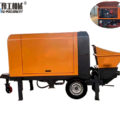
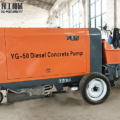
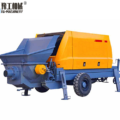
A concrete delivery pump is a machine that transports concrete through pipelines to job sites. This electric concrete pump uses an electric motor instead of a diesel engine. It produces no exhaust fumes and runs quietly. For residential buildings, bridge construction, tunnel lining, and municipal projects, this concrete pumping machine saves labor and speeds up construction.
YG Machinery offers electric concrete pumps from YG-20 to YG-50. Capacities range from 16 to 35 cubic meters per hour. Vertical delivery reaches up to 150 meters. Horizontal delivery reaches up to 300 meters. Choose the right model for your project scale.
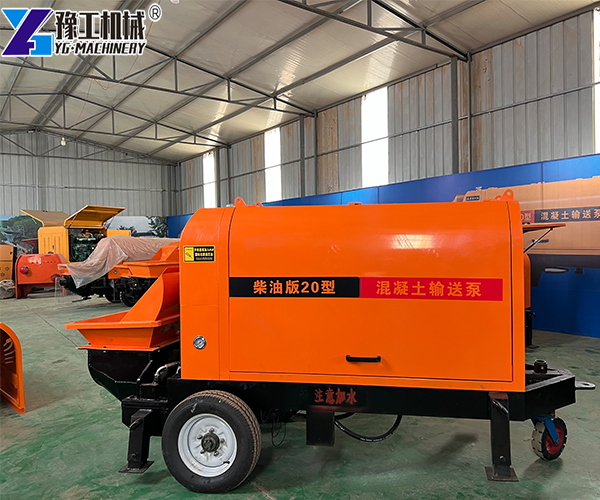
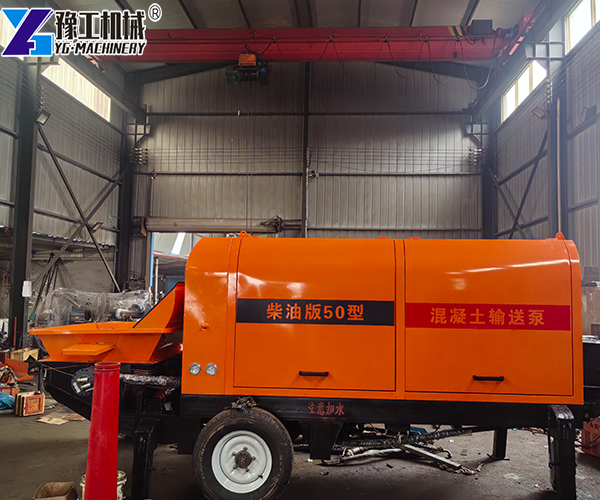
Technical Parameters of Concrete Delivery Pump
| Specification | YG-20 | YG-30 | YG-40 | YG-50 |
| Motor power | 22kW | 37kW | 45kW | 55kW |
| Max. outlet pressure | – | 26MPa | 28MPa | 28MPa |
| Max. theoretical throughput | 16-18 m³/h | 20-22 m³/h | 35 m³/h | |
| Max. aggregate size | ≤20mm | ≤30mm | ≤40mm | |
| Vertical conveying distance | 40m | 80m | 120m | 150m |
| Horizontal conveying distance | 80m | 140m | 260m | 300m |
| Pipe diameter | 80mm | φ80(100)mm | φ100(80)mm | Φ125/100mm |
| Weight | 1600kg | 2200kg | 2400kg | 2500kg |
| Dimensions (LxWxH) | 3400x1200x1600mm | 3600x1500x1600mm | 4000x1500x1550mm | 4200x1700x1750mm |
All models feature an S-tube distribution valve, hydraulic system, and PLC control panel. The electric motor provides smooth, stable power with no exhaust emissions.
Not sure which model fits your project? Read our How to Choose a Concrete Pump guide to compare pumping capacity, delivery distance, and power options.
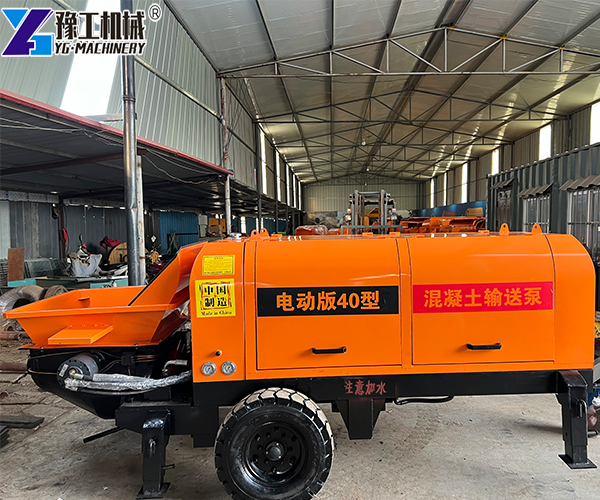
Electric vs Diesel Concrete Pump
Choosing between an electric concrete pump and a diesel pump depends on your job site conditions.
| Feature | Electric Concrete Pump | Diesel Concrete Pump |
| Emissions | Zero exhaust fumes | Produces exhaust |
| Noise level | Low, suitable for urban areas | Higher noise |
| Operating cost | Lower (electricity cheaper than diesel) | Higher (fuel costs) |
| Maintenance | Fewer moving parts, lower cost | More components, higher cost |
| Best for | Indoor, urban, residential areas | Remote sites without power |
| Power source | Requires grid connection | Self-contained fuel tank |
An electric concrete pump is the better choice for city construction, indoor projects, tunnels, and residential areas. It runs quietly and produces no harmful gases. Workers breathe clean air. Neighbors do not complain about noise.
For remote construction sites without access to electricity, you can also explore our Diesel Concrete Pump for reliable concrete delivery.
Working Principle of Concrete Pumping Machine
The concrete pumping machine follows a simple but efficient process:
Step 1: Concrete feeding – A mixer truck or wheel loader pours concrete into the hopper. The hopper holds enough material for continuous pumping.
Step 2: Piston suction – One concrete cylinder piston moves backward. This sucks concrete from the hopper into the cylinder.
Step 3: S-tube switching – The S-tube distribution valve connects the filled cylinder to the delivery pipe.
Step 4: Piston discharge – The piston moves forward. It pushes concrete into the delivery pipe at high pressure.
Step 5: Alternating cycle – The two cylinders alternate. One sucks while the other pushes. This creates continuous concrete flow.
Step 6: Pipeline delivery – Concrete travels through steel pipes or rubber hoses to the pouring location. Workers control the flow with a remote control.
The S-tube valve system ensures smooth, uninterrupted concrete flow. The hydraulic system maintains steady pressure even over long distances.
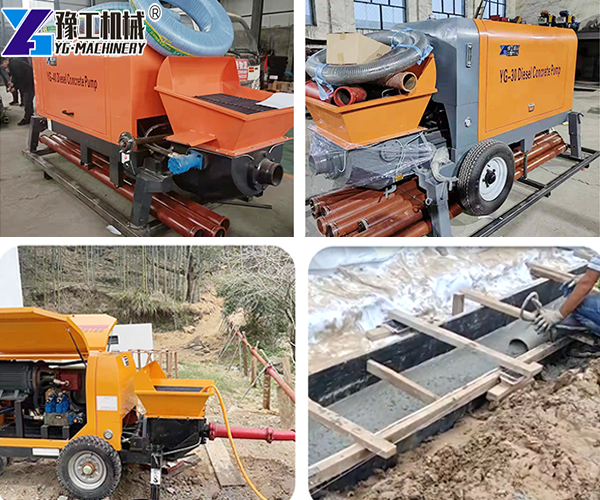
Key Features of Electric Concrete Pump
Zero emissions – The electric motor produces no exhaust fumes. Safe for indoor use in basements, tunnels, and enclosed spaces. No harmful gases for workers to breathe.
Quiet operation – Runs much quieter than diesel pumps. Suitable for night construction in residential areas. No noise complaints from neighbors.
Low operating cost – Electricity costs less than diesel fuel. Over a year of daily use, the savings add up significantly.
Low maintenance – Electric motors have fewer moving parts than diesel engines. No fuel filters, no oil changes, no injectors to clean.
S-tube valve system – Provides smooth concrete flow. Self-compensates for wear. Automatic sealing ensures consistent pressure.
High/low pressure switching – Switch between high-pressure low-volume for high-rise buildings and low-pressure high-volume for foundation pouring.
PLC intelligent control – Simple touchscreen or button controls. Automatic diagnostics. Remote control option for safe operation.
Durable construction – Wear-resistant alloy components. Long service life. Built for continuous daily use.
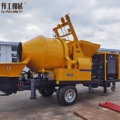
If you need both concrete mixing and pumping in one machine, our Concrete Mixer with Pump offers a complete on-site concrete solution.
Applications of Concrete Delivery Pump
This concrete delivery pump serves many project types:
Residential buildings – Pour concrete for foundations, columns, slabs, and walls. The compact size fits through narrow entrances.
Bridge construction – Pump concrete to bridge decks and piers. Long horizontal distance capability covers large spans.
Tunnel lining – Quiet, zero-emission operation works well in enclosed tunnels. The pump fits in tight spaces.
Municipal projects – Pour concrete for roads, sidewalks, drainage channels, and underground utilities.
Indoor construction – Works safely inside warehouses, factories, parking garages, and basements. No exhaust fumes.
Rural infrastructure – Pump concrete for small bridges, culverts, and irrigation systems. Electric power available in most villages.
Slope protection – Pour concrete on slopes and embankments. Stable pressure ensures even distribution.
Floor heating systems – Pump fine concrete and mortar for underfloor heating layers.
For projects that only require concrete mixing before transportation, you may also be interested in our Concrete Mixer Equipment .
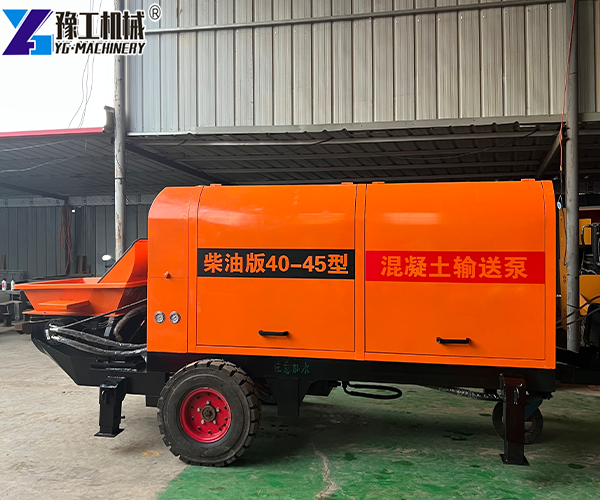
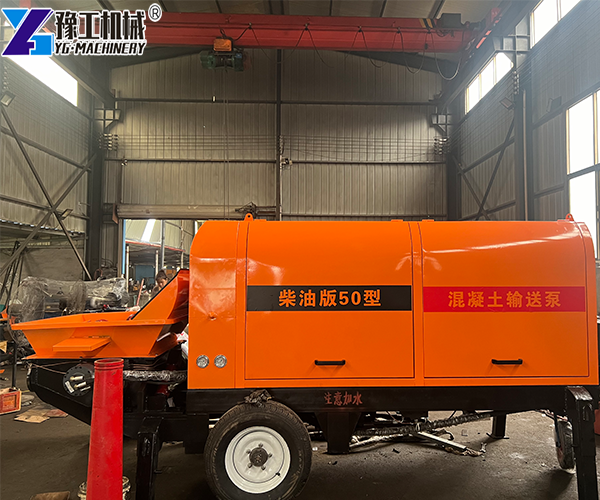
How to Choose the Right Concrete Pump Model?
Selecting the right concrete pump depends on your project scale and delivery distance.
| Project type | Recommended model | Why |
| Small house foundation, ground slab | YG-20 | 16-18 m³/h, enough for small projects, lower cost |
| 2-3 story building, small bridge | YG-20 or YG-30 | Good balance of power and portability |
| 4-6 story building, medium bridge | YG-30 or YG-40 | Higher output, longer vertical reach |
| High-rise building (10+ floors) | YG-40 or YG-50 | 35 m³/h capacity, 150m vertical distance |
| Long tunnel, long bridge | YG-50 | 300m horizontal distance, high pressure |
| Tight access job site | YG-20 | Compact size, easier to maneuver |
Still not sure? Tell us your building height, concrete volume per day, and site access. We will recommend the right electric concrete pump for your project.
Customer Case
A municipal contractor in Puebla, Mexico, needed to repair a bridge over a river. The bridge had damaged concrete on the underside. Access was difficult. A truck-mounted pump could not reach the location. Manual pouring was dangerous and slow.
They used a YG-40 electric concrete pump. The pump was set up on the riverbank. Long pipes reached under the bridge. Workers used a remote control to start and stop the flow.
Results:
- Concrete placed exactly where needed
- Zero accidents during the pour
- Repair completed in 5 days instead of 3 weeks
- The municipality approved the contractor for future bridge projects
The project supervisor said: “The electric pump allowed us to reach places no other pump could. The remote control kept workers away from dangerous edges.”
Looking for a compact solution for residential construction? See our Portable Concrete Mixer with Pump for mobile on-site concrete production and delivery.
Related Concrete Equipment
In addition to concrete delivery pumps, YG Machinery also offers concrete mixer with pump for integrated mixing and pumping, concrete mixer equipment for on-site concrete production, and portable concrete mixer with pump for projects that require flexible transportation between job sites.