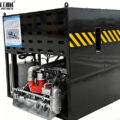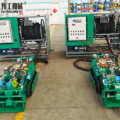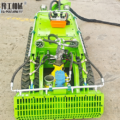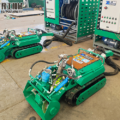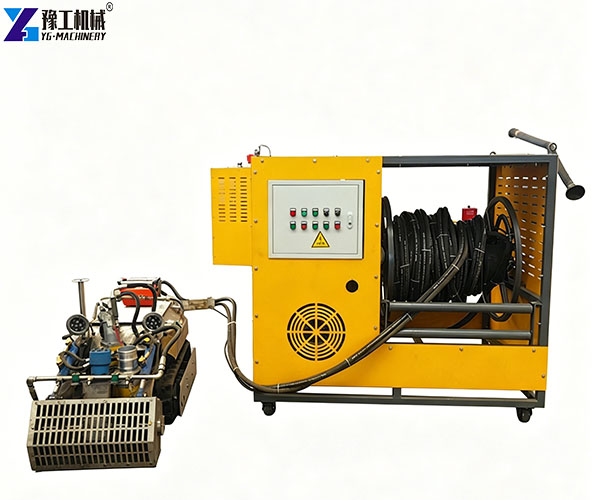
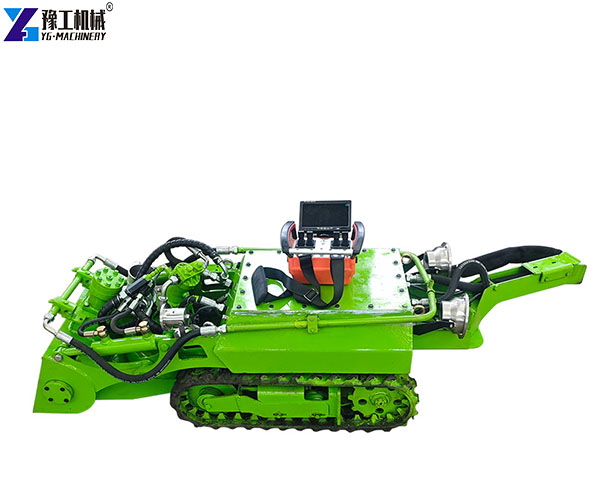
A dredge remote robot is a remote-controlled underwater machine used to remove sludge and sediment from rivers, lagoons, and ponds without draining the water. It works in waterways, industrial ponds, and treatment facilities where manual cleaning is dangerous or impossible.This article is a case study about a dredge robot price and application project in Brazil. A lagoon cleaning project in Rio de Janeiro faced massive sediment buildup. Our underwater sludge removal robot helped solve the problem efficiently while protecting the local ecosystem.
The Underwater Sludge Removal Robot Parameters
| Parameter | YG-500 | YG-600 |
| Robot Size | 1250 x 500 x 450 mm | 1350 x 600 x 600 mm |
| Drainage Width | 500 mm | 600 mm |
| Travel Speed | 3 to 9 m/min | 3 to 17 m/min |
| Pumpable Particle Diameter | 20 mm (customizable) | 40 mm (customizable) |
| Lift | 15 meters | 30 meters |
| Horizontal Conveying Distance | 100 to 150 meters | 100 to 150 meters |
| Work Efficiency | 100 cubic meters per hour | 150 cubic meters per hour |
| Suitable For | Pipes over 0.5 m diameter, rivers, ponds | Pipes over 0.6 m diameter, rivers, large ponds |
| Underwater Camera | 1 camera with real-time monitoring | 1 camera with real-time monitoring |
| Underwater Lighting | 2 LED lights | 2 LED lights |
| Waterproof Rating | IP68 | IP68 |
| Maximum Underwater Depth | 30 m | 30 m |
| Power Supply | Generator or 380V power supply | Generator or 380V power supply |
For more models and specifications, see silt removal robot for sale.
Brazil Project Background: Why The Customer Needed This?
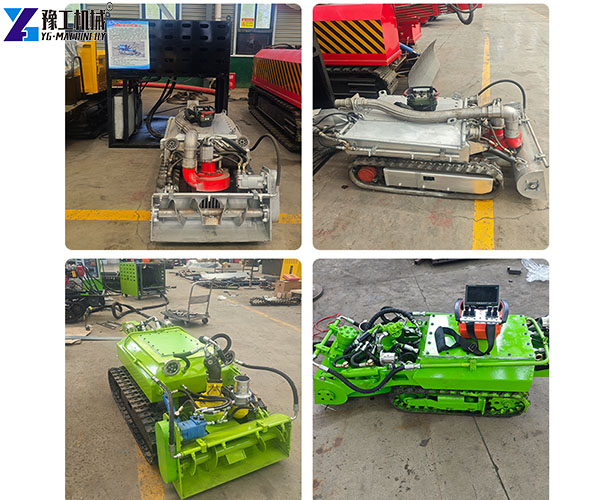
The client was the municipal environmental department in Rio de Janeiro, Brazil, working with a private concessionaire called Igua.
Application Scene: The Barra and Jacarepagua lagoons in Rio’s western zone had suffered decades of pollution from sewage and garbage. These lagoons are part of the Olympic Park area from the 2016 Rio Games.
The Problem: By 2024, the lagoons had accumulated massive amounts of silt, sediment, and filth. Local watersheds received untreated waste from informal neighborhoods. The situation became so severe that fish kills were common.
Key Needs: The private concessionaire Igua to clean up the lagoon complex. They set a target to remove enough silt and filth to fill 920 Olympic-size swimming pools. Dredging started in late April 2024, and they expected the work to take three years. The project required restoring channels between the lagoons and the Atlantic Ocean, installing collectors to prevent untreated sewage discharge, and recovering native mangrove forests.
The team could not simply drain the lagoons, as they are connected to the ocean and support local ecosystems. They needed a solution that worked underwater while maintaining water flow and minimizing environmental disruption.
How YG Sludge Cleaning Machine Solved The Brazil Problem?
Our sludge cleaning machine matched the customer’s needs perfectly. We focused on three main advantages that address the specific challenges of Brazilian lagoon cleaning.
Full Hydraulic Power System
The machine works reliably in Brazil’s tropical climate. Temperatures often reach 40°C with high humidity. The hydraulic system stayed stable throughout the project, ensuring continuous operation even during the hottest months.
Real-Time Visual Monitoring
Operators could see underwater clearly through the camera system. This helped them avoid submerged structures and sensitive aquatic vegetation while removing sludge exactly where it was thickest. The real-time monitoring also allowed environmental inspectors to verify that sediment dispersion was contained.
Modular Operation
We connected the robot to a crusher and dewatering unit on the shore. After sludge was dried, a forklift and stacker moved the dried material to trucks for proper disposal. This modular approach ensured that removed sediment did not re-enter the waterway.
Delivery And Client Feedback From Brazil
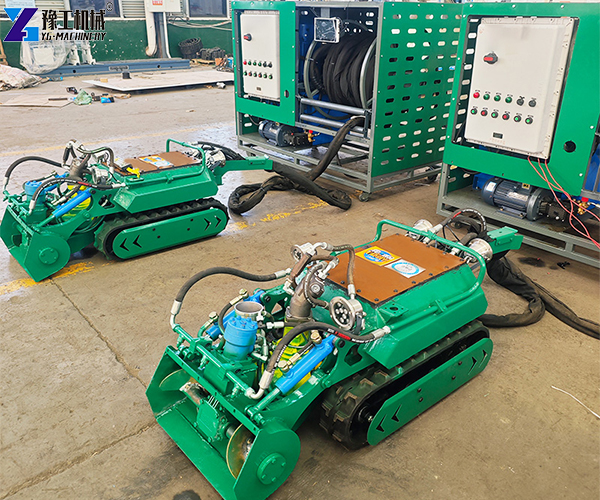
Delivery Process:
The YG-600 model was selected for the lagoon project due to its higher pumping capacity of 150 cubic meters per hour. The machine arrived at Rio de Janeiro port 45 days after order confirmation. YG engineers traveled to Brazil and trained the local Igua team in 12 days.
Actual Usage:
The robot operated for 28 consecutive days in the initial phase, working 18 hours per day. It removed approximately 5,000 cubic meters of sludge and sediment from the Jacarepagua lagoon section. The operation did not interfere with local wildlife or recreational activities.
Client Feedback:
The lagoon project manager said: “The real-time monitoring gave us confidence that we were not spreading pollution. The robot worked precisely where needed, and the onshore dewatering system kept everything contained.”
The environmental consultant noted that conditions had improved from “terminally ill” to a patient “back on its feet and walking.”
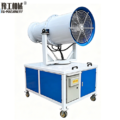
For dust control at the onshore dewatering site, a fog cannon machine keeps the air clean.
FAQs About Underwater Sludge Removal Robot
Q1: What are the application scenes for a sludge cleaning machine?
They are used in urban lagoons (like Rio’s Olympic Park lagoons), rivers (like the Tietê in São Paulo), industrial ponds, and agricultural water storage. Different scenes need different machine models.
Q2: What is the maximum working depth?
Our standard models work up to 30 meters deep. The cable control distance is standard 50 meters, maximum 150 meters.
Q3: Can the robot work while the lagoon or river is in use?
Yes. These machines are built for online cleaning. They work underwater without stopping recreational activities or water flow.
Q4: Which model should I choose for large-scale lagoon dredging?
The YG-600 works for larger waterways with higher sediment volumes. It pumps 150 cubic meters per hour and handles particles up to 40mm.
Q5: Does the robot handle debris like plastic and branches?
Yes. The pump system can handle particles up to 40mm in diameter. For larger debris, we recommend pairing the robot with a crusher to break down materials before pumping.
Why Customers Choose YG Dredge Remote Robot?
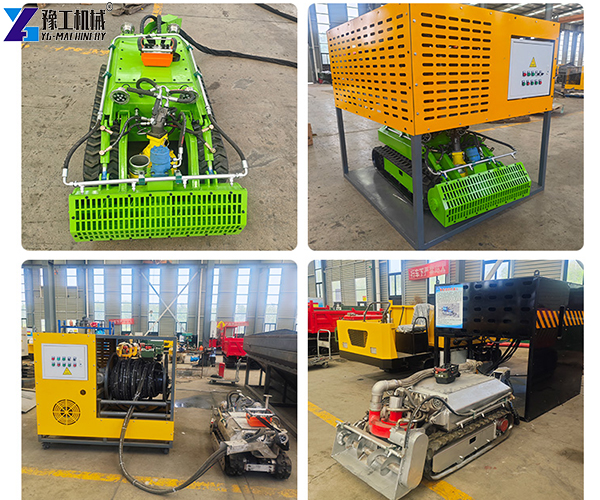
Here are the main reasons clients select our machines for Brazilian waterway projects.
Autonomous Navigation and Positioning Technology
Sensors like LiDAR, visual cameras, and ultrasonic sensors help the robot see the environment. The machine avoids obstacles like submerged trees, rocks, and infrastructure by itself.
Advanced Operation System
The drive system uses tracked chassis for soft lagoon sediment, wheeled chassis for pipes, or propellers for open water. Working tools include high-pressure water jets to break hard sediment, mechanical arms and cutters to handle debris, and a suction system with a vacuum pump to pump sludge to the shore. Operators stay on the shore and control the robot safely from a distance.
Environmental Compliance
The robot’s precision allows operators to remove only targeted sediment, leaving sensitive aquatic vegetation intact. This is crucial for Brazilian projects that must comply with strict environmental regulations.
YG Company Advantages In The Industry
YG is a trusted manufacturer of dredge remote robot systems with strong experience in the industry. We provide complete solutions including the robot, crusher, dewatering unit, pipeline, forklifts, and stackers. We make key parts in our own factory to ensure high quality and fast spare parts delivery.If you are facing sediment problems in your river, lagoon, or pond, YG is ready to help.